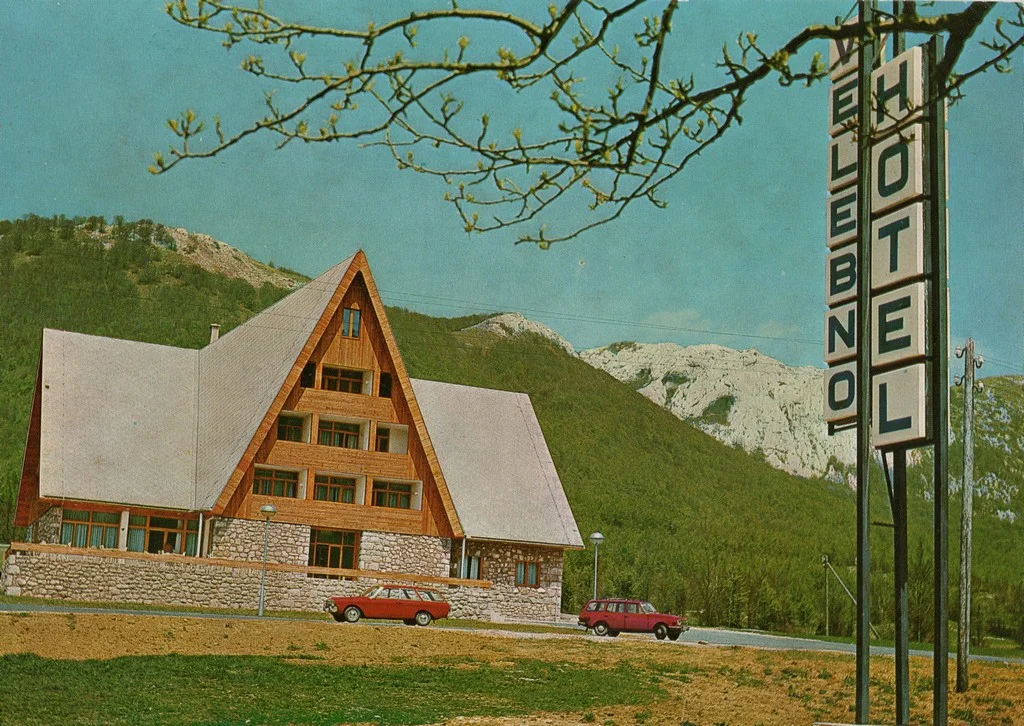
Hotel Velebno – A Symbol of Velebit Tourism
This authentic postcard from the 1970s or early 1980s shows Hotel Velebno in its full glory, situated in the fresh air of Baške Oštarije. Its recognizable architecture with a high-pitched roof fits perfectly into the mountain landscape beneath the sharp peaks of Velebit. While winters here were reserved for skiing, summer months offered an ideal escape from the coastal heat, attracting excursionists and hikers for coffee and Lika specialties on the hotel terrace. The scene with parked cars in front of the hotel evokes nostalgia for the golden age of Oštarije tourism, before the war destruction marked the end of an era.
T. Potočnjak Collection
Inv. no. ZTP-OS-1005
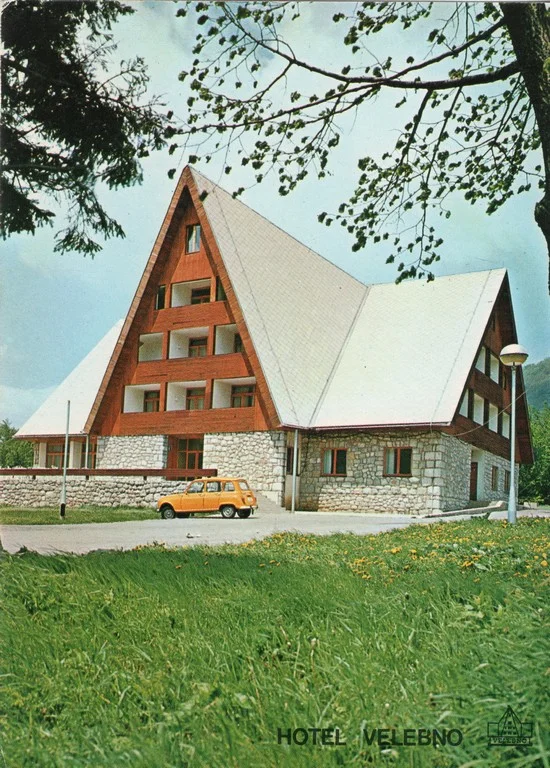
Hotel Velebno: A Mountain Icon at the Gates of Velebit
This striking photograph shows Hotel Velebno during its golden years. The hotel's architecture, with sharp, high roofs mimicking mountain peaks and a base made of hand-cut stone, became synonymous with Baške Oštarije. Parked in front of the hotel is the iconic orange Renault 4, giving this image a strong vintage feel.
Built at an ideal altitude where mountain and sea air mix, the hotel was for decades a primary destination for tourists, hikers, and athletes in training. Its location along the Karlobag–Gospić road made it an unavoidable stop for every traveler wishing to experience the peace of Velebit.
Although times have changed, Hotel Velebno remains in memory as a symbol of the boom in Oštarije tourism and a vista that, along with the surrounding meadows and peaks, defined the identity of this unique mountain pass.
T. Potočnjak Collection
Inv. no. ZTP-OS-1006
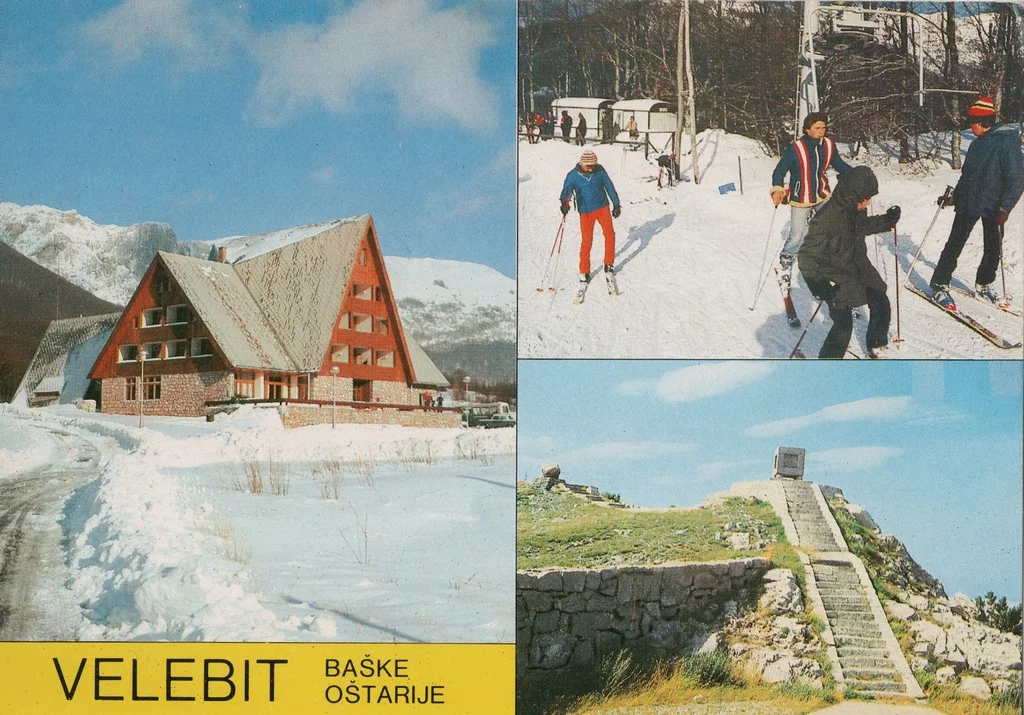
The Golden Age of Velebit Tourism
This multi-part postcard faithfully depicts Baške Oštarije in its full splendor during the second half of the 20th century. The left side is dominated by the recognizable architecture of the "Velebit" Mountain Lodge under a blanket of snow, which for decades served as a main refuge for hikers and travelers on their way to the sea.
The upper right frame takes us to the slopes of Oštarije during a time when it was a popular ski resort. The depiction of the old ski lift and skiers recalls winters when locals from Lika and guests from the coast enjoyed snowy delights, creating memories that many still recount today.
The lower right corner is dedicated to the Kubus (Ura) at Oštarijska Vrata, erected back in 1846. This stone monument at 927 meters above sea level symbolizes the junction of the mountain and the Adriatic, the point offering the most beautiful view of the Karlobag archipelago and the island of Pag.
T. Potočnjak Collection
Inv. no. ZTP-OS-1004
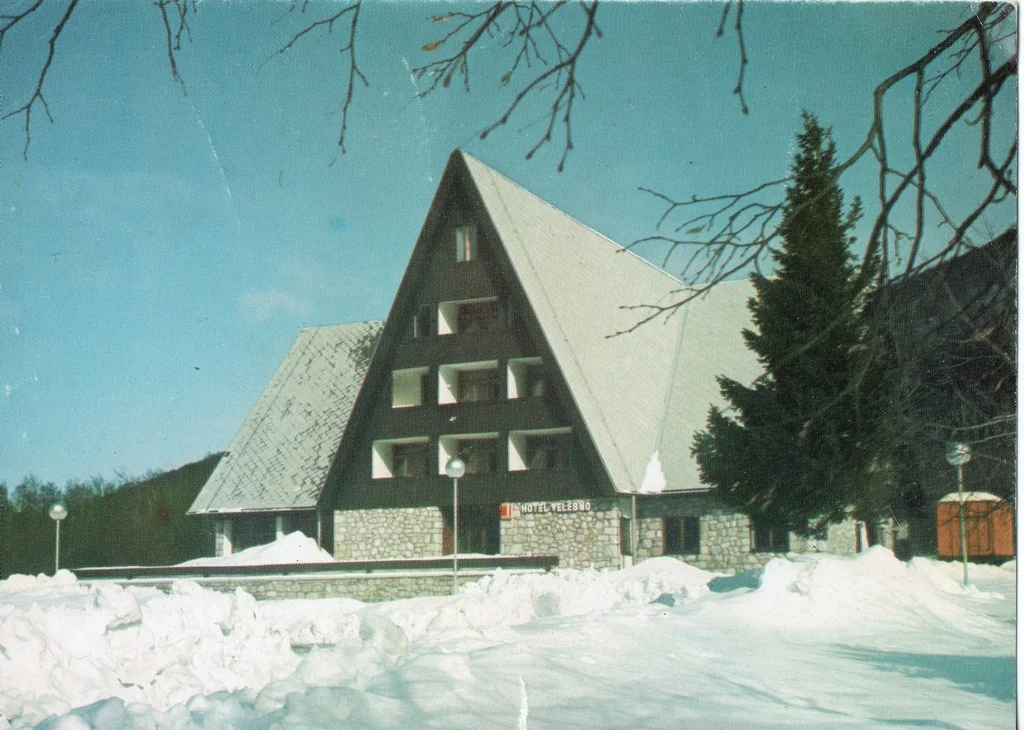
Hotel Velebno in its Winter Attire
This postcard from the late 1980s revives the memory of the old Hotel Velebno, the heart of Velebit's winter tourism. At that time, Oštarije was a true skiing mecca – with its own ski slope and lift at the foot of Ljubičko Brdo, the hotel was bustling with life while the Bura wind carried the scent of mulled wine and snow. It was a destination where generations took their first skiing steps, and thick Velebit drifts turned the hotel into a fairytale refuge before the winds of war in 1991 changed its fate forever.
T. Potočnjak Collection
Inv. no. ZTP-OS-1001
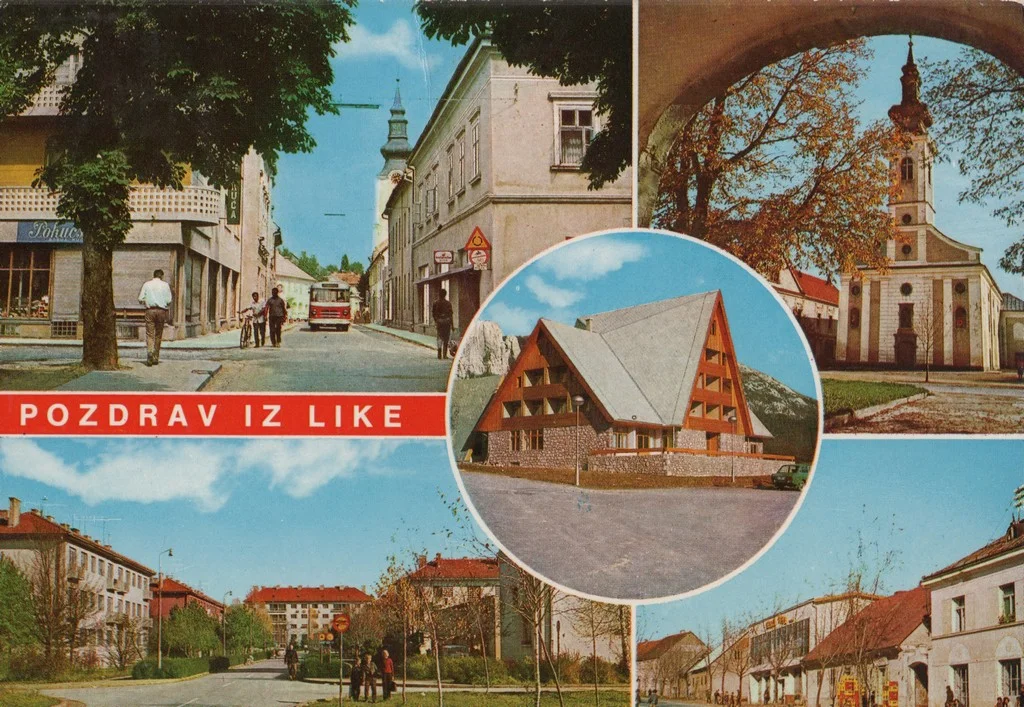
A Panoramic Greeting from the Heart of Lika
This collage postcard from the 1970s brings the main centers of Lika to the palm of your hand, showcasing the urban boom of the region during that period. In the upper left corner, we see the bustle of Gospić, while the upper right corner features Otočac with the tower of the Church of the Holy Trinity dominating the vista of the town on the Gacka river.
The lower part of the postcard is reserved for the then-modern architecture of Lički Osik (left) and the center of Perušić (right). The central circular motif features the Hotel Velebno in Baške Oštarije, which, with its specific architecture and sharp roof slopes, became a recognizable symbol of this mountain pass and an essential stop for travelers heading to the coast.
As a whole, this photograph records a time when old Lika towns were rapidly developing and connecting, creating a distinct regional identity between Velebit and the Gacka Field.
T. Potočnjak Collection
Inv. no. ZTP-OS-1007
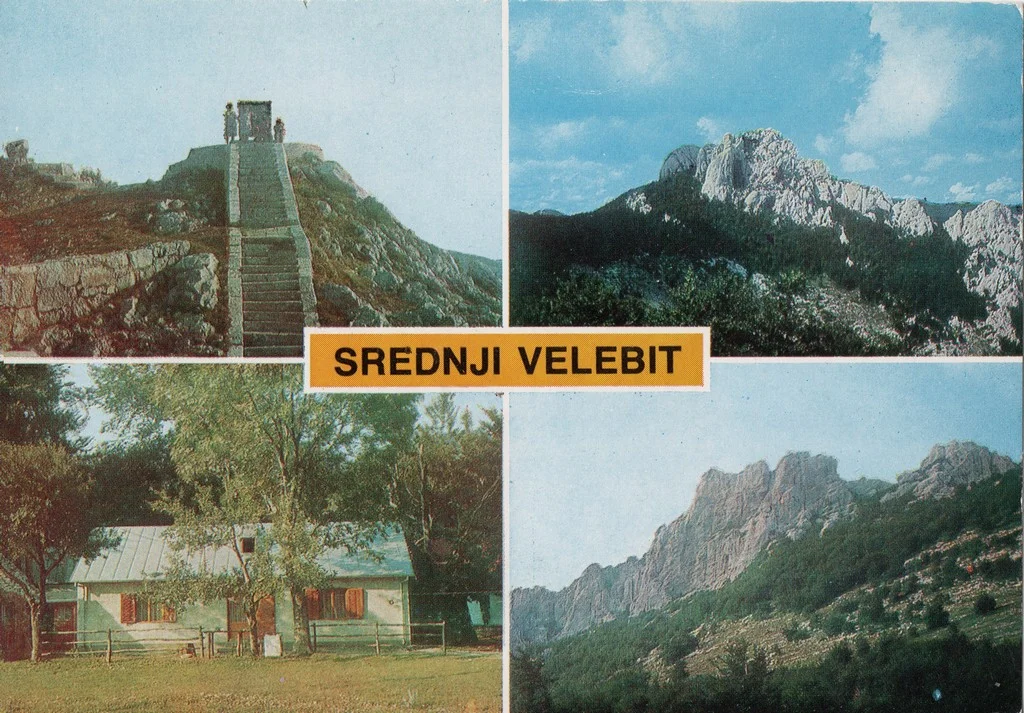
Middle Velebit: The Stone Heart of the Mountain
This postcard celebrates the raw beauty of Middle Velebit, an area where gentle Oštarije valleys meet sharp limestone peaks. The upper left frame leads us again to the Kubus, but from a perspective that emphasizes the steps and the climb to the viewpoint overlooking Karlobag and the islands.
Other frames show impressive rocks and mountaineering facilities that have been home to Velebit visitors for decades. The right side of the postcard focuses on the recognizable peaks of Dabarski Kukovi, whose vertical cliffs attract climbers and nature lovers from all over the world.
The lower left corner shows an idyllic mountain hut nestled in greenery, a symbol of the hospitality and peace provided by the mountain. This postcard perfectly captures the contrast between harsh stone and gentle forests that characterizes the surroundings of Baške Oštarije.
T. Potočnjak Collection
Inv. no. ZTP-OS-1003
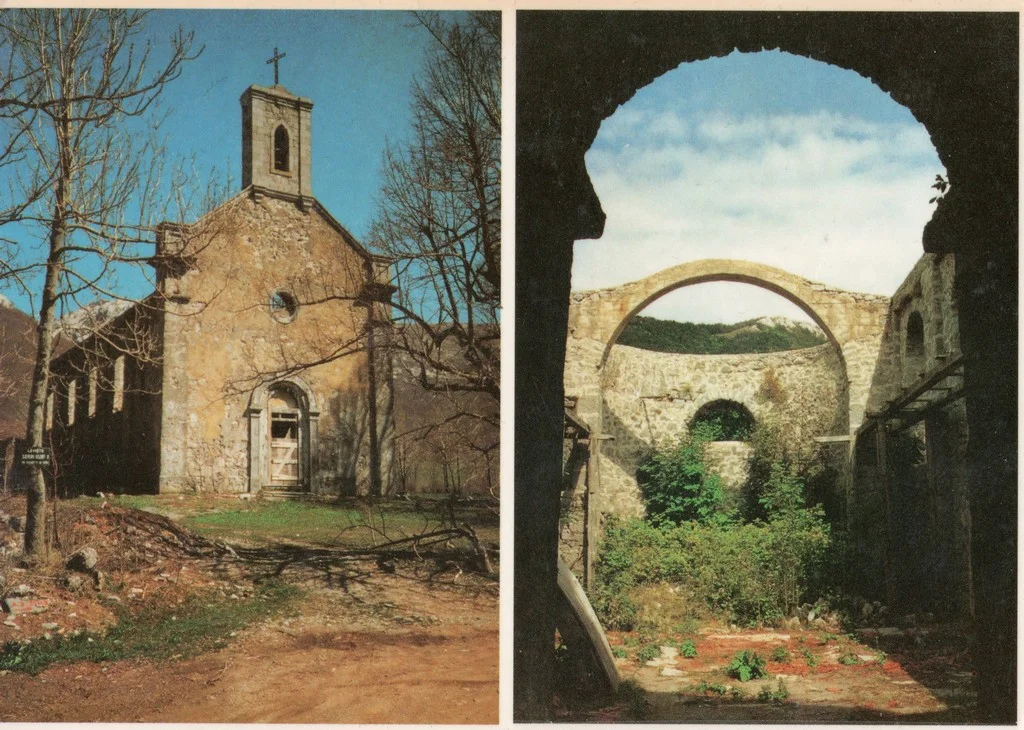
A Testimony to Decades of Silence
A poignant depiction of the remains of the Church of the Visitation of Mary (locally known as St. Elizabeth’s Church) after the 1943 bombing. The photograph records a period of long neglect, when trees and shrubs grew within the bare walls, and the sky became the only roof. This scene of the "wounded" church best illustrates the difficult path to its final restoration and the victory of life over destruction.
Thorough renovation and reconstruction of the church began only in 1988. Thanks to the efforts and donations of the faithful, Lika emigrants, and church authorities of the time, the church was roofed again and made fit for worship just before the start of the Homeland War.
Although the main structural renovation was completed around 1990, work on the interior decoration and the restoration of the altars continued later (e.g., the restoration of the main altar took place in stages until 2015).
T. Potočnjak Collection
Inv. no. ZTP-OS-1002
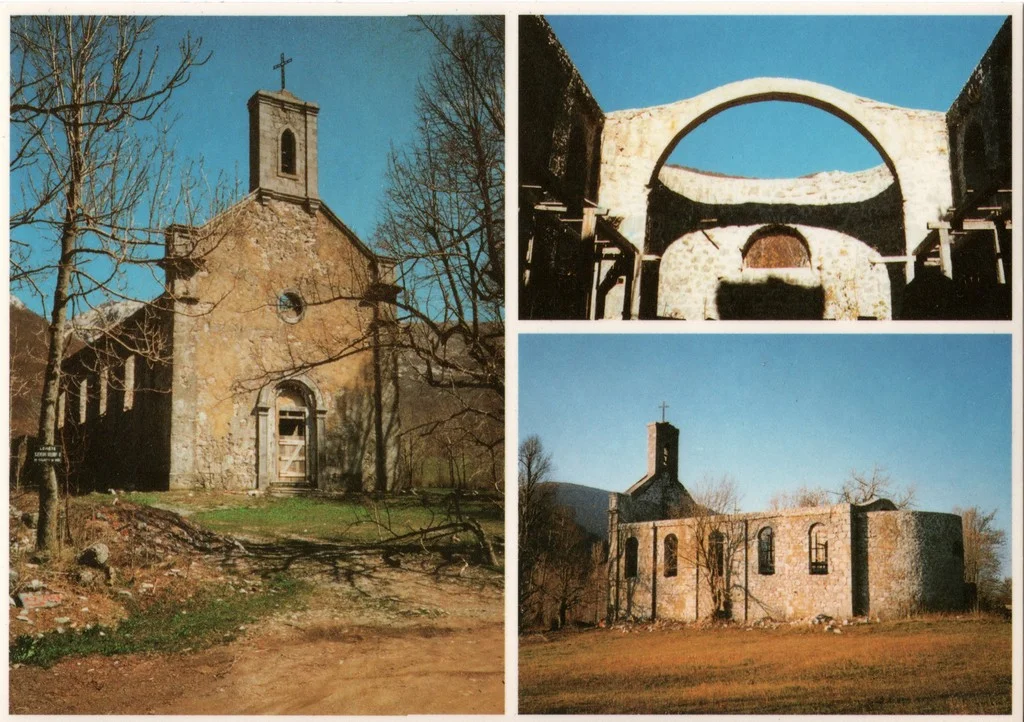
Before the Restoration: The Surviving Church Walls
This postcard presents three views of the Church of the Visitation of Mary in Baške Oštarije before its comprehensive restoration. The exterior views show the preserved façade, bell tower and stone side walls, while the interior view reveals the open, roofless sanctuary and the remains of the apse. Together, the images document the condition of the church after decades of exposure to the elements and before restoration work began in 1988.
T. Potočnjak Collection
Inv. no. ZTP-OS-1011
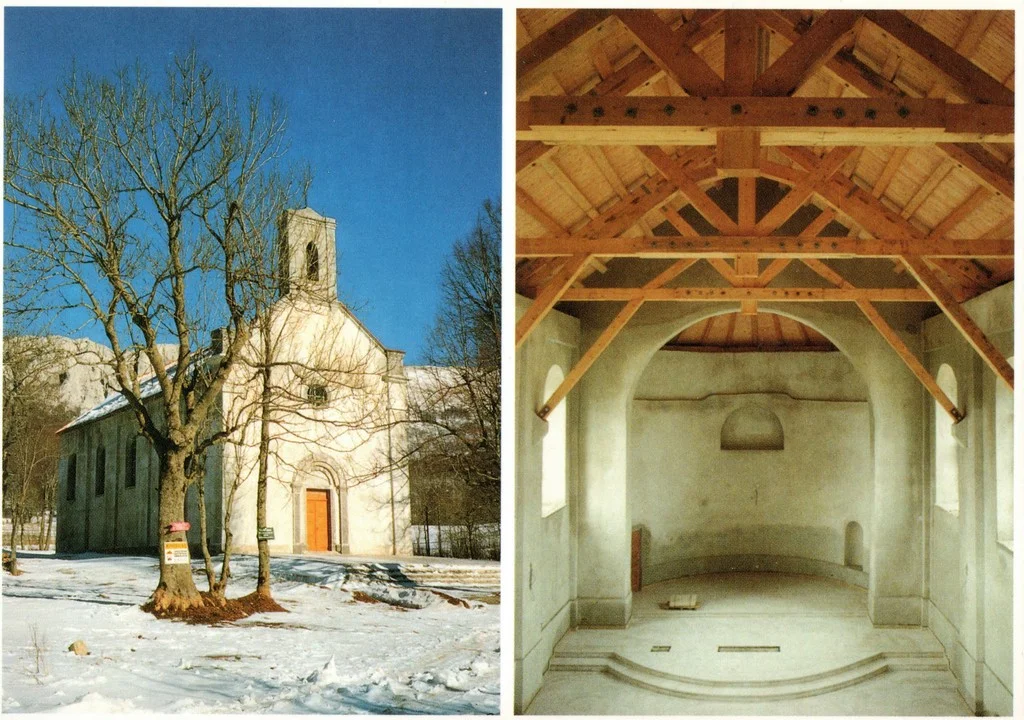
A New Beginning: Under a Roof Again
These photographs document the key moments of the church's restoration. The left side shows the exterior of the church under snow, while the right reveals the impressive new wooden roof structure. After decades of exposure to decay and harsh weather, the installation of the roof meant final protection for the sanctuary and a victory over the silence that had lasted since 1943.
The reconstruction was carried out with the goal of preserving the original stone identity, while the interior gained the warmth of wood, preparing the space for the reunion of the faithful and the return of spiritual life to this part of Baške Oštarije.
T. Potočnjak Collection
Inv. no. ZTP-OS-1008
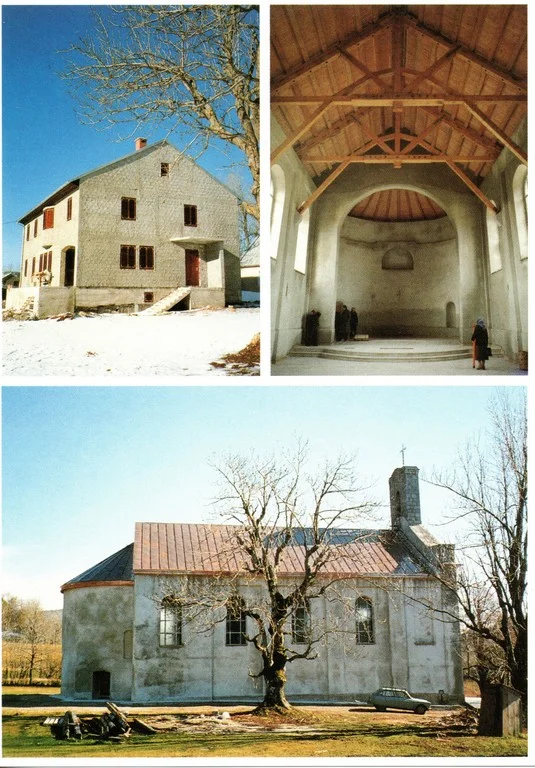
Restoring the Church: The Return of a Sacred Space
This postcard shows the Church of the Visitation of Mary after the key stages of restoration. The lower image records the renewed exterior with its new roof, while the upper-right view shows the restored interior with a wooden roof structure and a renewed sanctuary. The upper-left image also records the parish house, placing the restoration within the wider setting of Baške Oštarije.
T. Potočnjak Collection
Inv. no. ZTP-OS-1012
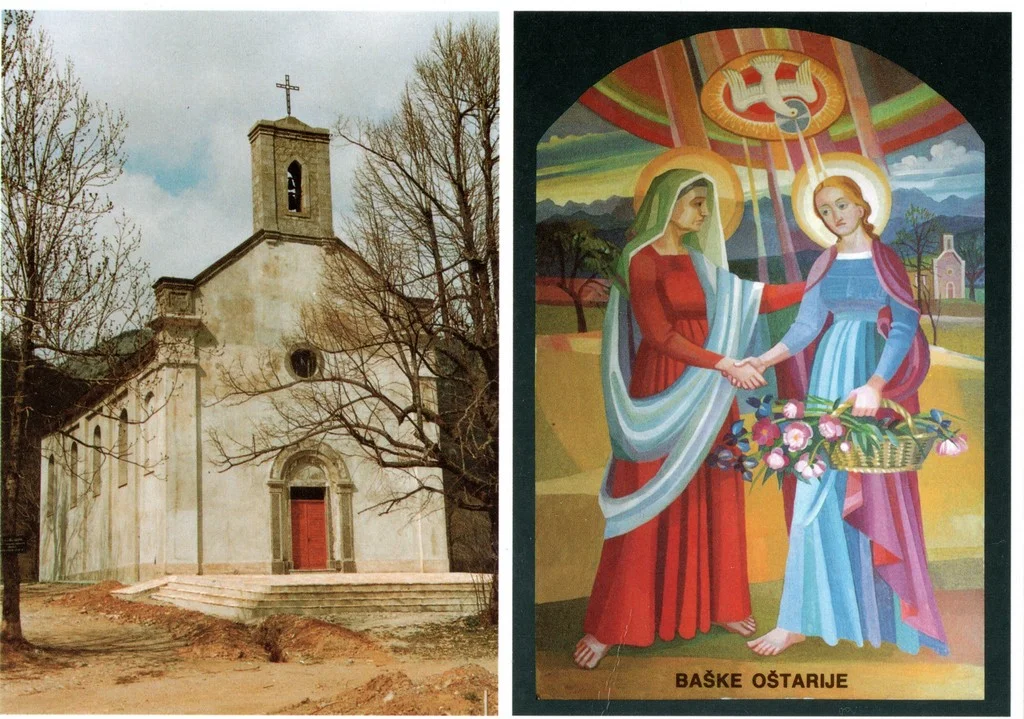
Spiritual and Material Renewal
This depiction unites the external beauty of the restored church in Baške Oštarije with its spiritual essence. On the left, we see the church in its full glory after reconstruction, while the right side shows the altar painting of the "Visitation of Mary to Elizabeth," a work by an academic painter that adorns the interior of the sanctuary.
The meeting between Mary and Elizabeth symbolizes togetherness and hope—exactly what was needed for this church to rise from the ashes of the bombings. Today, it stands as a recognizable symbol of Oštarije, blending historical heritage with the artistic expression of the modern age.
T. Potočnjak Collection
Inv. no. ZTP-OS-1009
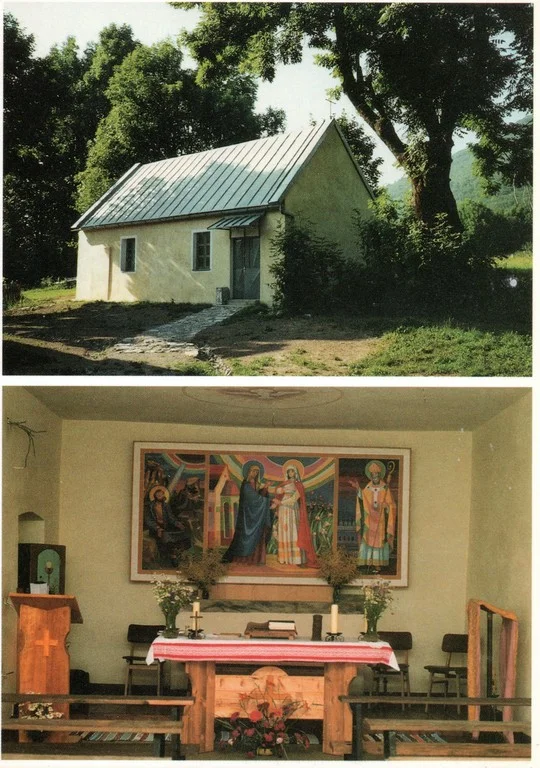
Guardian of Faith through Years of Waiting
Before the grand Church of the Visitation of Mary reopened its doors, the spiritual life of Oštarije took place in this humble chapel. The upper part of the photograph shows its simple exterior blended into the Lika landscape, while the lower part reveals a carefully arranged interior with an altar and triptych.
For years, this building served as a refuge and a place of prayer, proving that a church is not made of walls alone, but of its people. Despite its simplicity, the interior radiates warmth and dignity, preserving tradition until the moment of the main sanctuary's final restoration.
T. Potočnjak Collection
Inv. no. ZTP-OS-1010
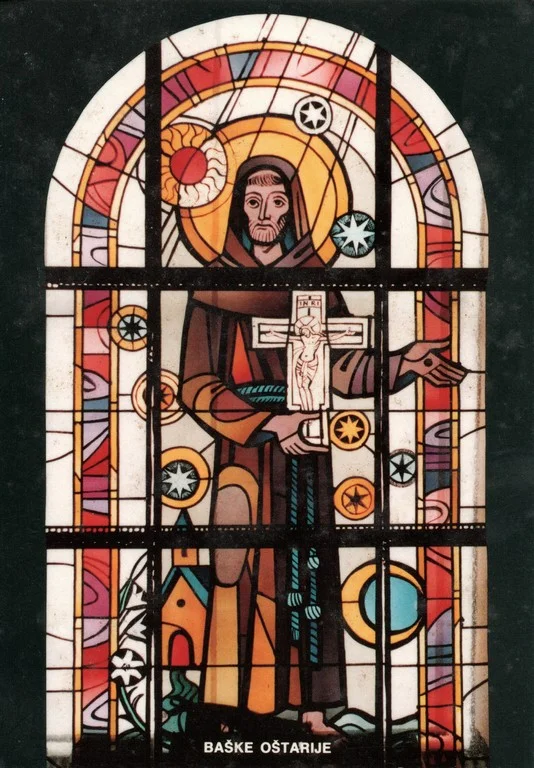
Sacred Motif of Baške Oštarije
Stained-glass window depicting St Francis of Assisi in a Franciscan habit, holding a crucifix.
T. Potočnjak Collection
Inv. no. ZTP-OS-1013
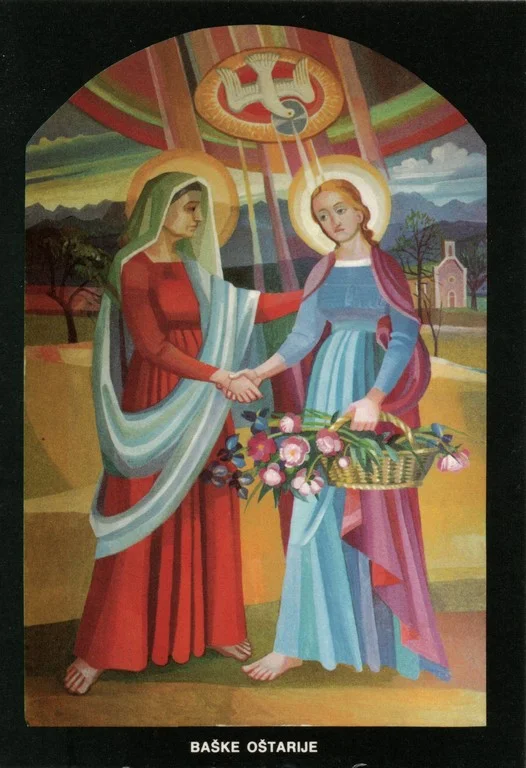
Sacred Motif of Baške Oštarije
Depiction of the Visitation of Mary to Elizabeth, with the church set in the landscape of Baške Oštarije in the background.
T. Potočnjak Collection
Inv. no. ZTP-OS-1015

Sacred Motif of Baške Oštarije
Postcard depicting Christ and a Marian motif associated with Mariazell.
T. Potočnjak Collection
Inv. no. ZTP-OS-1014
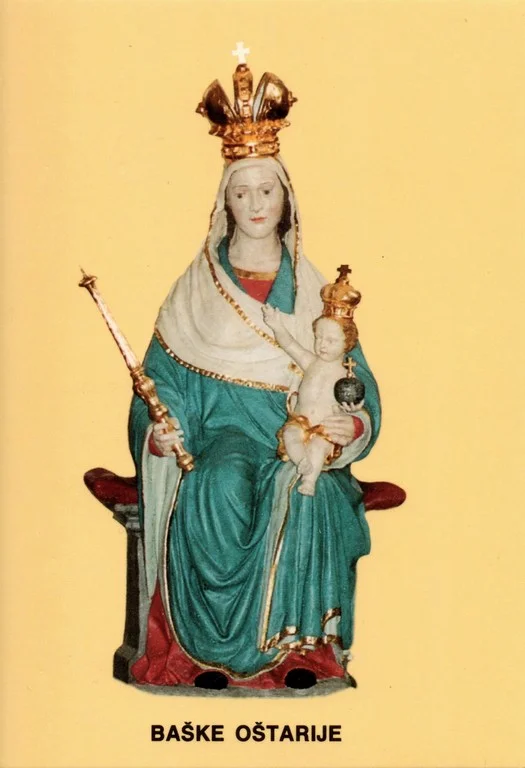
Sacred Motifs of Baške Oštarije
Statue of the Blessed Virgin Mary with the Child Jesus.
T. Potočnjak Collection
Inv. no. ZTP-OS-1016