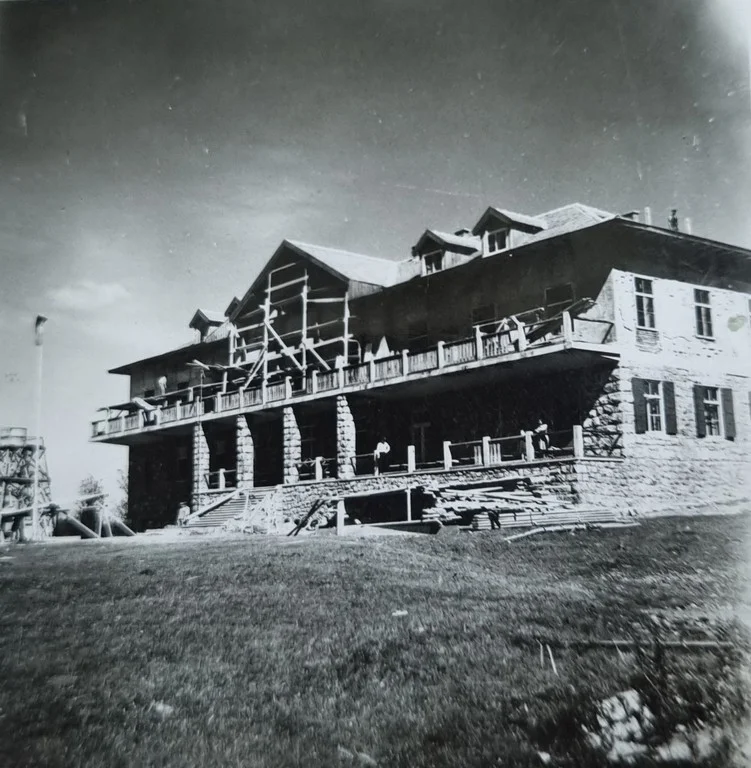
Hotel Velebno – The Birth of a Mountain Legend
This rare photograph captures the historic construction of the first Hotel Velebno in Baške Oštarije, completed in 1940. At a time when its foundations were still being laid and its walls were slowly rising from the stone of Velebit, few could have imagined that it would become one of the region's best-known symbols of mountain tourism. The wooden scaffolding and unfinished balconies reflect the dedication and vision of those who believed in the potential of this mountain landscape, creating a hotel that would welcome travelers and mountaineers for decades to come.
Source: Croatian State Archives (HDA), Zagreb.
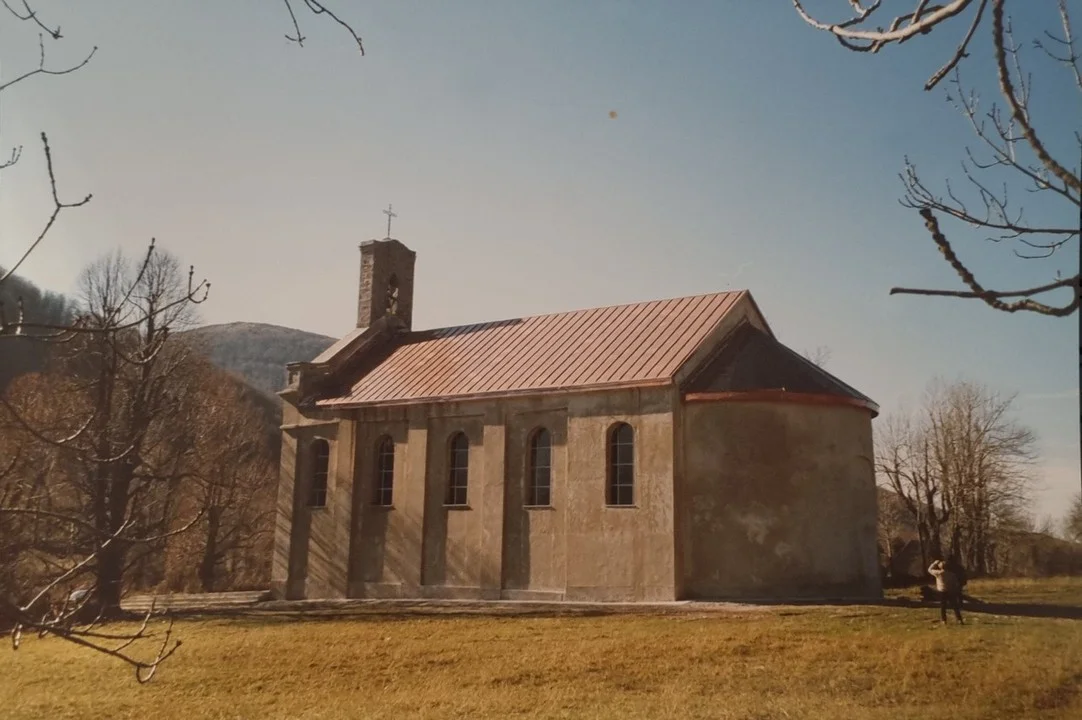
The Church in Baške Oštarije After Restoration, 1990
This photograph, taken in 1990, shows the Church of the Visitation of the Blessed Virgin Mary after the completion of its main restoration works. The extensive restoration began in 1988, and by 1990 the church had once again been roofed and made suitable for worship, preserving one of the most important sacred landmarks of the Velebit region.
Source: Collection of the Capuchin Monastery, Karlobag.
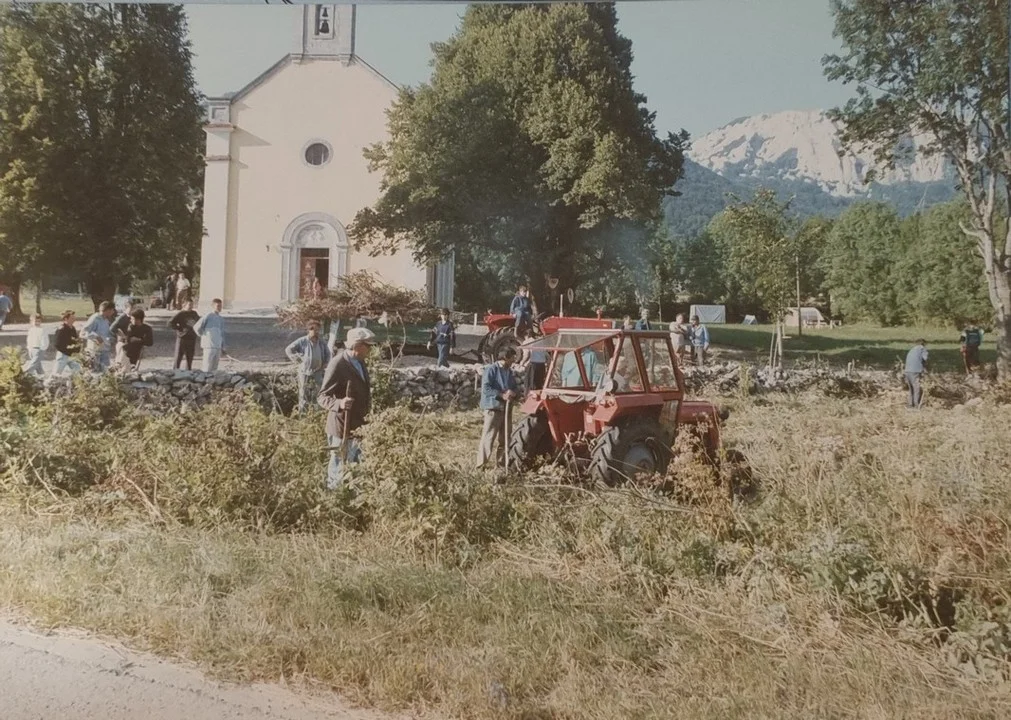
Landscaping Around the Church in Baške Oštarije, 1990
This photograph from 1990 shows local residents and volunteers landscaping the grounds surrounding the Church of the Visitation of the Blessed Virgin Mary after the completion of the main restoration works. Working together, they restored the area around the church, completing the renewal of its immediate surroundings. Rising in the background is the majestic Velebit massif, giving the scene its distinctive mountain setting.
Source: Collection of the Capuchin Monastery, Karlobag.
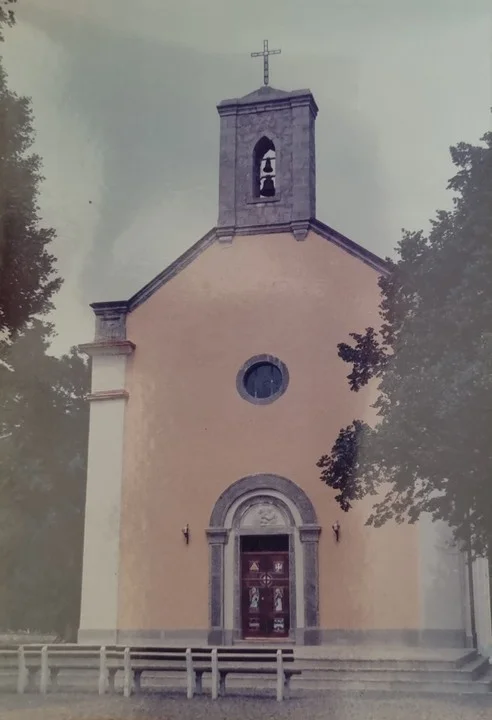
The Church of the Visitation of the Blessed Virgin Mary
This photograph shows the front façade of the Parish Church of the Visitation of the Blessed Virgin Mary in Baške Oštarije, restored in the early 1990s after suffering wartime damage. Its simple architecture, stone portal, and modest bell tower blend harmoniously into the rugged Velebit landscape. For centuries, this church has been a place of prayer, gathering, and rest for travelers crossing the Velebit Mountains between the Lika region and the Croatian coast.
Source: Collection of the Capuchin Monastery, Karlobag.
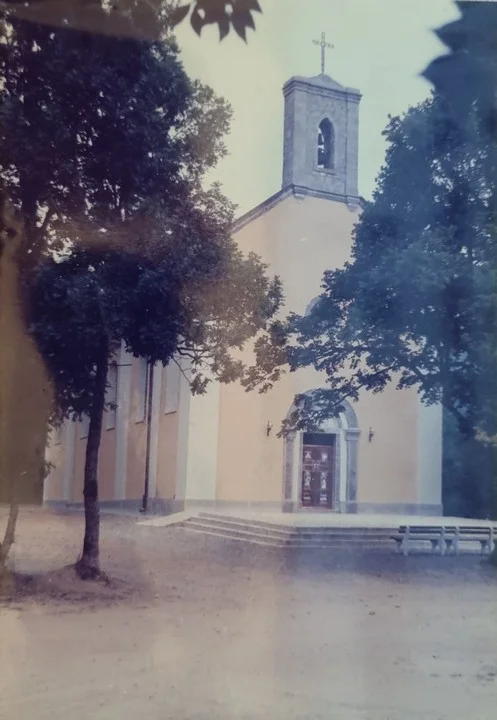
The Church Among the Velebit Trees
This photograph presents the church from a wider perspective, surrounded by mature trees that have shaped the recognizable atmosphere of Baške Oštarije for decades. Standing on the Velebit plateau, the church is one of the region's most important historical and spiritual landmarks and remains an essential destination for hikers, pilgrims, and visitors exploring the mountain landscape.
Source: Collection of the Capuchin Monastery, Karlobag.
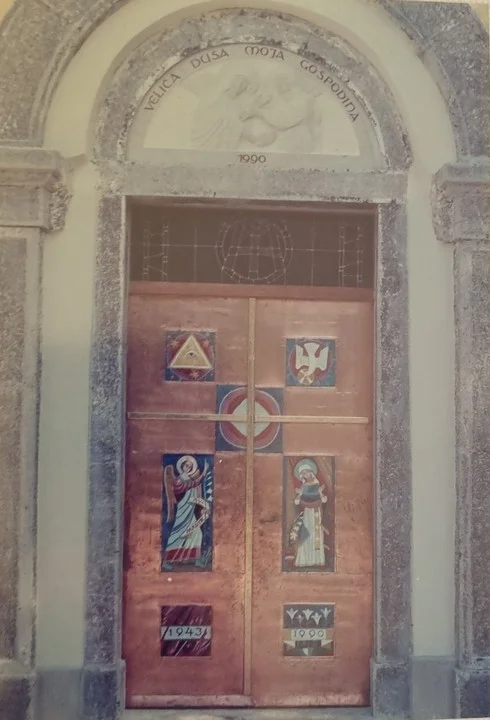
The Church Entrance
The main portal is framed in stone and crowned by a relief of the Blessed Virgin Mary bearing the inscription "My soul magnifies the Lord," taken from Mary's hymn of praise, the Magnificat. The wooden entrance doors are decorated with sacred symbols and artistic motifs commemorating the church's restoration in 1990 and its enduring connection with the faithful of this region.
Source: Collection of the Capuchin Monastery, Karlobag.
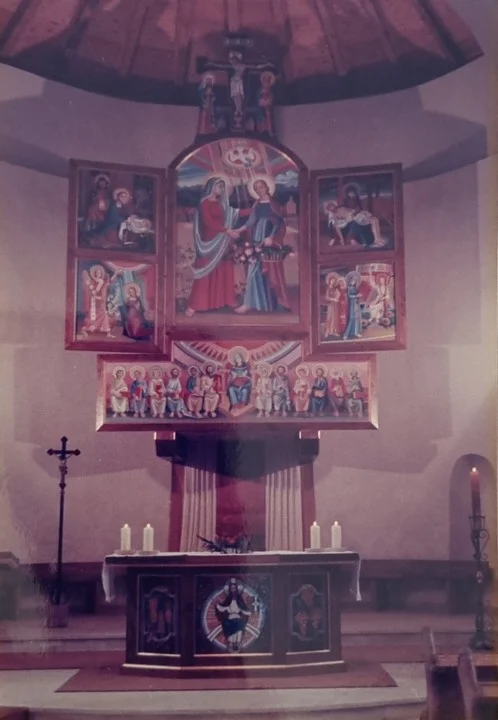
The Main Altar of the Restored Church
The church interior is marked by simplicity and warmth. The central altar is adorned with a modern polyptych dedicated to the Blessed Virgin Mary and the mystery of Christ's salvation, surrounded by depictions of saints and biblical scenes. The combination of traditional sacred architecture and contemporary religious art reflects the church's restoration and the continuation of its centuries-old spiritual heritage.
Source: Collection of the Capuchin Monastery, Karlobag.
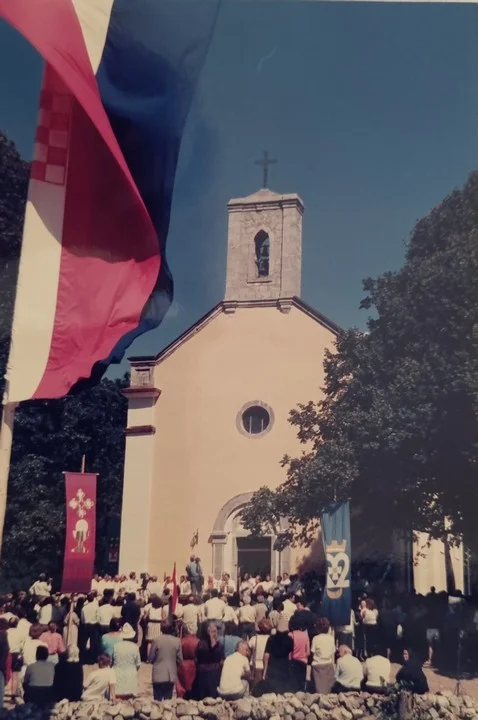
Celebration Following the Church's Restoration
A large gathering of worshippers assembled in front of the church during the solemn celebration held after its restoration in 1990. Croatian flags and church banners reflect the atmosphere of unity and hope that marked the revival of religious life at this well-known Velebit sanctuary. Such celebrations have continued the centuries-old tradition of pilgrimages to Baške Oštarije.
Source: Collection of the Capuchin Monastery, Karlobag.
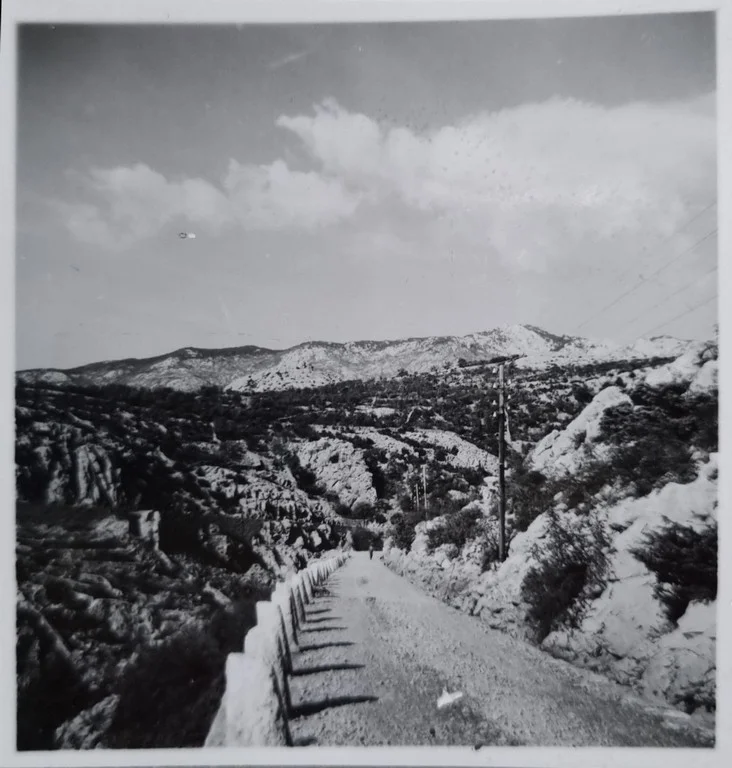
The Road to the Coast – A Journey Through the Velebit Karst
This photograph captures the road connecting Baške Oštarije and Karlobag before it was paved in late 1960. The stone curbs and gravel surface vividly illustrate the challenges once faced by travelers crossing the rugged yet beautiful Velebit landscape. It remains a valuable reminder of a time when the journey from the mountains to the Adriatic coast was a true adventure—far slower and far more demanding than it is today.
Source: Croatian State Archives (HDA), Zagreb.