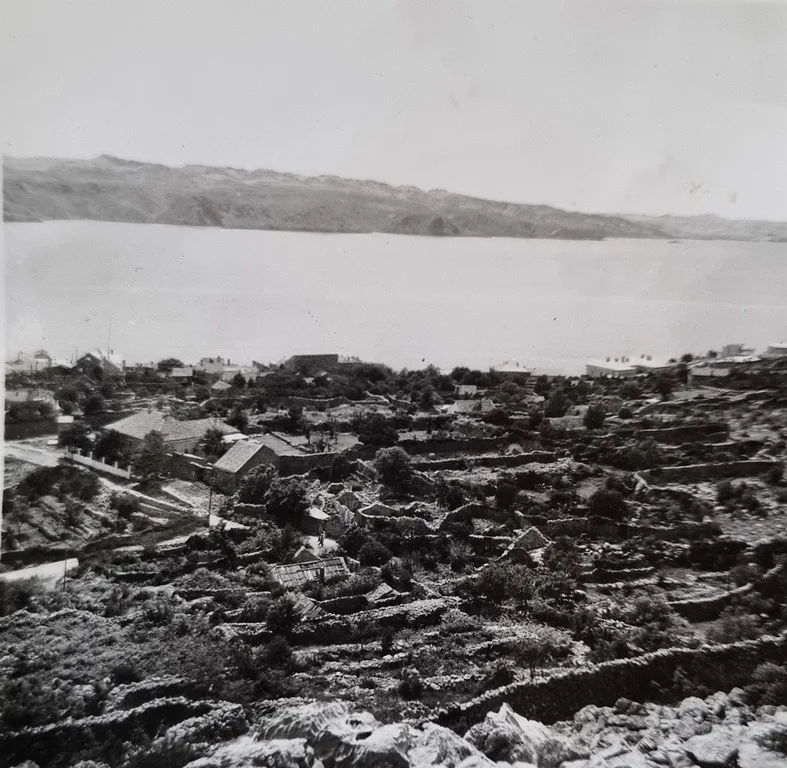
Karlobag from Lahtinac – A Look into the Past of the Old Center
This panoramic view from the Lahtinac hill offers a rare insight into the time when the life of Karlobag was almost entirely concentrated within the old town center itself. The photograph faithfully depicts the town before it expanded toward the outer areas, highlighting the compact structure of stone houses surrounded by dry-stone walls that once shaped every meter of this terrain. In the background, the Velebit Channel spreads out peacefully, creating a contrast between the gentle coast and the rugged hinterland that has shaped the identity and daily life of Karlobag for centuries.
Source: Croatian State Archives (HDA), Zagreb.
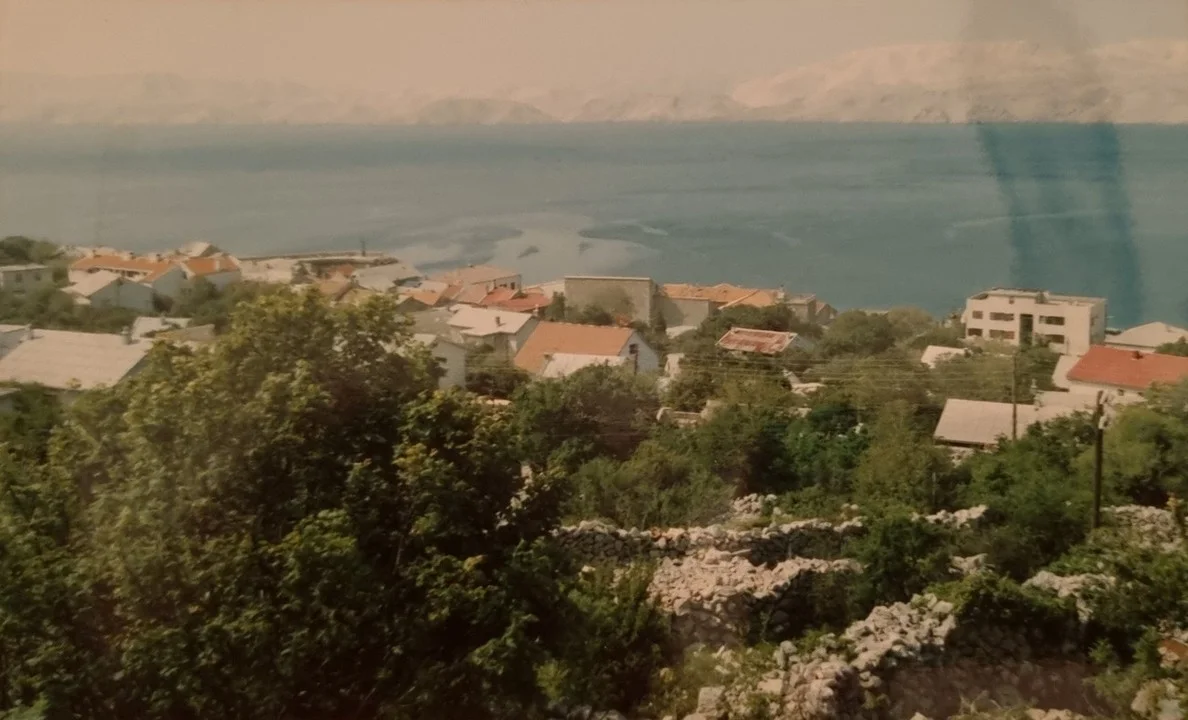
View of Karlobag and the Velebit Channel
This photograph shows Karlobag from the hillside above the town. In the foreground are traditional dry-stone walls and Mediterranean vegetation, while the town's houses, harbour, and the calm waters of the Velebit Channel stretch out beyond. On the horizon, the slopes of the Island of Pag complete the characteristic coastal landscape.
Source: Collection of the Capuchin Monastery, Karlobag.
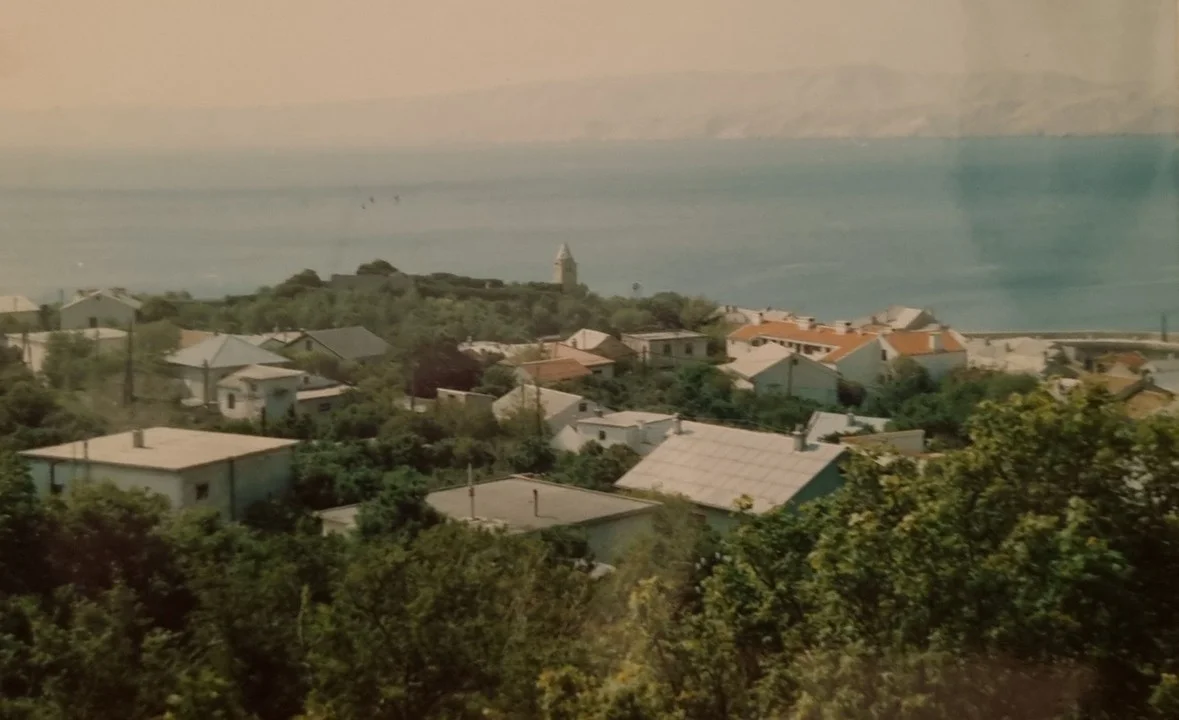
View of Karlobag with the Church of St. Joseph
This photograph presents Karlobag as seen from the slopes above the town. Rising among the houses and surrounding greenery is the bell tower of the Church of St. Joseph and the Capuchin Monastery, one of Karlobag's most important historical and spiritual landmarks. In the background lie the Velebit Channel and the Island of Pag.
Source: Collection of the Capuchin Monastery, Karlobag.
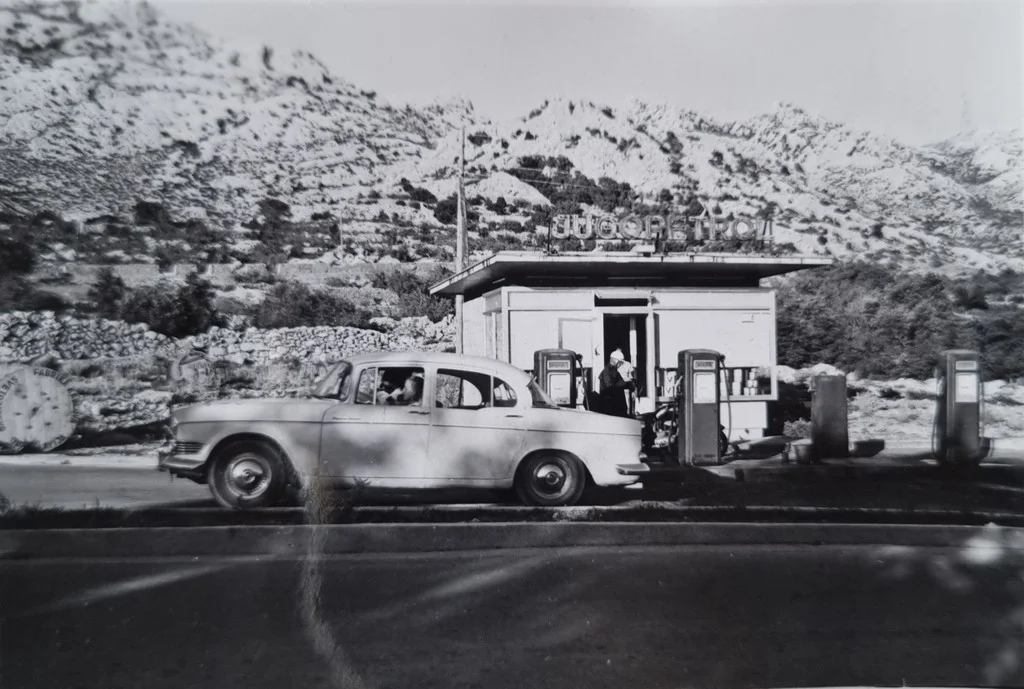
The First Gas Station – Motorization Comes to Karlobag
This photograph documents the opening of the first gas station in Karlobag in 1968, which was built as a key part of a major infrastructure project to modernize the Adriatic Highway and the road toward Gospić. Located in the immediate vicinity of the town center, the station marked the arrival of a new era and the beginning of more intensive motorization of this region. It is interesting that even today, decades later, a modern gas station is located at that same historic spot, continuing to serve travelers on their journey through Karlobag.
Source: Croatian State Archives (HDA), Zagreb.
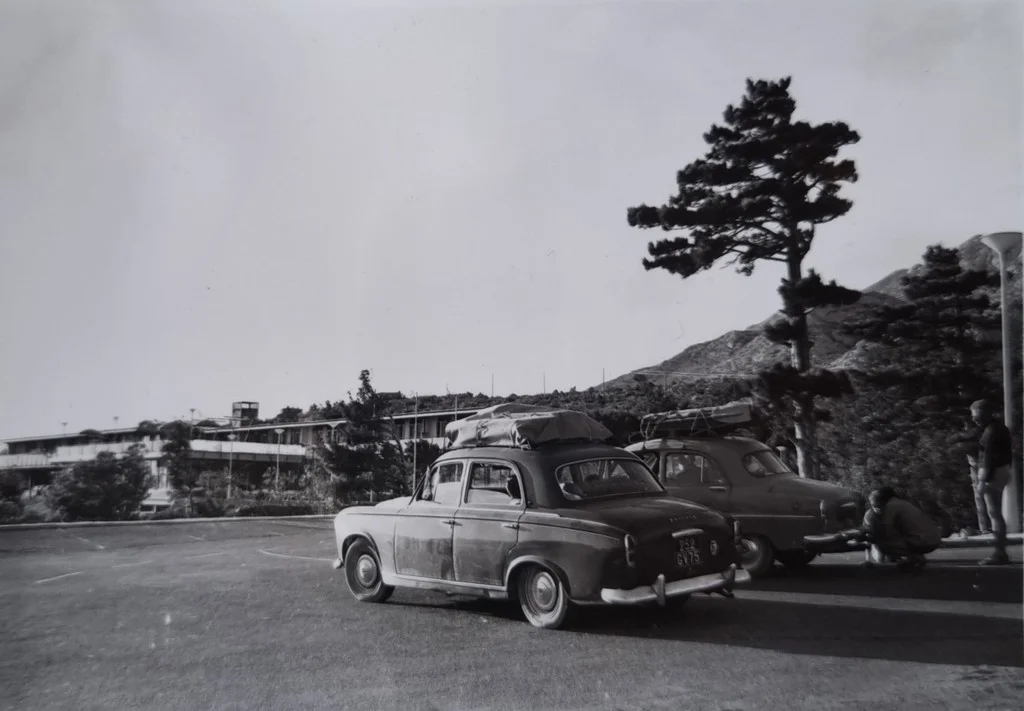
Motel Karlobag – First Stops on the Way South
This photograph captured the parking lot of Motel Karlobag, a building that was located on the same site where the Zagreb Hotel stands today. In the era of the boom in automobile tourism, such motels were essential rest stops for travelers cruising the Adriatic Highway. The sight of loaded cars in the parking lot in front of the motel perfectly captures the atmosphere of the summer migrations of the last century, when every stop in Karlobag was part of an exciting adventure traveling toward the sun and the sea.
Source: Croatian State Archives (HDA), Zagreb.
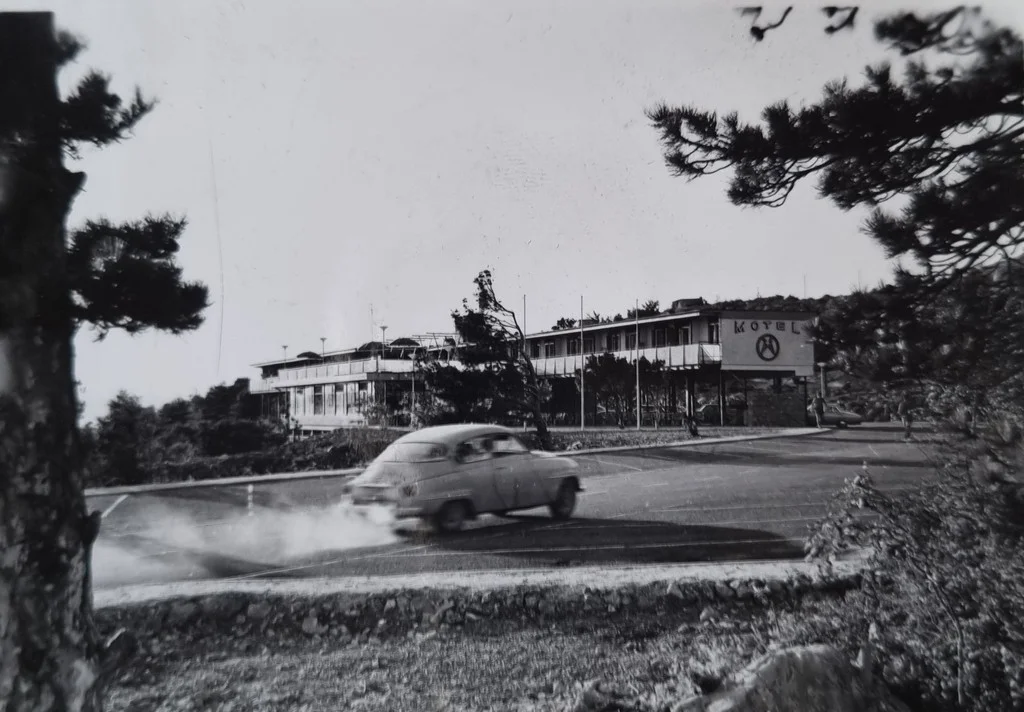
Motel Karlobag – An Icon of the Highway in Motion
From this angle, Motel Karlobag comes to full expression, clearly showing its recognizable architectural style that dominated this part of the coast for decades. As a car speeds past the motel, the image captures the dynamics of life on the Adriatic Highway – the road that connected people, towns, and memories. This frame is not just a document of architecture, but also a reminder of the passage of time and the beauty of traveling in an era when every "Motel" was a promise of rest and hospitality for weary travelers on their way south.
Source: Croatian State Archives (HDA), Zagreb.
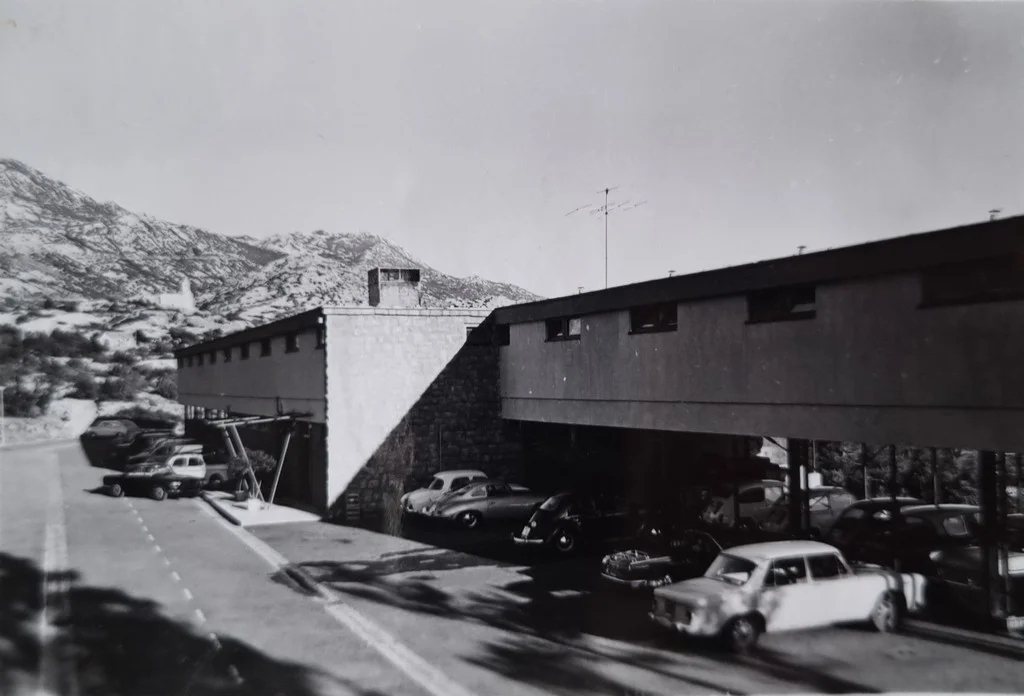
Motel Karlobag – Architecture at the Foot of Velebit
This close-up shot shows the combination of solid stone and modern lines that defined the motel, placing it in a unique dialogue with the Velebit massif in the background. The architectural execution with its recognizable pillars and covered parking area gave an impression of modern comfort, perfectly adapted to the needs of travelers of that time. Looking at this photograph, we feel the spirit of a time when different people, cars, and destinations met here, creating fleeting but unforgettable stories in the heart of Karlobag.
Source: Croatian State Archives (HDA), Zagreb.
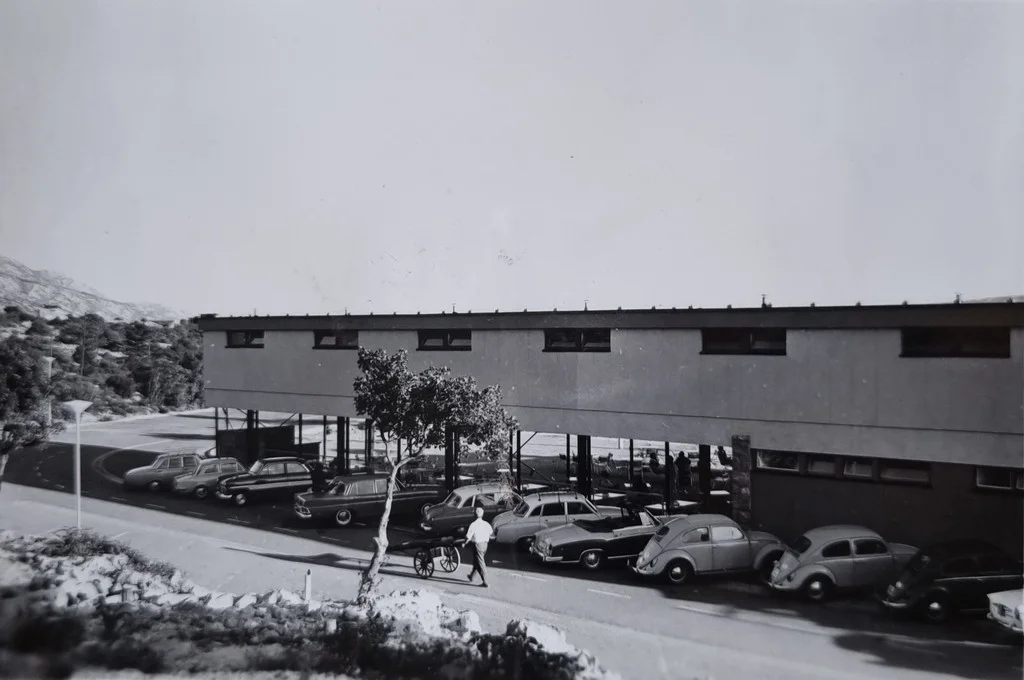
Motel Karlobag – Pulsating Center of Travel
Another view of Motel Karlobag, this time with an emphasis on the vivid daily life that took place in front of the building itself. A series of parked cars, from legendary "Beetles" to elegant sedans of the time, testifies to the popularity of this location as a key stop on the Adriatic Highway. As a passerby walks with a handcart past the full parking lot, the photo captures a moment of a peaceful, summer atmosphere where the modern pace of travel and the relaxed rhythm of life in a small coastal town meet.
Source: Croatian State Archives (HDA), Zagreb.
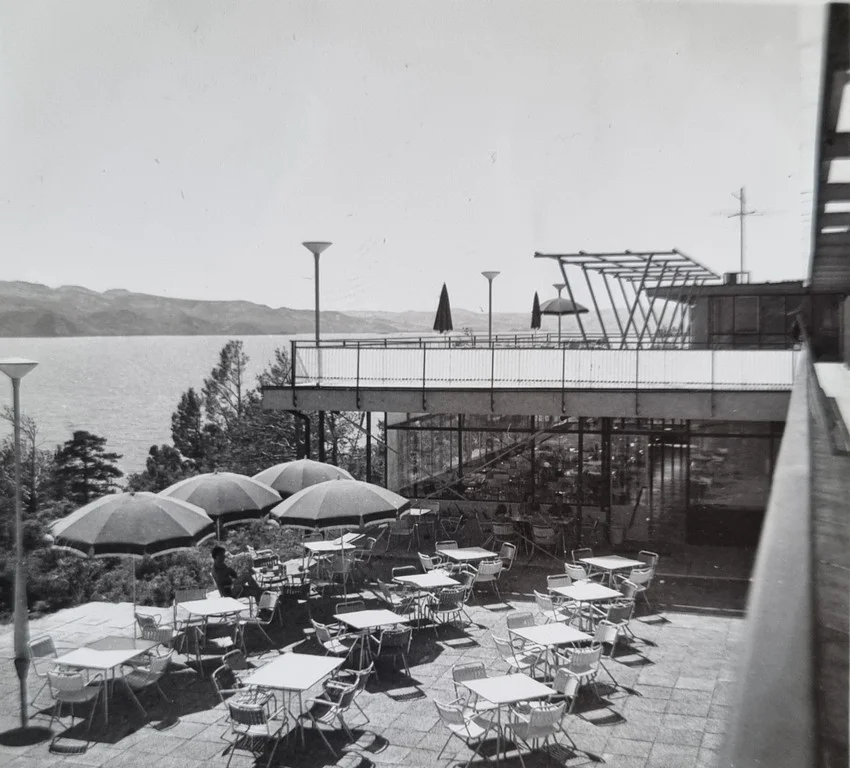
Motel Terrace – An Oasis with a View of the Velebit Channel
This photograph shows the spacious motel terrace, which was surely one of the favorite places for a break for many travelers. With a row of tables with umbrellas and a panoramic view of the calm surface of the Velebit Channel, the terrace offered the perfect ambiance for enjoying summer days. The clean architectural line design of the terrace and the restaurant area in the background emphasizes the modernist spirit of that time, while the empty tables and serene atmosphere invite us to imagine the hum of guests who once created memories here.
Source: Croatian State Archives (HDA), Zagreb.
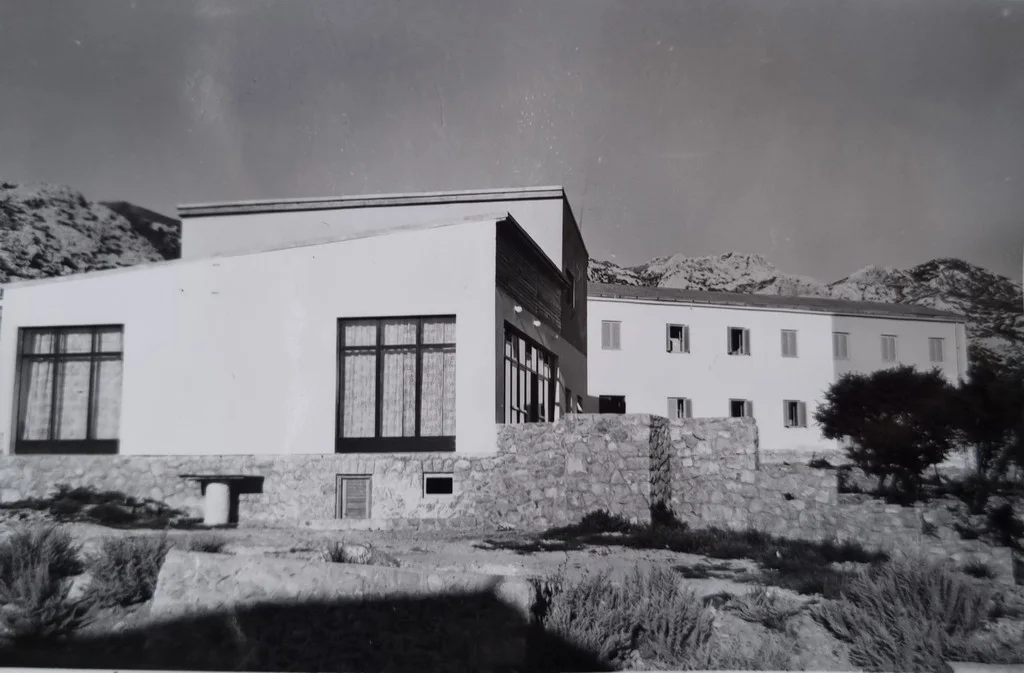
Children's Resort "Vladimir Nazor" – A Place of Unforgettable Summers
The "Vladimir Nazor" children's resort in Karlobag was built in 1960. The institution for the organized vacation of children and youth was formally founded by the City Assembly of Zagreb in 1962. The architecture of the building, with its simple lines and stone foundations that blend harmoniously into the rugged environment at the foot of Velebit, was the scene of numerous children's games, friendships, and carefree summer days. The facility is remembered as a symbol of children's tourism in Karlobag, preserving in its rooms the spirit of a time when collective resorts were the heart of a child's summer.
Source: Croatian State Archives (HDA), Zagreb.
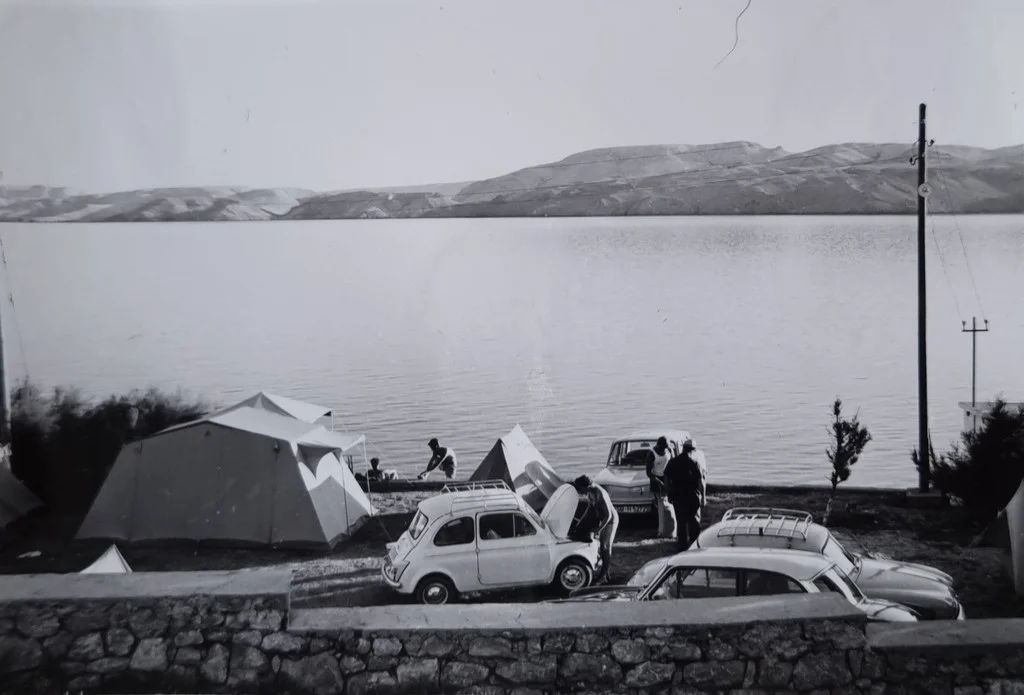
Camp "Travela" – The Beginnings of Mass Tourism
Camp "Travela" was built and opened in the early 1970s, more precisely around 1971/1972, during the great wave of development of mass tourism on the Adriatic coast. The photograph faithfully depicts the atmosphere of those early years: tents, loaded cars, and direct contact with the sea symbolized the then-ideal of freedom and the simplicity of camping. This camp became an essential destination for many travelers who sought an authentic Mediterranean experience in Karlobag, nestled in the beauty of the Velebit landscape.
Source: Croatian State Archives (HDA), Zagreb.
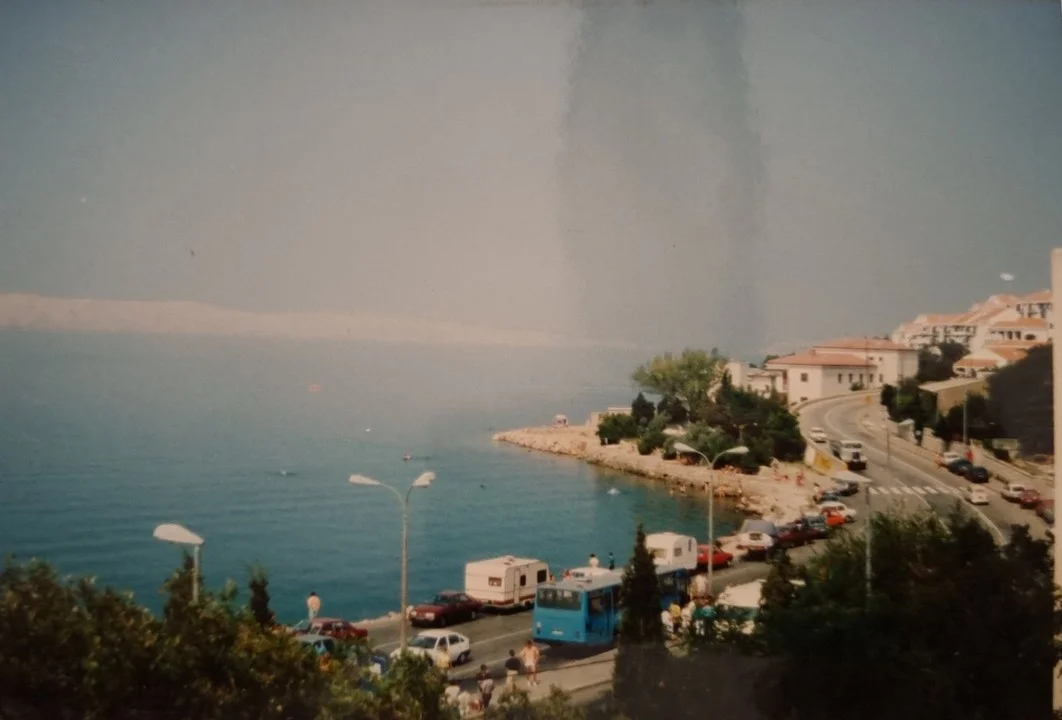
View of Travela Camp and the Karlobag Waterfront
This photograph presents a view of the coastal area of Karlobag with Travela Camp, which during the second half of the twentieth century became one of the town's best-known tourist destinations. The campsite was located alongside the coastal road, beach, and promenade, while the Velebit Channel and the Island of Pag form the scenic backdrop. For decades, Travela Camp welcomed both domestic and international visitors and played an important role in the development of tourism in Karlobag.
Source: Collection of the Capuchin Monastery, Karlobag.
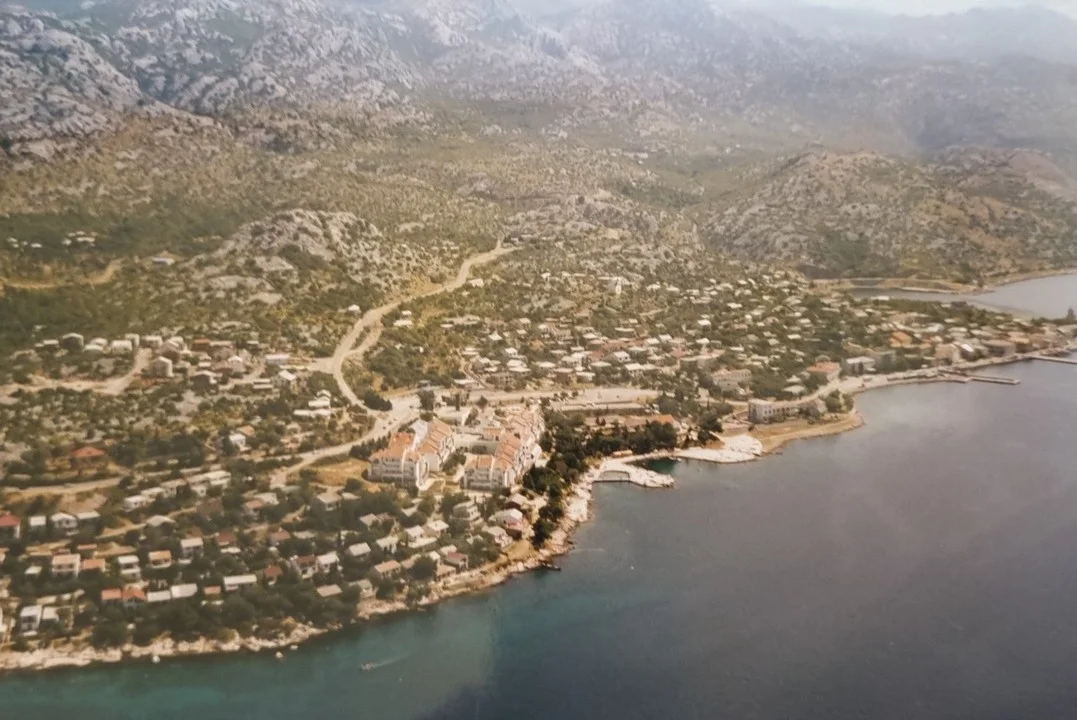
Aerial View of Karlobag, 1984
This aerial photograph, taken in 1984, shows Karlobag nestled between Mount Velebit and the Adriatic Sea. At the center lies the town's historic core with the Capuchin Monastery and the Church of St. Charles Borromeo, while the waterfront promenade and harbor stretch along the coastline. The rugged slopes of Mount Velebit dominate the background, shaping both the landscape and the historical development of Karlobag, and providing a unique view of the town in the mid-1980s.
Source: Collection of the Capuchin Monastery, Karlobag.
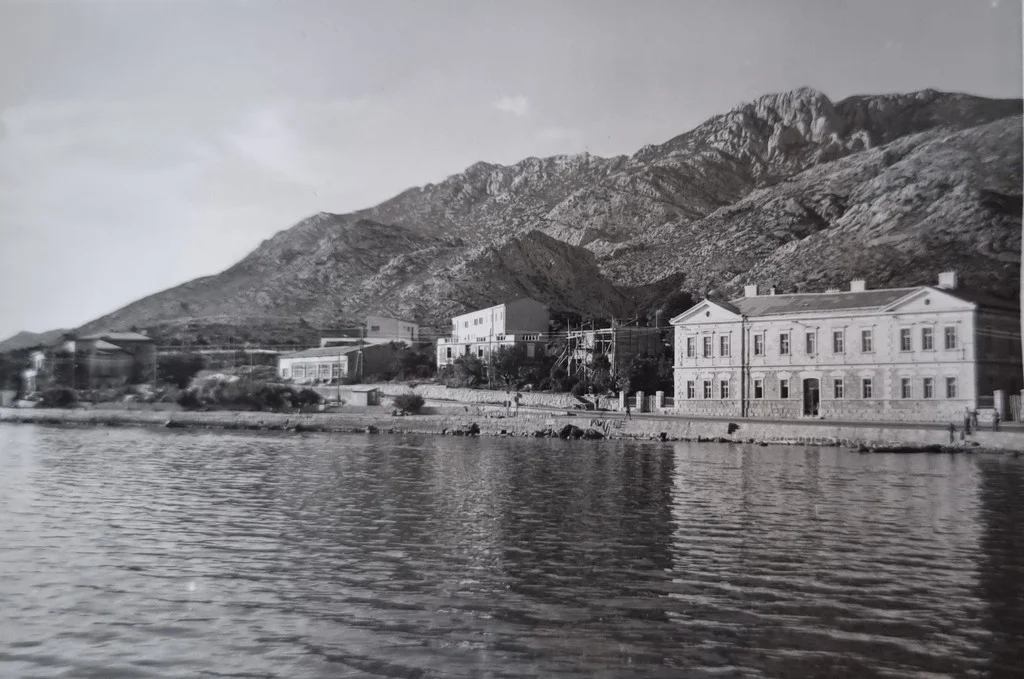
The School Building – Education by the Sea
This panoramic view from the sea reveals the recognizable school building in Karlobag, which dominates the coastal belt with its classic architectural style. Situated at the foot of the dramatic slopes of Velebit, the school was not just a center of education, but also one of the town's most recognizable visual symbols. The photograph captures a moment of peaceful coexistence between historic construction and harsh nature, reminding us of the importance of this institution in the daily life of Karlobag generations.
Source: Croatian State Archives (HDA), Zagreb.
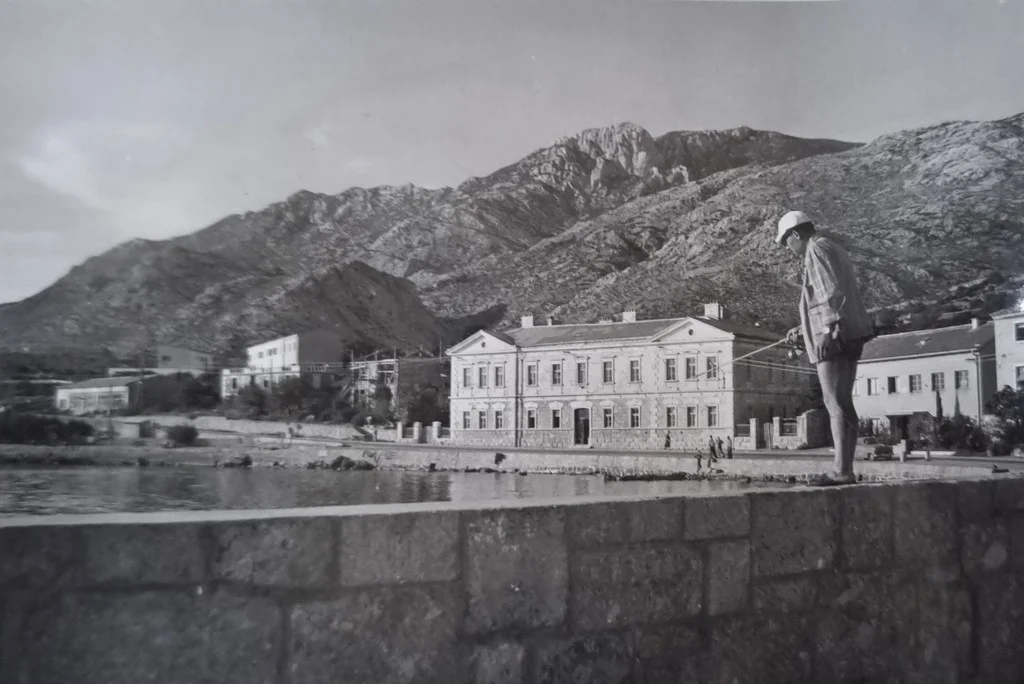
The School and the Peaceful Coast – Daily Life in Karlobag
While the school building stands proudly in the background as a silent witness to time, the foreground captures a relaxed moment of fishing on the coast. This photograph perfectly captures the contrast between the educational institution and the calm, slower rhythm of life by the sea, which has always been the core of Karlobag's identity. The combination of Velebit slopes, the classic architecture of the school, and the almost meditative act of fishing creates an image of a place where history and daily life intertwine in perfect harmony.
Source: Croatian State Archives (HDA), Zagreb.
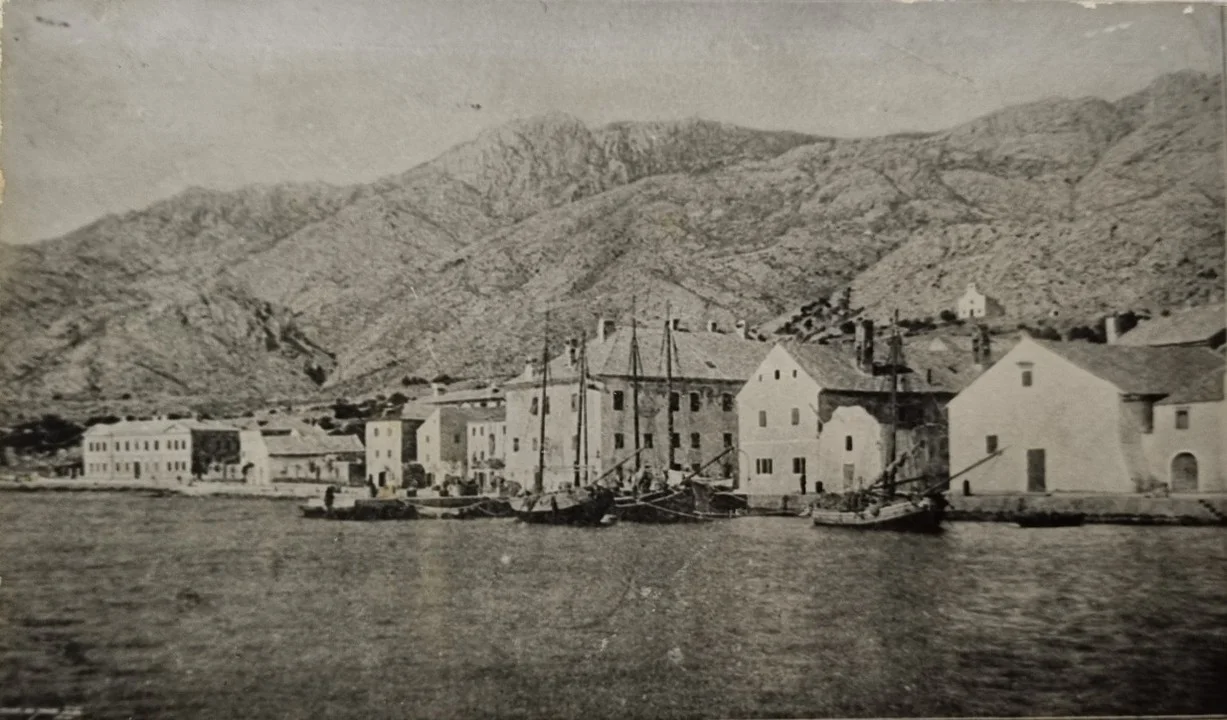
View of Karlobag from the Sea, circa 1910
This photograph shows Karlobag as seen from the sea around 1910. In the foreground are several sailing vessels moored along the waterfront, while the stone houses of the old town stretch behind them. Rising above the town is the Church of St. Charles Borromeo, with the rugged slopes of Mount Velebit forming the distinctive backdrop that has characterized Karlobag for centuries. The photograph faithfully captures the appearance of the town at a time when maritime trade and coastal shipping played an important role in everyday life.
Source: Collection of the Capuchin Monastery, Karlobag.
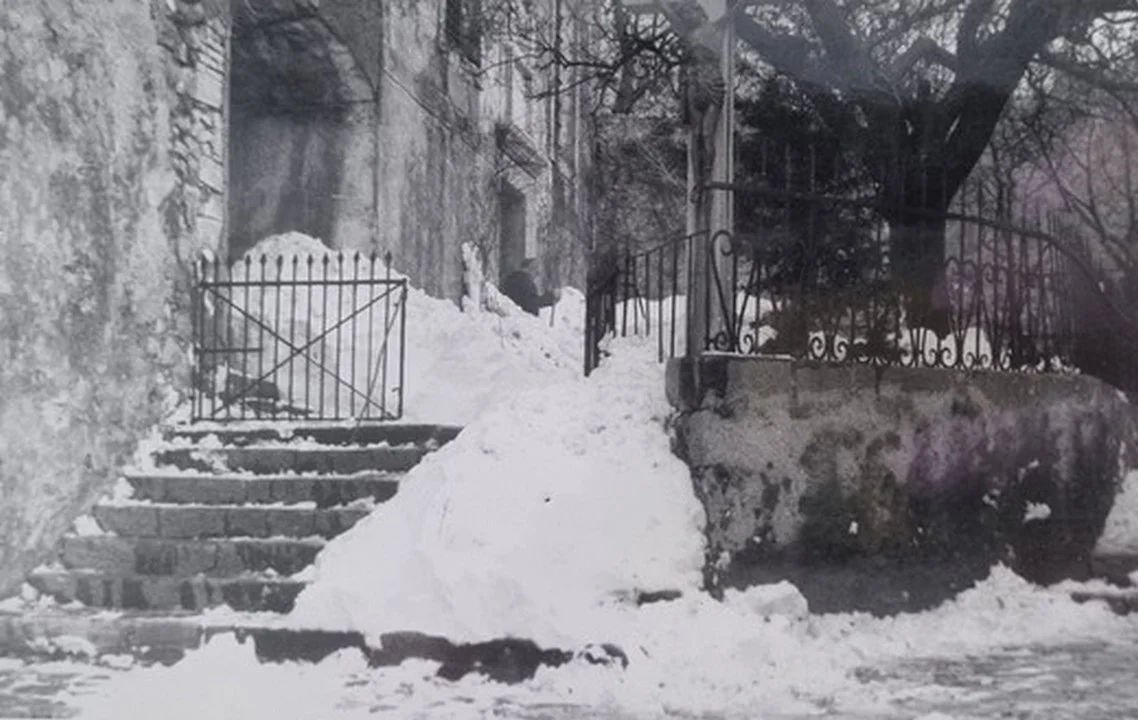
Entrance to the Courtyard of the Capuchin Monastery and the Church of St. Joseph, 1971
Taken in 1971, this photograph shows the entrance to the courtyard of the Capuchin Monastery and the Church of St. Joseph in Karlobag during winter. The stone steps, wrought-iron gate, and monastery courtyard are covered in snow, while the old tree standing in front of the church enhances the peaceful atmosphere of this historic complex. The image preserves the appearance of the monastery before later restoration works and provides a valuable record of its more recent history.
Source: Collection of the Capuchin Monastery, Karlobag.
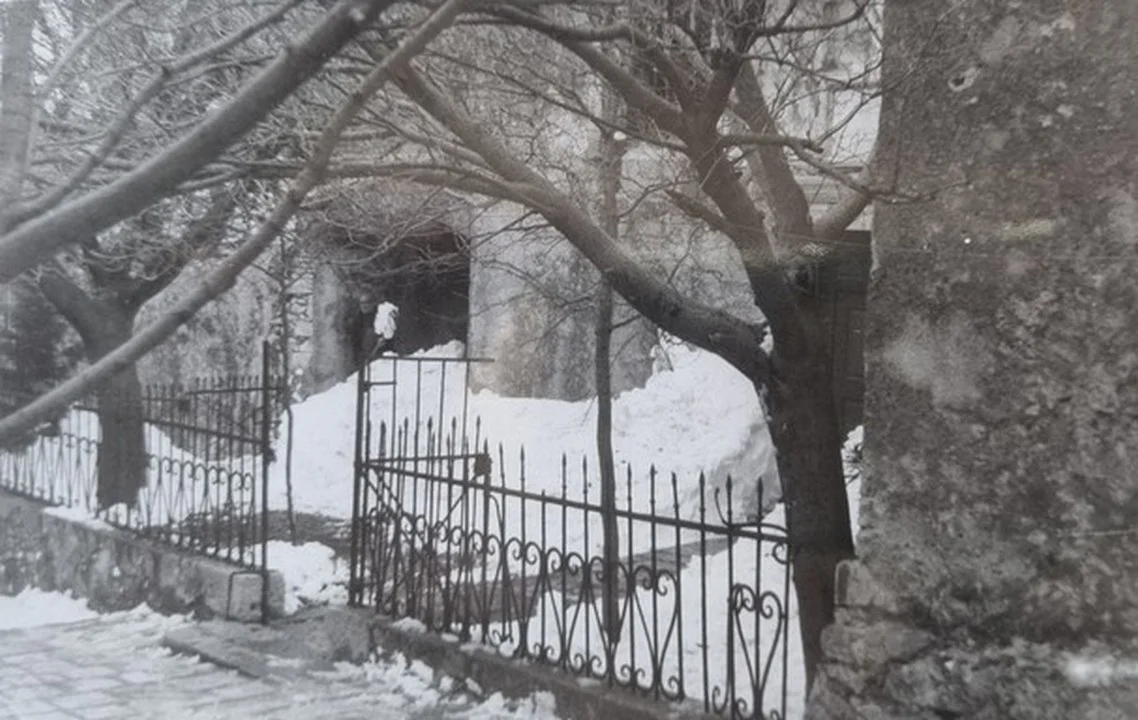
Fence and Entrance to the Courtyard of the Capuchin Monastery and the Church of St. Joseph, 1971
Taken in 1971, this photograph shows the stone wall and wrought-iron gate leading into the courtyard of the Capuchin Monastery and the Church of St. Joseph in Karlobag. Snow covers the courtyard and the approach to the church, while the large trees create the characteristic atmosphere of the monastery garden. This winter scene preserves the appearance of the monastery entrance before later restoration work and serves as a valuable record of its more recent history.
Source: Collection of the Capuchin Monastery, Karlobag.
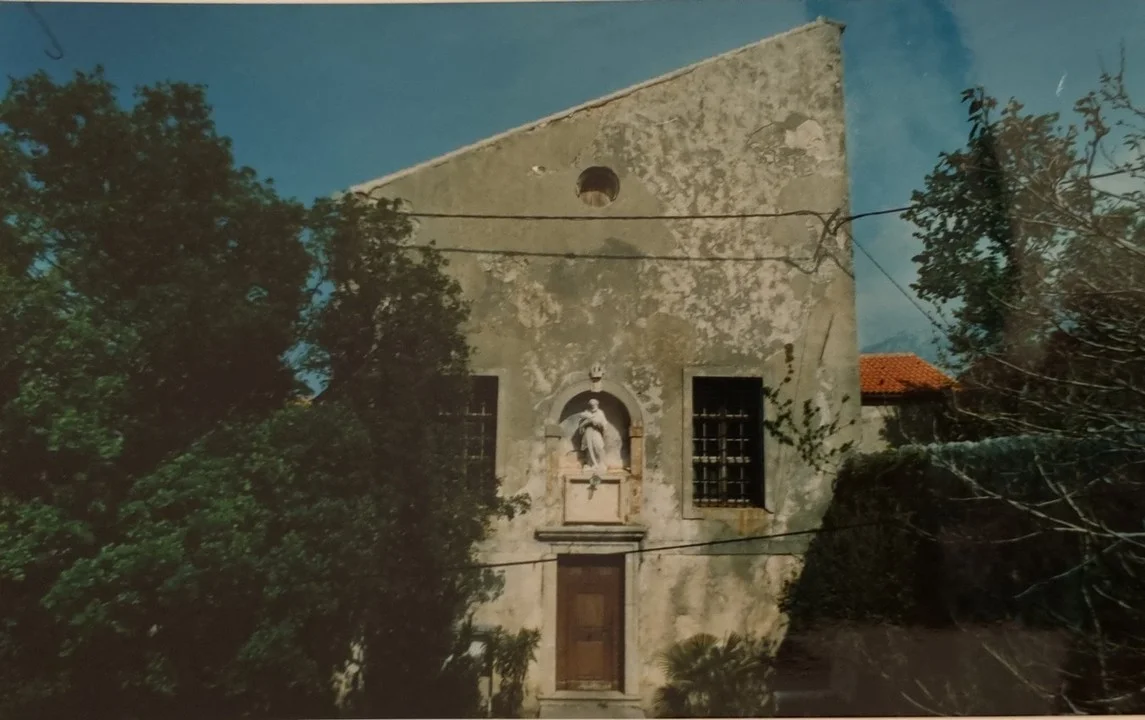
Façade of St. Joseph's Church in Karlobag
This photograph shows the main façade of St. Joseph's Church, located beside the Capuchin Monastery in Karlobag. Above the main entrance stands a statue of St. Joseph holding the Child Jesus, while the simple façade reflects the modest architectural style characteristic of Capuchin monasteries. For centuries, the church and monastery have remained among the most important spiritual and cultural landmarks of Karlobag.
Source: Collection of the Capuchin Monastery, Karlobag.
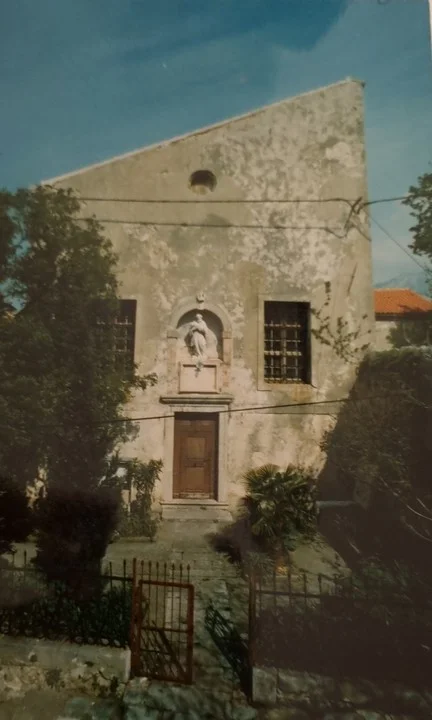
Entrance to St. Joseph's Church
This photograph shows the approach to the main entrance of St. Joseph's Church, featuring stone steps and an iron fence that separates the monastery courtyard from the street. Above the portal stands a statue of St. Joseph with the Child Jesus, while the greenery of the monastery garden enhances the peaceful atmosphere of this historic sacred complex.
Source: Collection of the Capuchin Monastery, Karlobag.
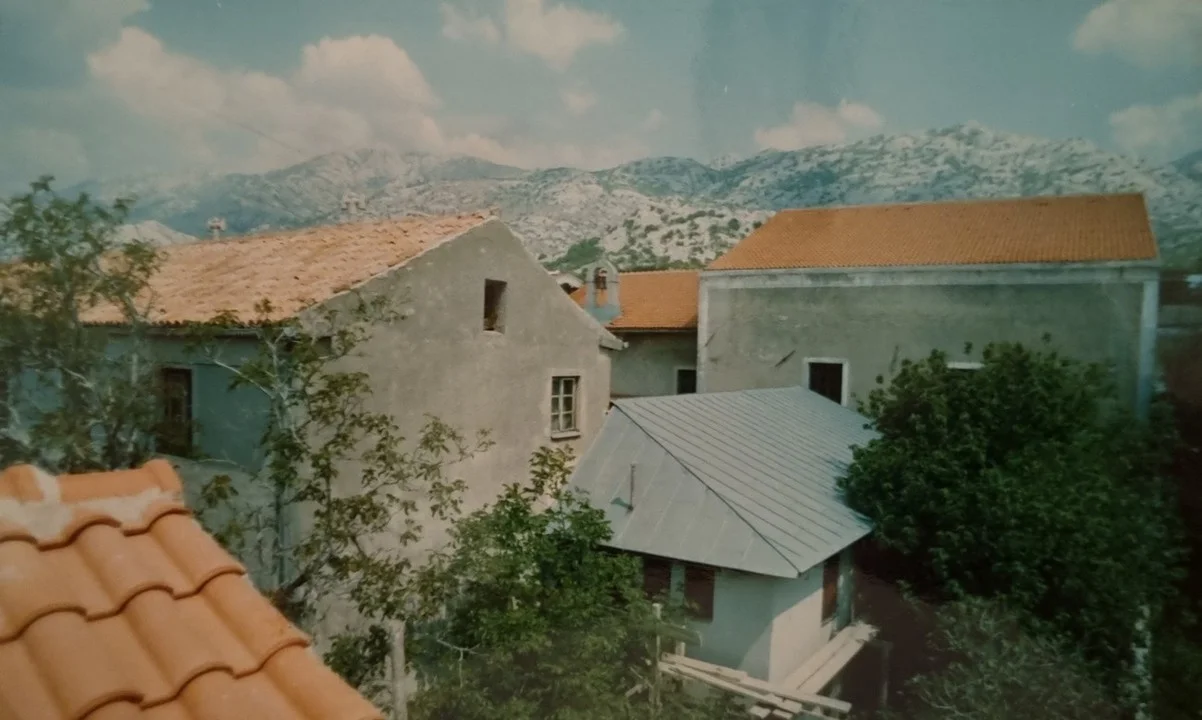
View from the Monastery toward Mount Velebit
This photograph shows part of the Capuchin Monastery and the surrounding houses of Karlobag with a view toward the slopes of Mount Velebit. The stone houses with their characteristic rooftops, the monastery buildings, and the rugged mountain landscape reflect the harmonious relationship between the town and its natural surroundings, a defining feature of Karlobag.
Source: Collection of the Capuchin Monastery, Karlobag.
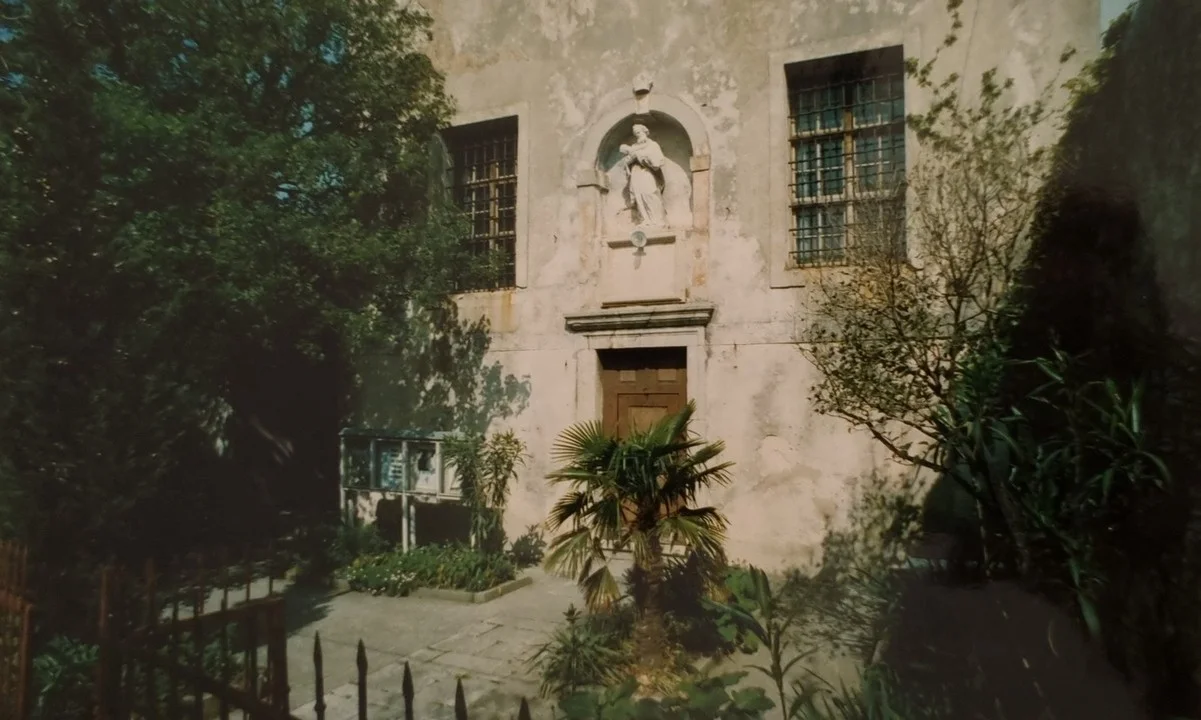
Courtyard of St. Joseph's Church and the Capuchin Monastery
This photograph shows the inner courtyard in front of the main entrance to St. Joseph's Church. Beside the stone portal, crowned by a statue of St. Joseph holding the Child Jesus, lies a small monastery garden adorned with ornamental plants. Its harmony and tranquillity reflect the centuries-long presence of the Capuchins in Karlobag. To this day, the courtyard remains a place of gathering, prayer, and everyday monastic life.
Source: Collection of the Capuchin Monastery, Karlobag.
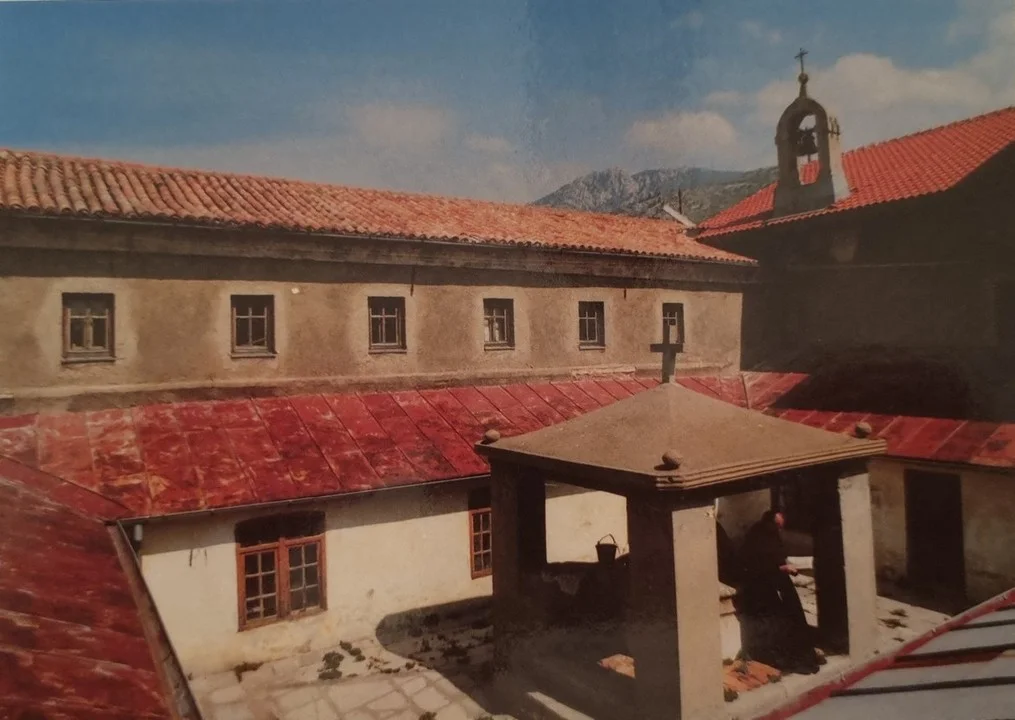
Inner Courtyard of the Capuchin Monastery
This photograph shows the inner courtyard of the Capuchin Monastery in Karlobag. At its centre stands the monastery's stone cistern and well, which for centuries provided a reliable source of water for the community. Surrounding the courtyard are the monastery buildings and service rooms, while the bell tower of the Church of St. Joseph and the slopes of Mount Velebit rise above the rooftops in the background. The image faithfully preserves the appearance of the monastery complex before later restoration work.
Source: Collection of the Capuchin Monastery, Karlobag.
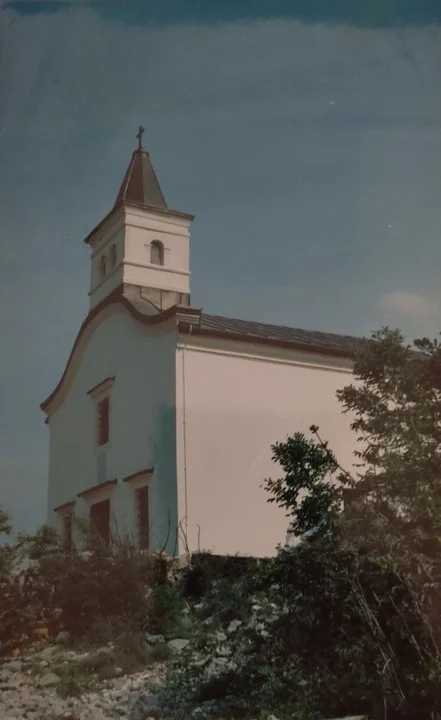
Chapel of Our Lady of the Seven Sorrows – Calvary
This photograph presents a side view of the Chapel of Our Lady of the Seven Sorrows, better known among the people of Karlobag as Calvary. Standing on a hill above the town, the chapel has for centuries served as an important place of pilgrimage and devotion, marking the traditional destination of local Stations of the Cross processions. Its elevated position makes it one of Karlobag's most recognizable sacred landmarks.
Source: Collection of the Capuchin Monastery, Karlobag.
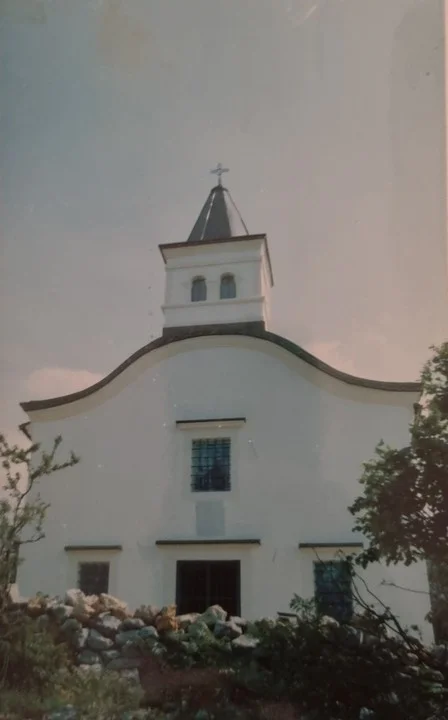
Front Façade of the Chapel of Our Lady of the Seven Sorrows
This photograph shows the front façade of the Chapel of Our Lady of the Seven Sorrows, popularly known as Calvary. Its simple Baroque design, graceful curved gable, and distinctive bell-cote reflect the modest yet dignified character of this historic sanctuary. For generations, the chapel has held a special place in the religious life and traditions of the people of Karlobag.
Source: Collection of the Capuchin Monastery, Karlobag.
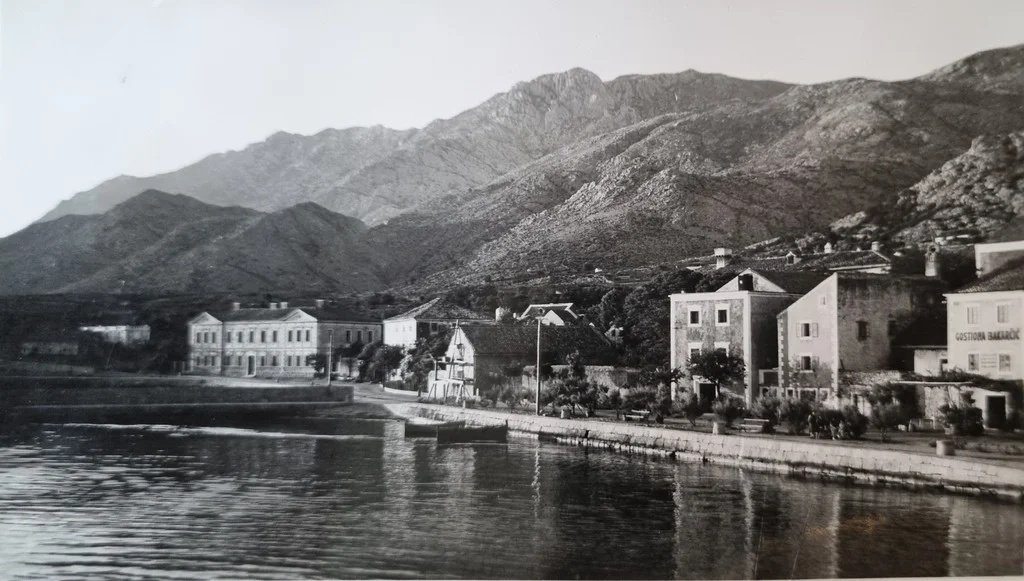
The Waterfront and "Bakarčić" Inn – A Meeting Place
This panoramic view captures the quiet Karlobag waterfront and the recognizable building of the "Bakarčić" inn, which was an essential gathering place for the local population and travelers. Framed by the magnificent Velebit massif looming over the town, this scene captures the authentic spirit of a seaside town where coffee, conversation, and the scent of the sea merged into daily life. The inn was a symbol of hospitality for years, and this shot preserves the memory of times when life along the waterfront pulsed at a slower, more relaxed rhythm.
Source: Croatian State Archives (HDA), Zagreb.
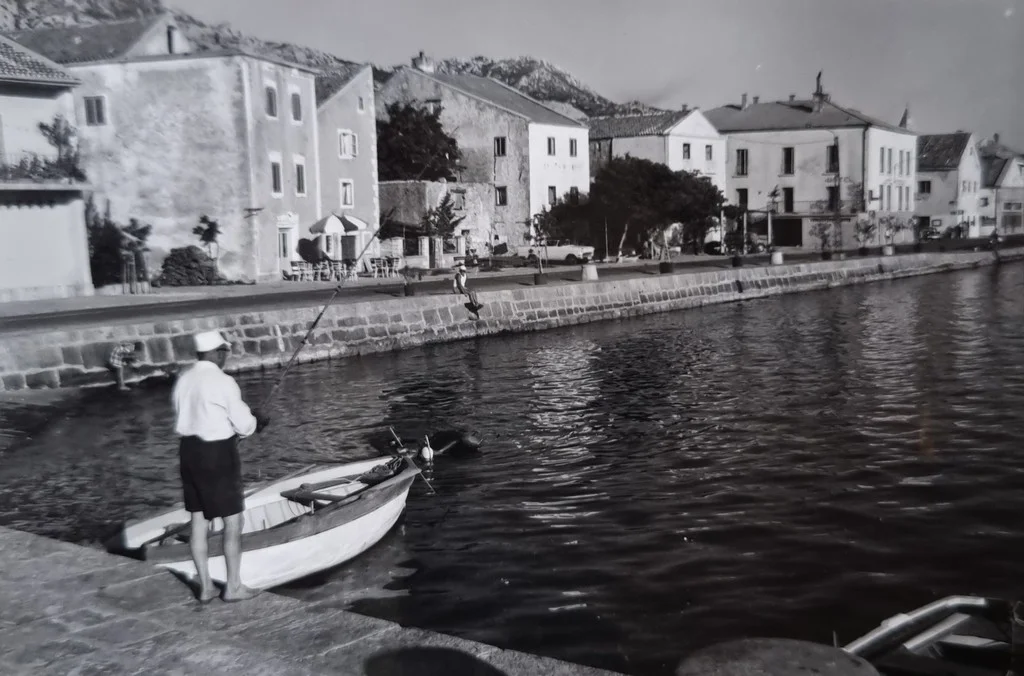
The Coast of Karlobag – Time to be Enjoyed
This shot displays the quiet Karlobag coast, where the historical architecture of the town meets the blue of the sea. The scene of a fisherman silently preparing his boat, while recognizable stone houses are outlined in the background, exudes the authentic coastal peace that was a hallmark of life in this region. The photograph is a beautiful reminder of the slower rhythm of daily life, where values such as patience, connection with the sea, and simplicity of living were preserved and nurtured day by day.
Source: Croatian State Archives (HDA), Zagreb.
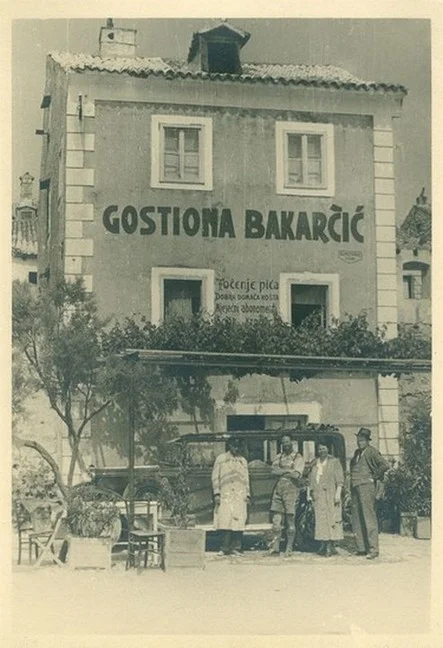
The “Bakarčić” Inn – Life on the Karlobag Waterfront
This photograph shows the “Bakarčić” Inn, one of the best-known social gathering places on the Karlobag waterfront. Standing beneath the vine-covered pergola in front of the building are the owners, staff, or guests, while the parked automobile reflects a period when road transport was gradually transforming everyday life in the town. Alongside the large inn sign on the façade, advertisements can be seen promoting drinks, homemade cuisine, and monthly meal subscriptions. This rare photograph captures not only the appearance of the inn but also a glimpse of everyday life in historic Karlobag—a meeting place for local residents, travellers, and visitors alike.
Source: Croatian State Archives (HDA), Zagreb.
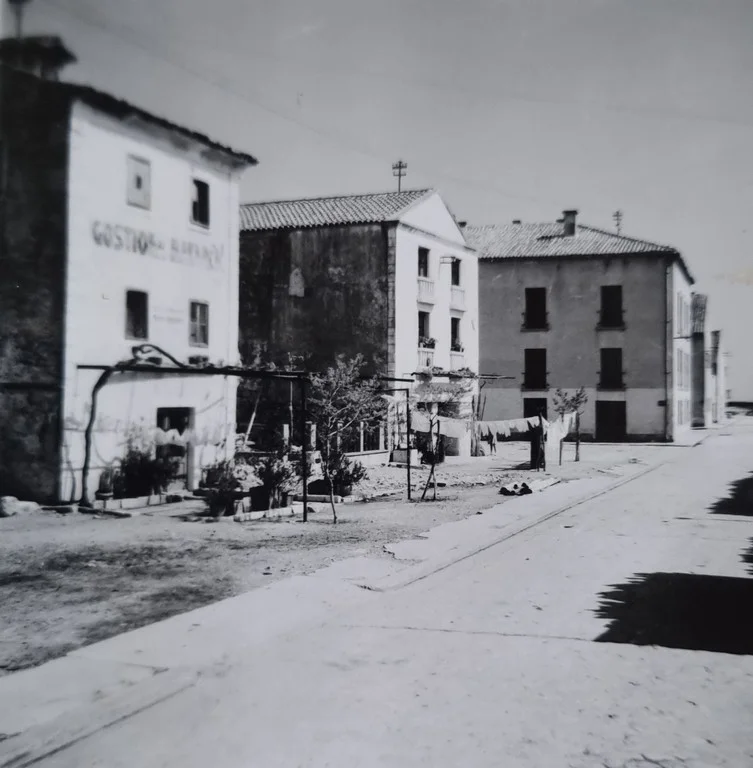
From "Bakarčić" Inn to "Velinac" Hotel – A Historical Lineage
This photograph captures a precious piece of Karlobag's architectural history. On the left, the recognizable "Bakarčić" inn stands out, while in the right part of the frame is the former "Jadran" hotel, a building known today as the "Velinac" hotel. This row of buildings testifies to the town's long tourist tradition, where old spaces for refreshment and lodging were transformed over time to keep pace with the development of modern tourism, while maintaining their recognizable identity in the heart of Karlobag.
Source: Croatian State Archives (HDA), Zagreb.
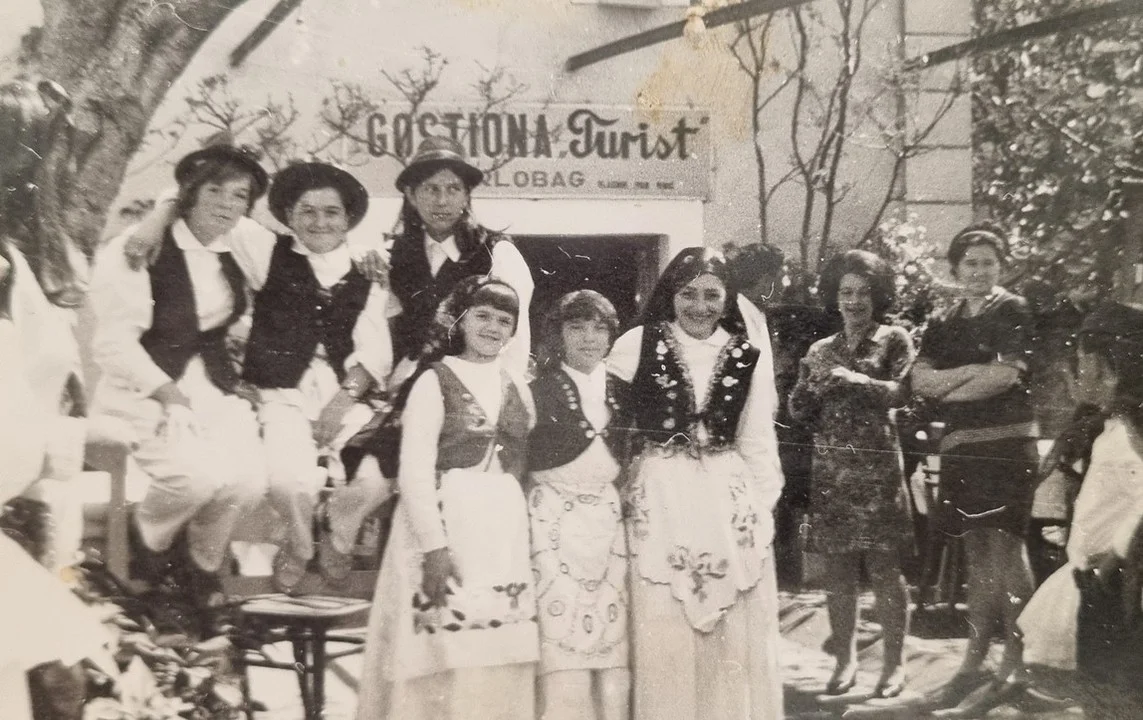
In Front of the Tourist Inn in Karlobag
This photograph shows a group of local residents and children dressed in traditional folk costumes standing in front of the Tourist Inn in Karlobag. The inn was located in the Bakarčić family house, later owned by the Minić family, and throughout the 20th century it served as one of the town's well-known gathering places for both residents and visitors. The photograph provides a valuable record of Karlobag's social life and the preservation of local traditions through traditional dress and community gatherings.
Source: Collection of the Capuchin Monastery, Karlobag.
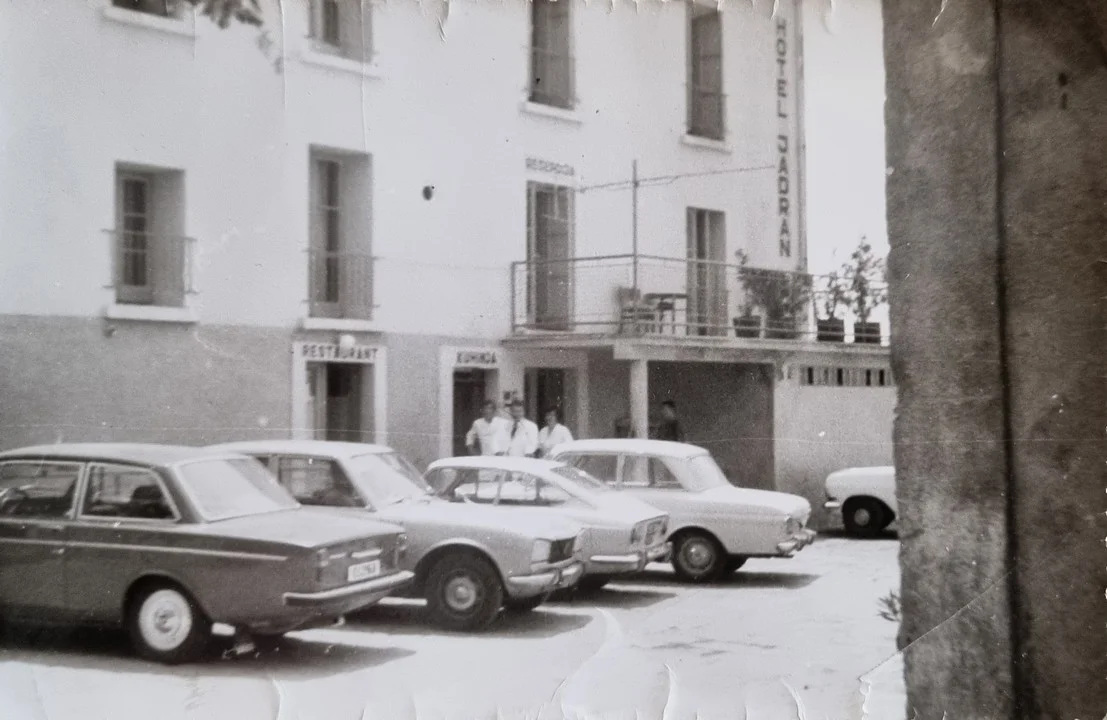
Hotel Jadran – A Place of Meeting and Relaxation
A view of the parking lot behind Hotel Jadran in Karlobag, in front of which older cars from the last century are parked. In the background, the hotel facade is visible with the signs "RESTRURANT", "KUHINJA", and "HOTEL JADRAN", along with staff gathered at the entrance, capturing the spirit and vibrancy of the town's tourism past through this vintage photograph.
Source: Private Collection of Ana and Marijana Popović.
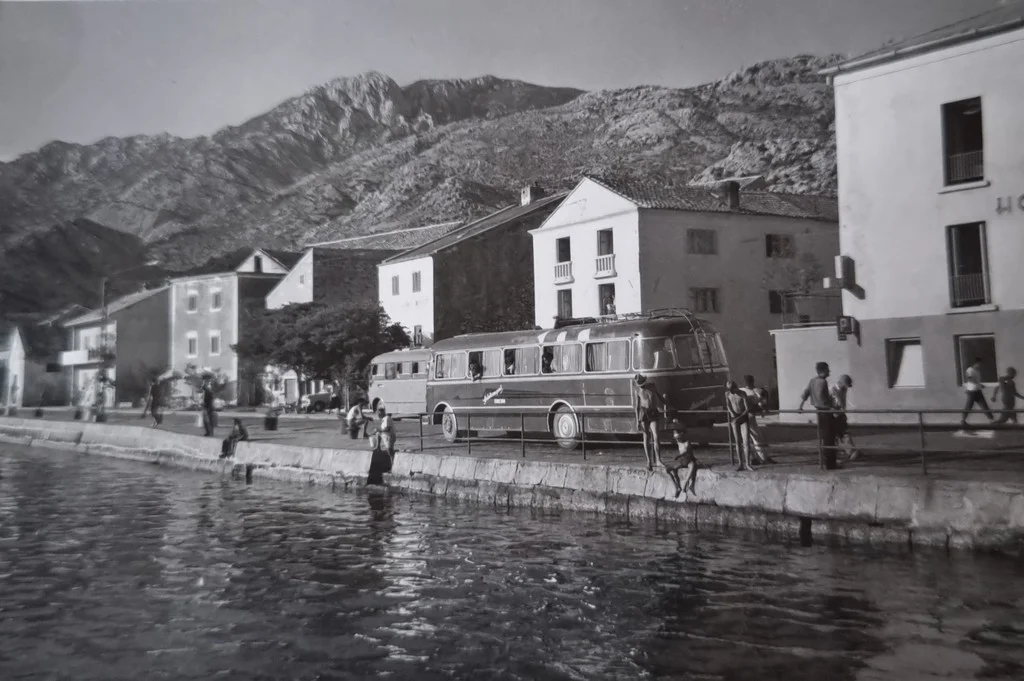
A Break on the Highway – Buses in front of the "Jadran" Hotel
This photograph faithfully captures an authentic scene from traveling the Adriatic Highway, where buses in front of the "Jadran" hotel in Karlobag served as a key stop for a rest. After a long and exhausting drive on the winding road, travelers found a moment of refreshment and rest here by the sea. The sight of people sitting on the edge of the waterfront and watching the sea while waiting to continue their journey symbolizes the spirit of tourism at the time, in which such stops were much more than a simple break—they were places of meeting, conversation, and essential enjoyment of the beauties of the Croatian coast.
Source: Croatian State Archives (HDA), Zagreb.
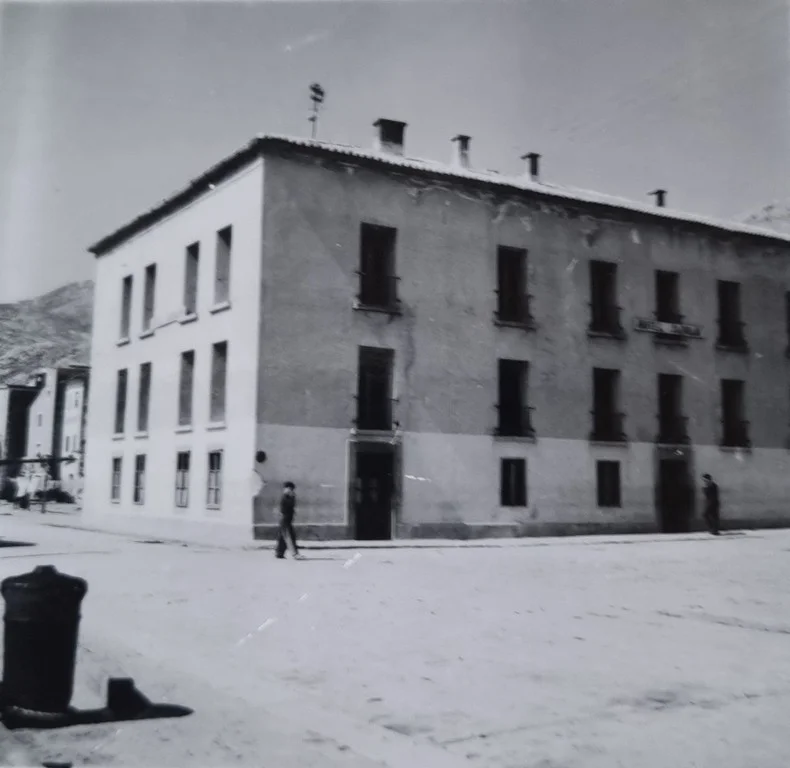
"Jadran" Hotel – Former Center of Karlobag Tourism
This photograph shows the "Jadran" hotel, a building that was a recognizable symbol of Karlobag's tourist offer for years. With its architecture and position, the hotel represented an important destination for numerous visitors who sought accommodation in the heart of the town. Although times have changed, this building remains an important part of the historical skyline of Karlobag, preserving memories of numerous guests and summer days spent here.
Source: Croatian State Archives (HDA), Zagreb.
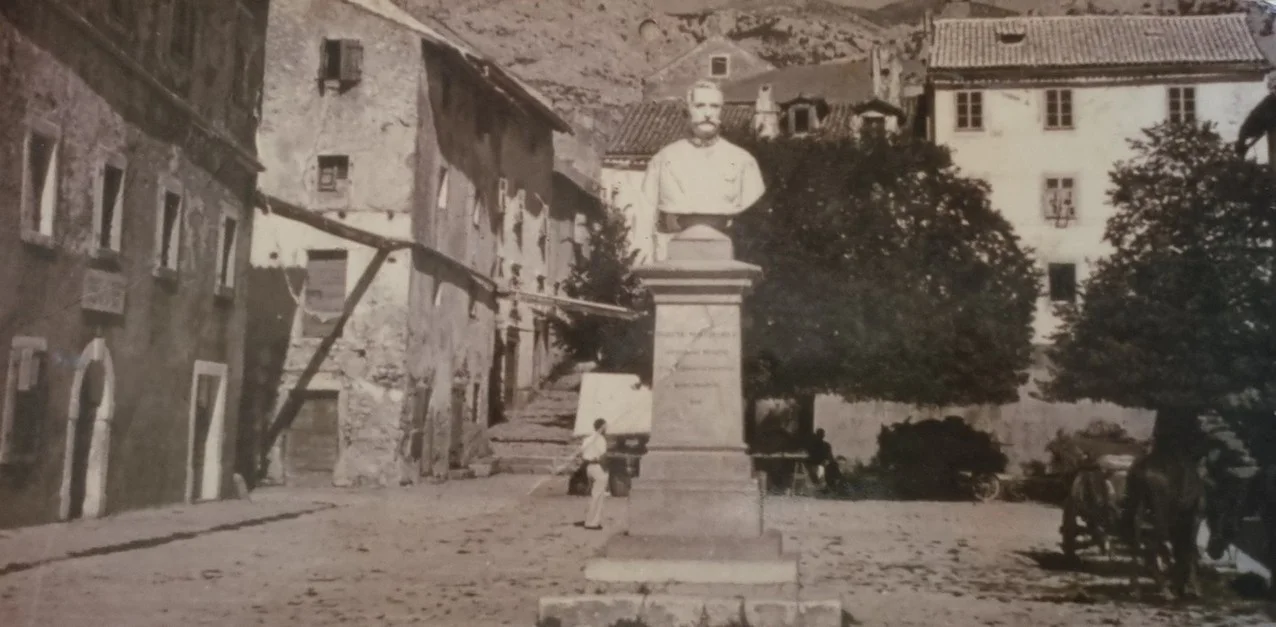
The Monument to General Anton Molinari in the Main Square
This photograph, taken during the 1930s, shows Karlobag's main square with the monument to General Anton Molinari standing at its centre. The bust, created by the renowned Croatian sculptor Ivan Rendić, was unveiled in 1878 in honour of General Anton Molinari, whose influence, vision, and personal dedication gave a strong impetus to the town's development. Around the monument, everyday life unfolded in the town—the cobbled square, surrounding houses, pedestrians, and horse-drawn carts create an authentic glimpse of Karlobag between the two World Wars, when the square remained the heart of public and social life.
Source: Croatian State Archives (HDA), Zagreb.
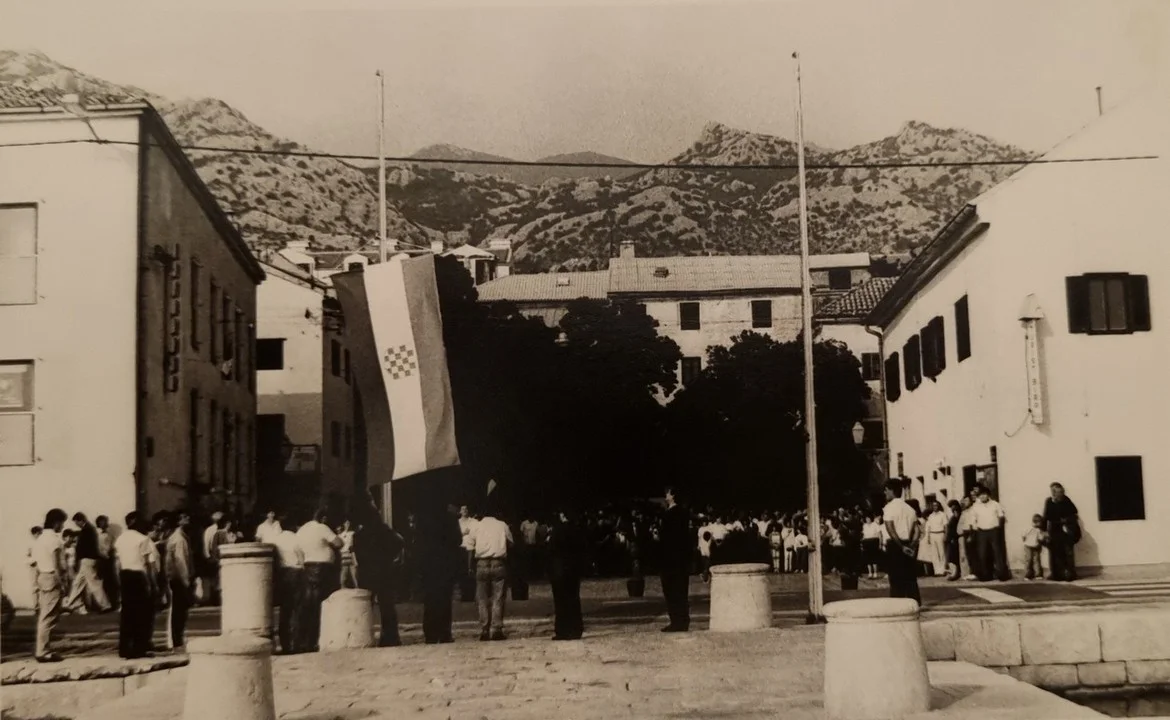
Ceremony in Karlobag's Main Square, 1990
This photograph captures a public ceremony held in Karlobag's main square in 1990. Local residents gathered to witness the raising of the Croatian tricolour, which became a symbol of the democratic changes and the restoration of Croatian statehood during that year. The slopes of Mount Velebit rise in the background, while the image preserves the atmosphere of unity and the historic moment that marked the beginning of a new chapter for both Karlobag and the Republic of Croatia. :contentReference[oaicite:0]{index=0}
Source: Collection of the Capuchin Monastery, Karlobag.
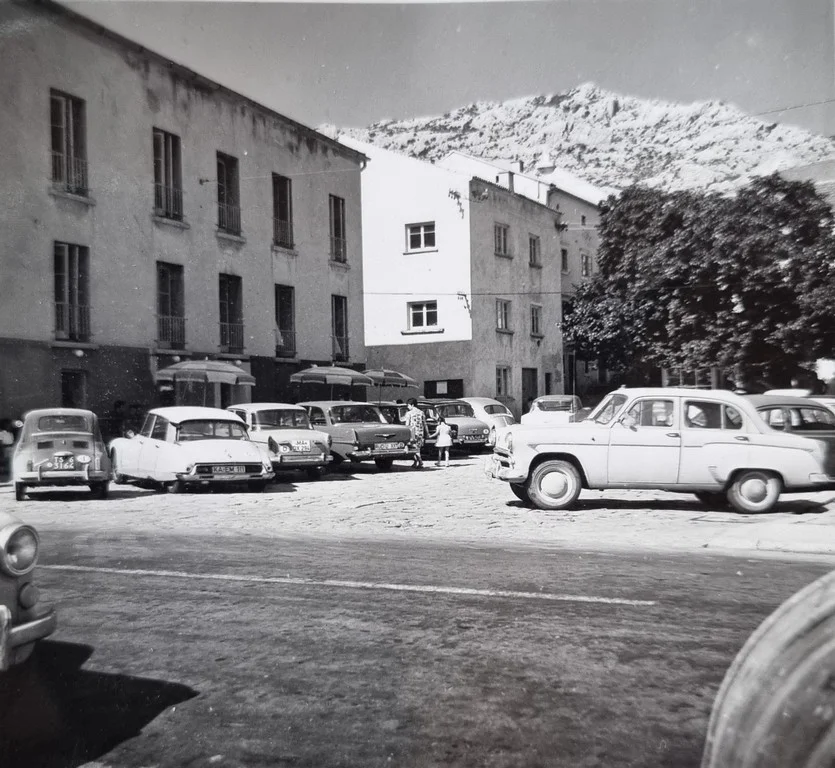
The Town Square and "Jadran" Hotel – The Pulsing of Life
This photograph shows the town square in Karlobag in front of the "Jadran" hotel, filled with a line of cars, which testifies to the vibrancy of the place in the summer months. The square, as the central gathering place, was a stage where the local population and numerous tourists who arrived from all parts met. Cars of different brands and registration plates in this shot remind us of the golden age of automobile tourism, when Karlobag was an essential stop on the way to the south, maintaining its authentic Mediterranean charm at the foot of Velebit.
Source: Croatian State Archives (HDA), Zagreb.
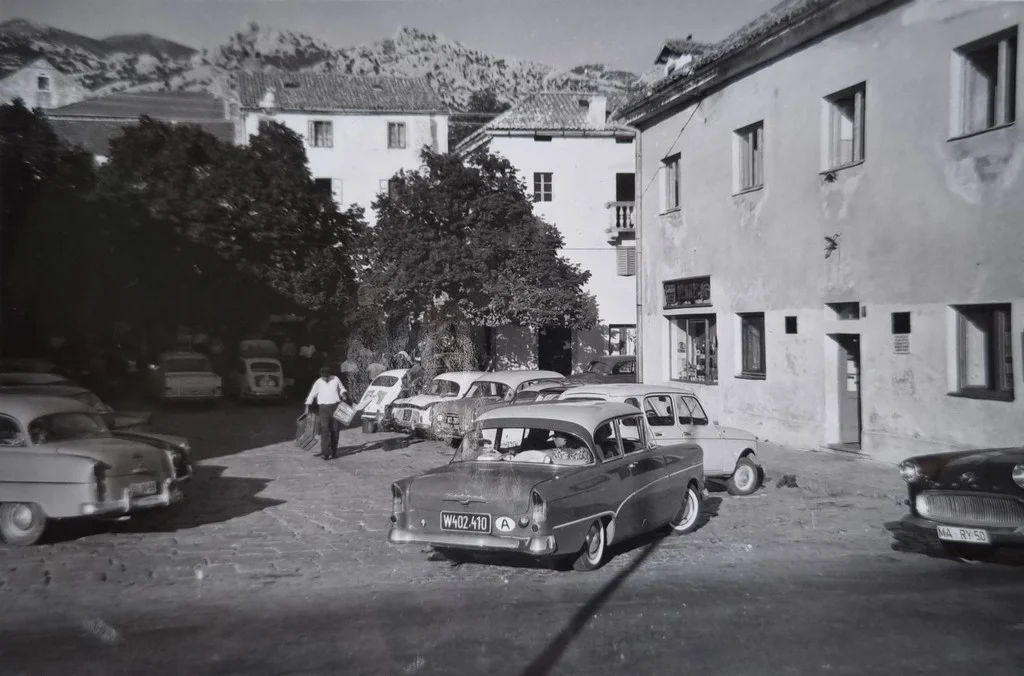
Main Square – Heart of the Community
This shot shows the lively daily life on the main square in front of the building that serves as the seat of the municipality today. In the past, a shop operated right at this location, an important center of supply and daily meetings for the locals. The sight of cars parked on the square and people carrying out their daily duties portrays Karlobag as a functional and lively place, whose core has always been a gathering place that connects generations and preserves local history from oblivion.
Source: Croatian State Archives (HDA), Zagreb.
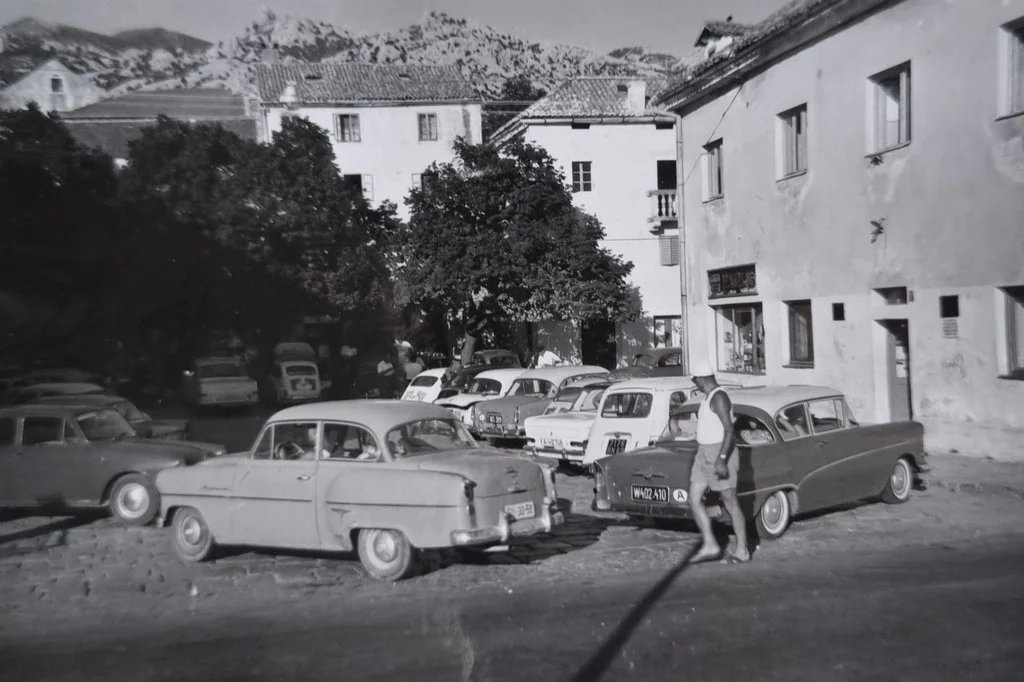
Main Square from Another Angle – A Time Machine of Streets
This photograph offers a fresh look at the main square in Karlobag, capturing famous buildings and the atmosphere from a slightly different perspective. Although the angle of view has changed, the essence of the square remains the same: it is a dynamic center of the town where historical architecture, the daily life of locals, and the transience of tourists intertwine. A line of parked cars and a passerby in summer clothes remind us of the many generations who have left their mark on these stone slabs, making the square an eternal witness to daily life in Karlobag.
Source: Croatian State Archives (HDA), Zagreb.
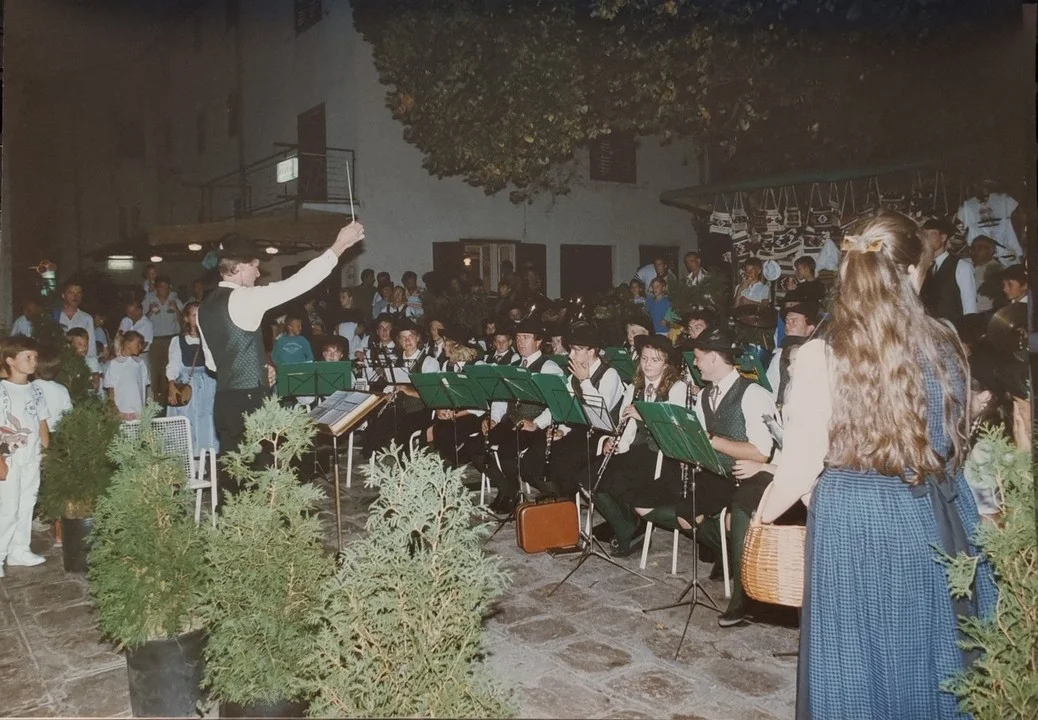
Concert on Dr. Franjo Tuđman Square in Karlobag, 1990s
This photograph, taken during the 1990s, shows a concert by a brass band on Karlobag's main town square. A large audience gathered to enjoy the musical performance, while many of the participants wore traditional folk costumes, adding to the festive atmosphere. Events such as this formed an important part of Karlobag's cultural and social life, bringing together both residents and visitors during the town's summer celebrations.
Source: Collection of the Capuchin Monastery, Karlobag.
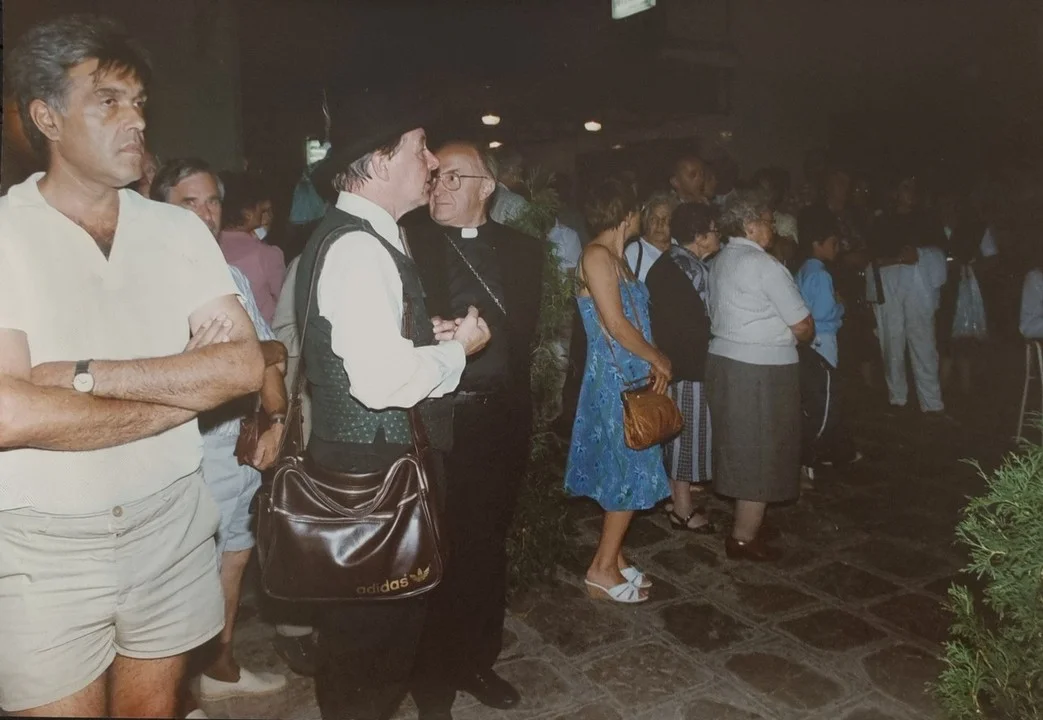
Visitors at a Concert on Dr. Franjo Tuđman Square in Karlobag, 1990s
This photograph shows part of the audience gathered during a concert held on Karlobag's main town square in the 1990s. In the foreground, a participant dressed in traditional folk costume is seen speaking with a priest, while in the background local residents and visitors enjoy the musical performance. The photograph reflects the vibrant cultural and social life of Karlobag and the importance of public gatherings and summer festivities.
Source: Collection of the Capuchin Monastery, Karlobag.
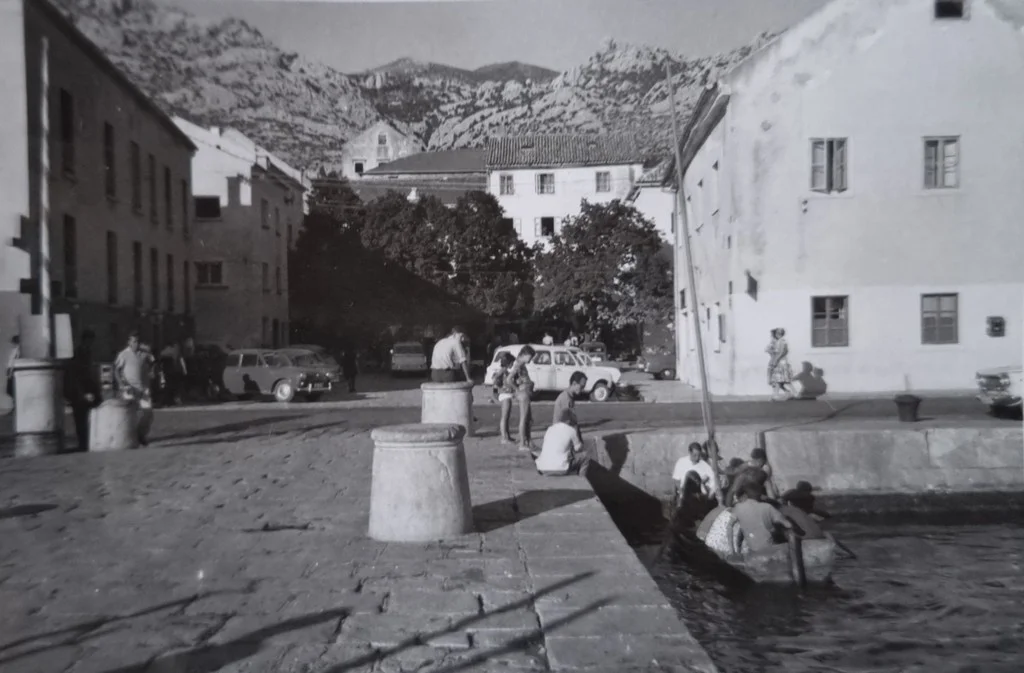
From the Waterfront to the Main Square – The Link of Karlobag
This shot captures the moment of immediate connection between the Karlobag waterfront and the main square, where the building of today's municipality rises as a central landmark. While locals and visitors rest by the boats on the waterfront, the background reveals the bustling life on the square, creating an image of a place where the sea and land meet in daily harmony. The photograph faithfully captures the architectural harmony and social importance of this space that was the epicenter of events for decades, connecting trade tradition and life by the sea into one inseparable whole.
Source: Croatian State Archives (HDA), Zagreb.
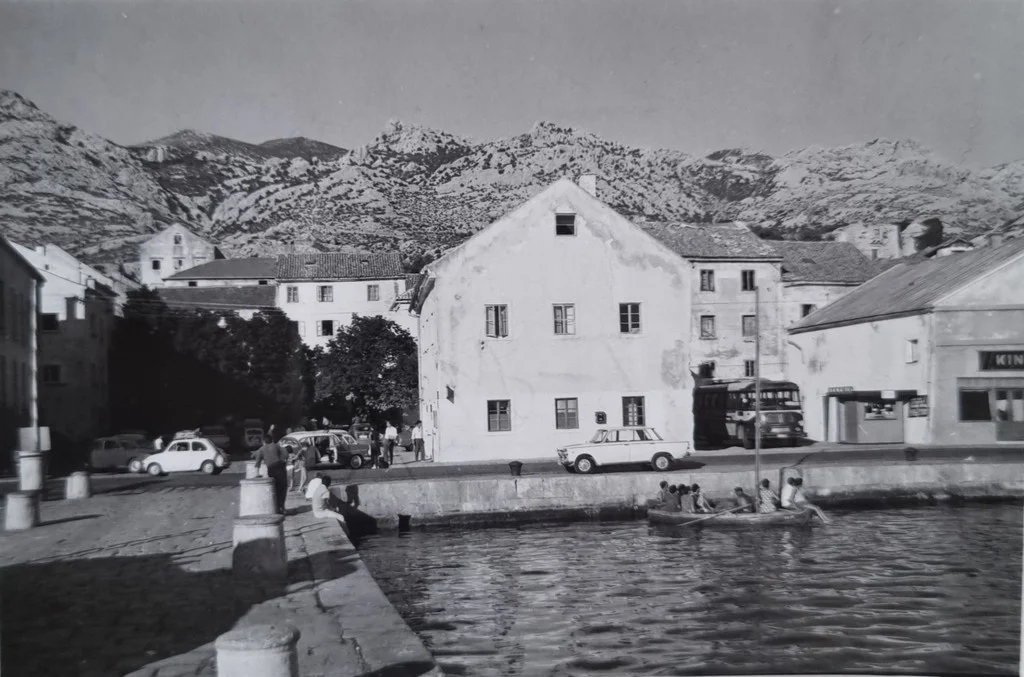
Main Square and "Pišarela" – The Hub of Travel
This shot shows the main square and the building of today's municipality, a place that was once the center of traffic connectivity in Karlobag. At the location where a shop is today, a small kiosk known by the popular name "Pišarela" once stood. It was in this little booth that tickets for boats, ferries, and buses were bought, making it an unavoidable point for all locals and travelers who were preparing for a journey. The photograph faithfully preserves the memory of that simpler, but extremely important part of Karlobag's history, when "Pišarela" was the heart of communication and movement in the town.
Source: Croatian State Archives (HDA), Zagreb.
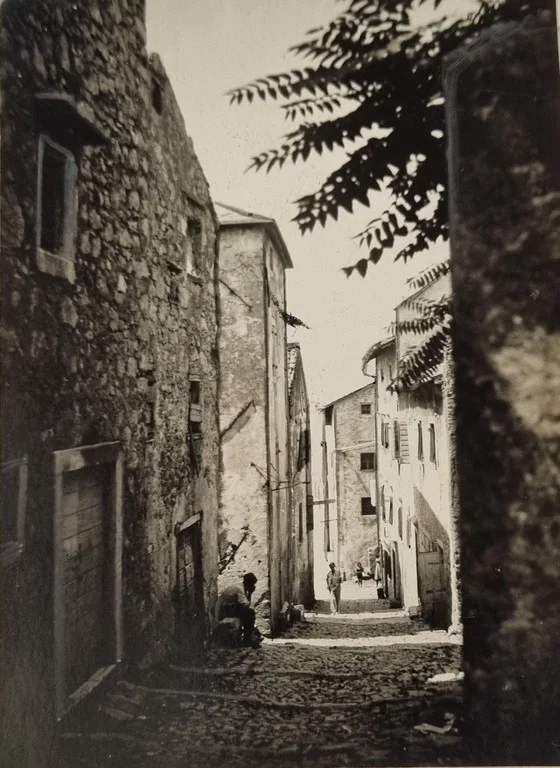
Stone Steps – A Path into History
This photograph captures the authentic atmosphere of the old town center of Karlobag, where narrow stone streets with stairs lead directly toward the main square. Framed by old stone houses, this street tells the story of times when such passages were the main arteries of daily life. The play of light and shadow on the stone walls, along with the sight of locals moving along this path, creates an impression of peace and timelessness, reminding us of the beauty of Mediterranean architecture in which every stone is a witness to past generations.
Source: Croatian State Archives (HDA), Zagreb.
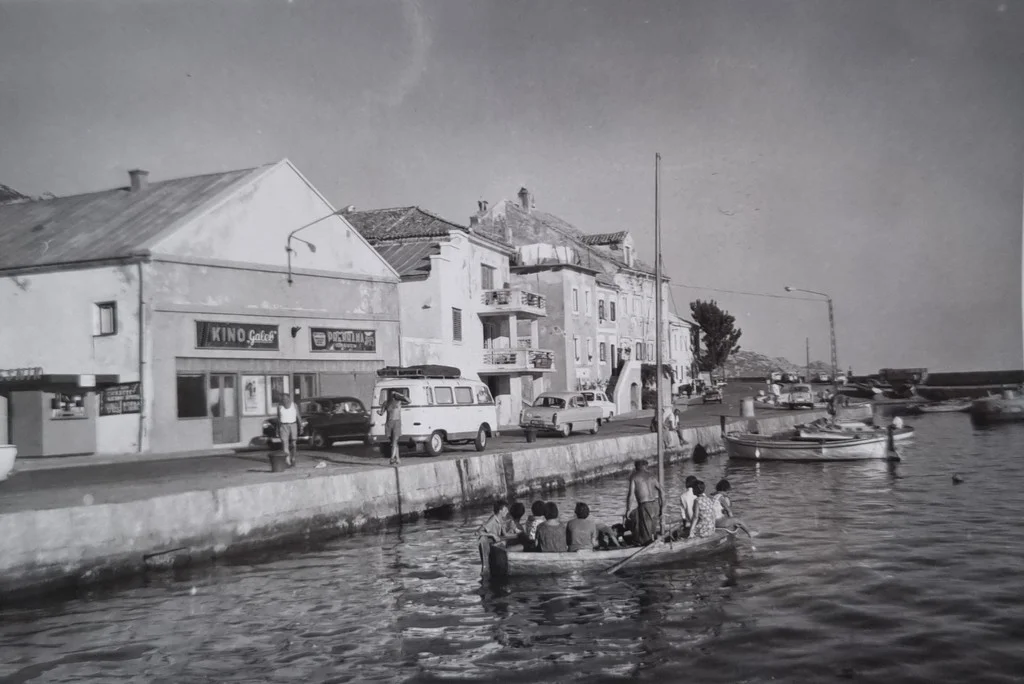
"Galeb" Cinema and "Prehrana" Store – Heart of the Karlobag Waterfront
This shot captures the recognizable building that housed the "Galeb" cinema, along with the essential "Prehrana" grocery store, which together formed an important center of daily life on the Karlobag waterfront. While the relaxation of life at sea can be seen in the foreground, with people in a small boat, the buildings in the background remind us of times when such places were epicenters of gathering—the cinema as a place of entertainment, and the store as a key point for supplies. Together, they were a symbol of cultural and social life that gave a special note to daily life in Karlobag.
Source: Croatian State Archives (HDA), Zagreb.
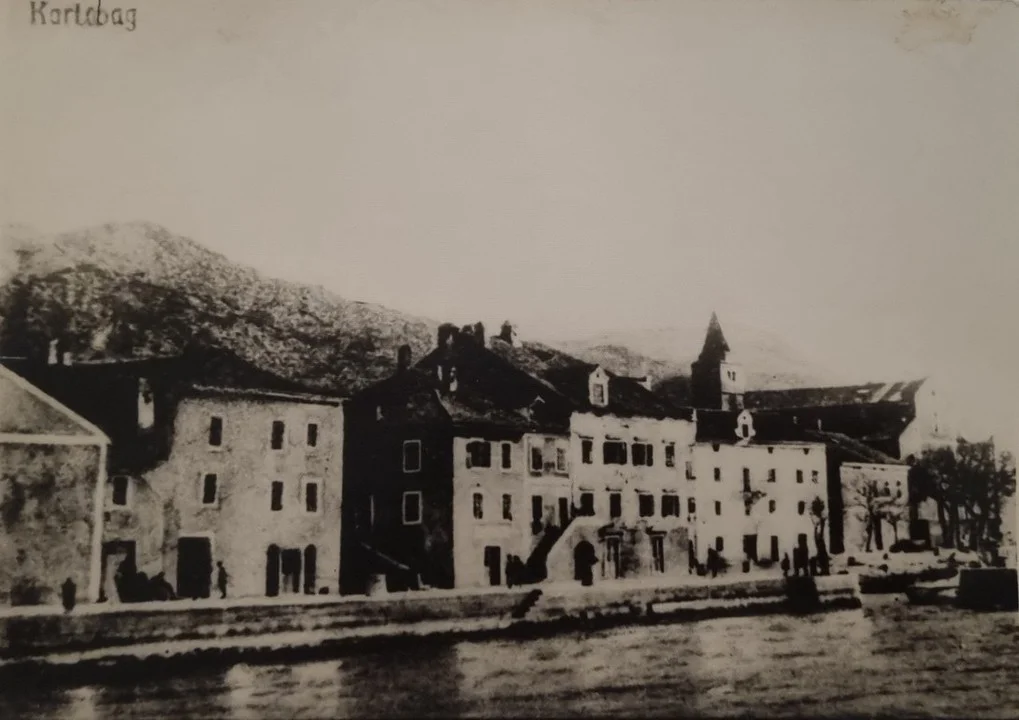
View of Karlobag's Historic Waterfront and Old Town
This photograph captures a section of Karlobag's historic waterfront lined with stone houses that for decades formed the town's distinctive seafront. At the center stands the elegant Baroque portal of one of the oldest houses along the promenade, while the bell tower of the Parish Church of St. Charles Borromeo rises prominently in the background. Small wooden boats are moored along the shore, reflecting the everyday life of the local people, as well as Karlobag's long-standing fishing and maritime traditions. This appearance of the waterfront remained largely unchanged until the destruction of the Second World War, when a significant part of the historic town center suffered severe damage.
Source: Collection of the Capuchin Monastery, Karlobag.
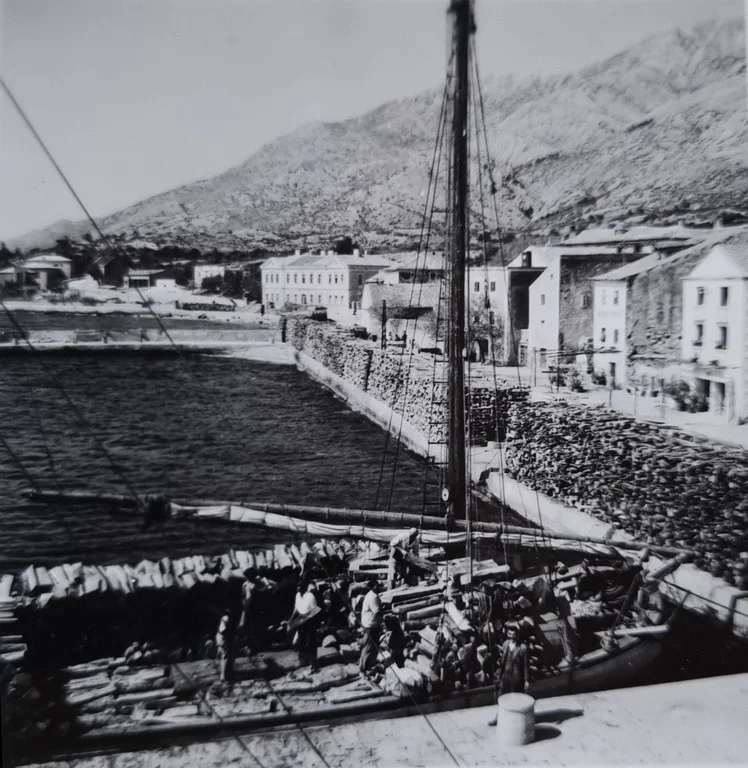
Karlobag as a Trade Center – Centuries-Old Tradition
This photograph is a testament to the rich history of Karlobag, which was one of the main ports of the northern Adriatic back in the time of the Habsburg Monarchy. Karlobag was then a key hub for trade with the islands, especially when it came to the export of wood, salt, and wine, which were the backbones of the local economy. This tradition, which was successfully maintained decades later, is clearly evident in the picture through the scene of intense work in the port, emphasizing the inseparable link between the town and the sea and the trade that ensured Karlobag's economic significance and recognition in the region.
Source: Croatian State Archives (HDA), Zagreb.
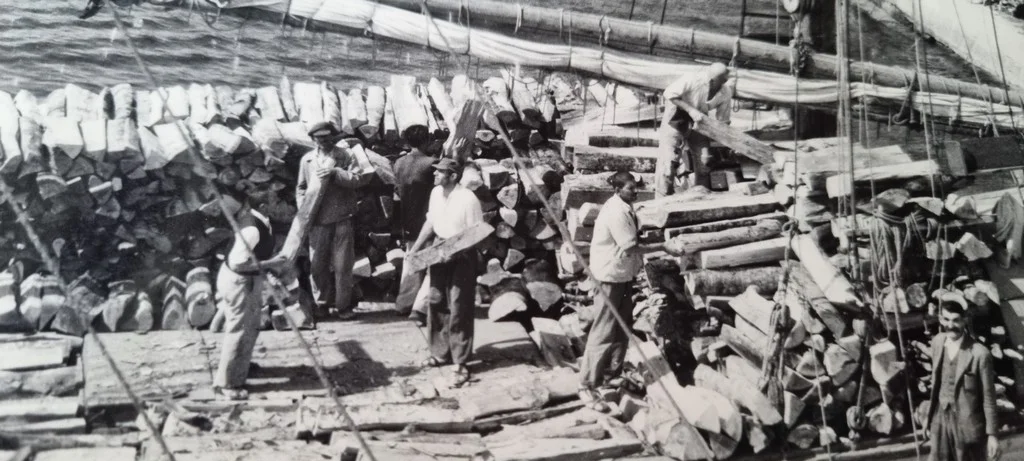
Trade Tradition Up Close – Work in the Port of Karlobag
This photograph, taken from a different angle compared to the previous one, offers an intimate look at the daily life and hard work in the port of Karlobag. A close-up shows a group of port workers, dressed in work clothes, diligently and manually transshipping wood logs onto a ship. The complexity of the process of stacking wood and the physical effort that accompanied every step is visible, emphasizing the importance of this activity for the town's economy. The scene on the ship's deck testifies to the vibrant trade tradition that defined Karlobag as an important center of the northern Adriatic, and this shot from another angle allows us to appreciate the human element behind that historical story.
Source: Croatian State Archives (HDA), Zagreb.
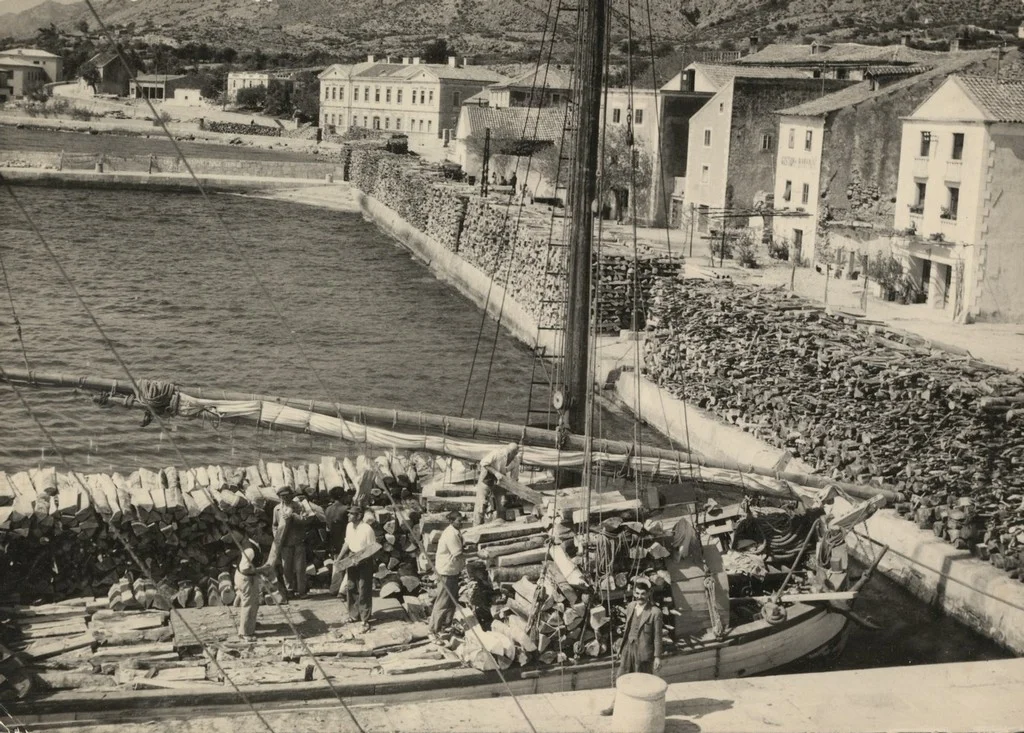
The Port as a Trade Hub – Testimony to the Wood Industry
This shot provides a wider view of the port area of Karlobag, where an impressive amount of timber ready for loading is clearly visible. The piles of wood stacked along the coast are not just an aesthetic element of the photograph, but proof of the intense economic activity that kept Karlobag on the map of the most important trade ports of the northern Adriatic at that time. The scene of workers on the ship and huge supplies of wood on land frames the story of a time when trade with the islands and the continent was the driving force of the town, leaving a permanent mark in the visual history of Karlobag.
Source: Croatian State Archives (HDA), Zagreb.
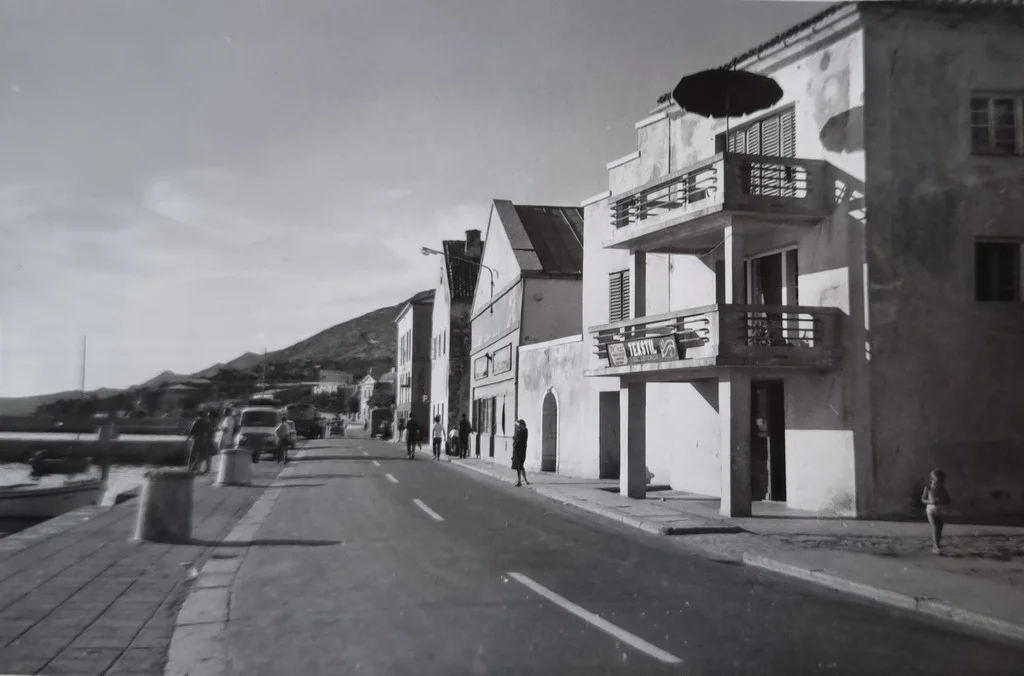
Textile Shop at Zdeslav's
The Karlobag waterfront with a road and recognizable old maritime bollards along the shore. On the right side, Zdeslav's house dominates with striking terraces and balconies, where textiles were sold at the time, while in the background are the Galeb cinema and a grocery store, which together make this photograph powerfully evoke the spirit of the past and the collective memory of Karlobag.
Source: Croatian State Archives (HDA), Zagreb.
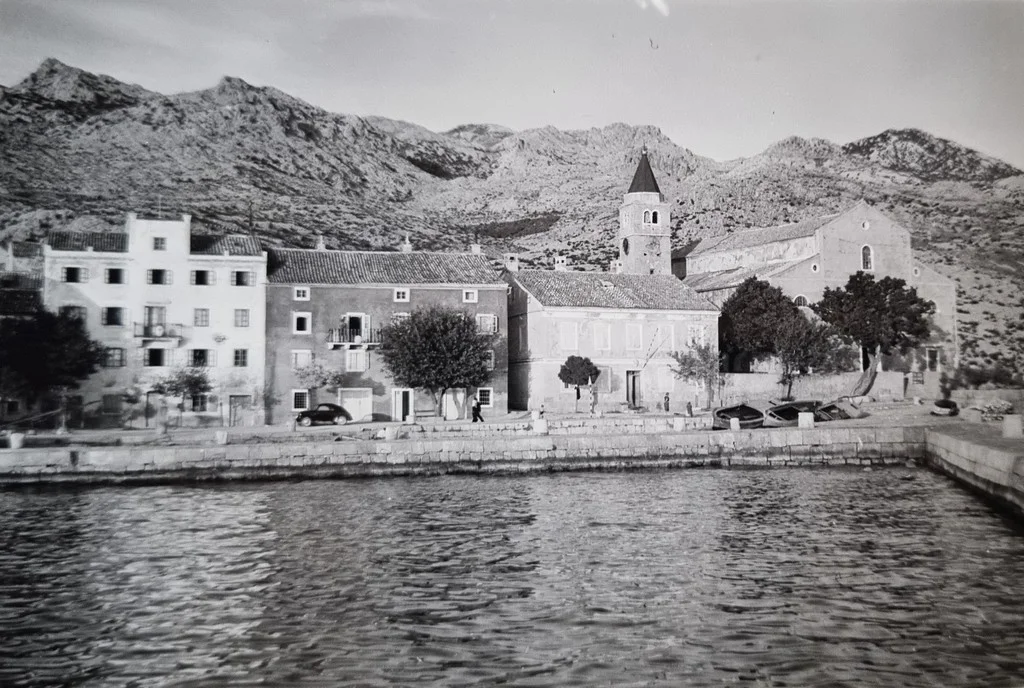
The Old Town Center and the Church of St. Charles Borromeo – Symbols of Karlobag
This photograph provides a beautiful panoramic view of the old town center of Karlobag, dominated by architecture that blends harmoniously with the foothills of Velebit. At the center of attention is the church of St. Charles Borromeo, a recognizable spiritual and architectural landmark of the town whose bell tower proudly overlooks the surrounding houses. The scene, which encompasses the coastline, historic stone buildings, and the sacred object, faithfully conveys the Mediterranean atmosphere of Karlobag, where the past and present meet in a unique harmony of sea and stone.
Source: Croatian State Archives (HDA), Zagreb.
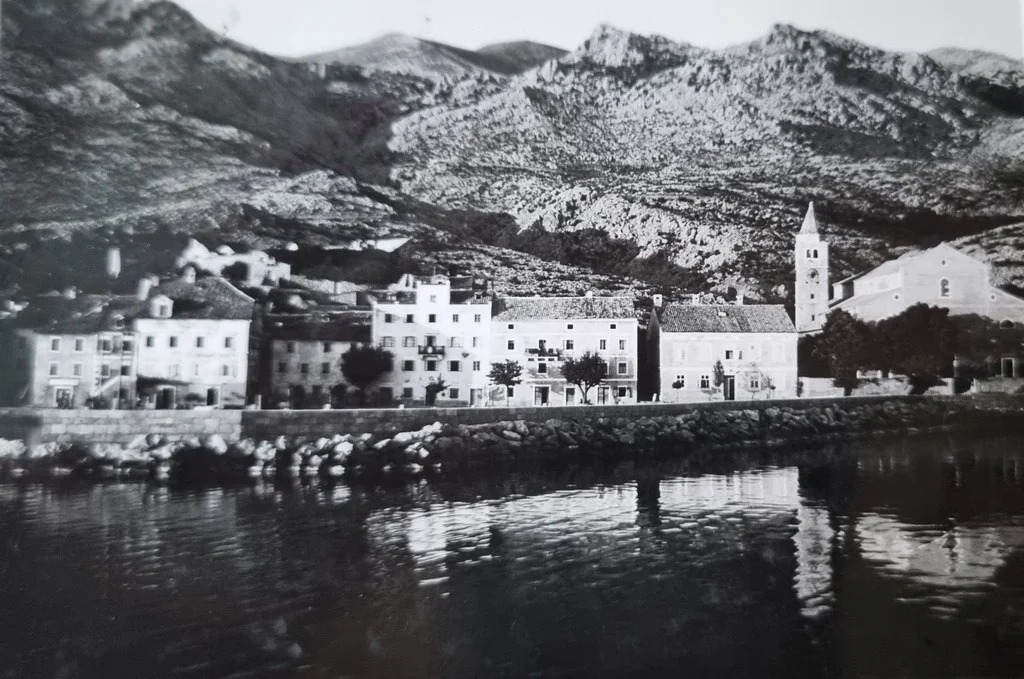
The Old Town Core in the Embrace of Sea and Mountain
This frame offers another view of the old town center of Karlobag, emphasizing the harmonious row of historical buildings stretching along the very coast, at the foot of the steep slopes of Velebit. The Church of St. Charles Borromeo dominates the view here as well, serving as a spiritual and visual landmark that connects the town's architectural heritage with its natural environment. This perspective further emphasizes the intimacy of the settlement's connection with the sea, creating an impression of eternity and peace that Karlobag has preserved for decades.
Source: Croatian State Archives (HDA), Zagreb.
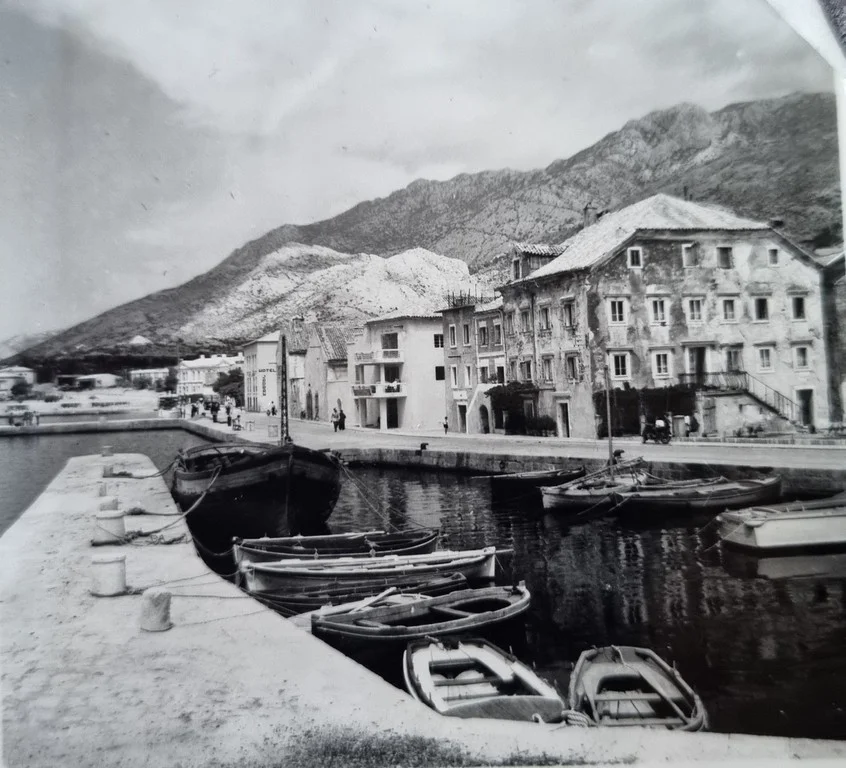
The Pier and the Old "Karlić" Bracera – Witnesses of Maritime Tradition
This photograph captures a quiet moment in the port of Karlobag, where the pier provides shelter to a row of boats, among which the old "Karlić" bracera stands out. Braceras were an indispensable part of Dalmatian and Adriatic maritime history—heavy cargo ships that connected the coast and the islands for centuries. The sight of moored vessels against the backdrop of old architecture and Velebit evokes memories of times when the life of Karlobag was inextricably linked to the sea, and such wooden beauties were the main pillar of survival and trade.
Source: Croatian State Archives (HDA), Zagreb.
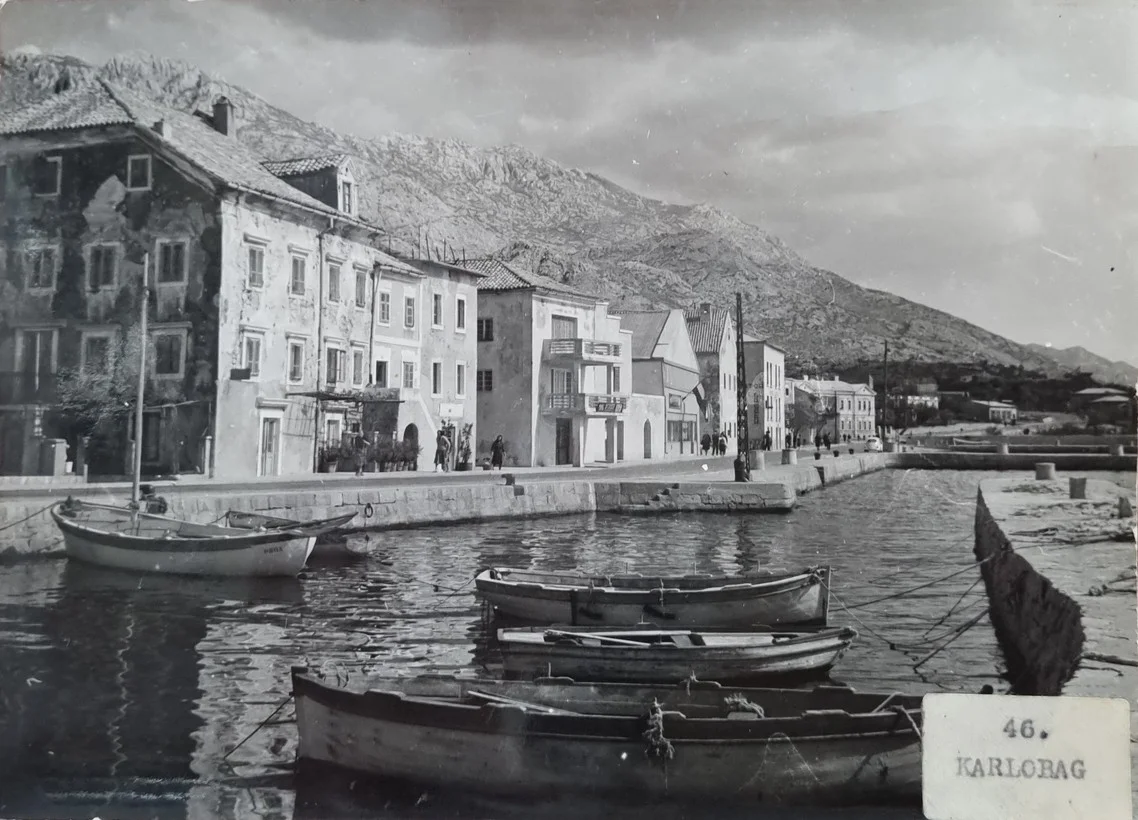
Karlobag Waterfront and Boats beneath Velebit
The photograph shows the Karlobag waterfront with a row of houses along the shore, while several wooden boats are moored in the calm harbour in the foreground. In the background, the bare and rocky slopes of Velebit rise dramatically, creating the characteristic contrast between the sea, the town and the mountain. The scene faithfully records the former appearance of the waterfront and Karlobag’s everyday connection with the sea, while the boats and the arranged quay bear witness to the town’s maritime character.
Source: Karlobag Municipality Archives.
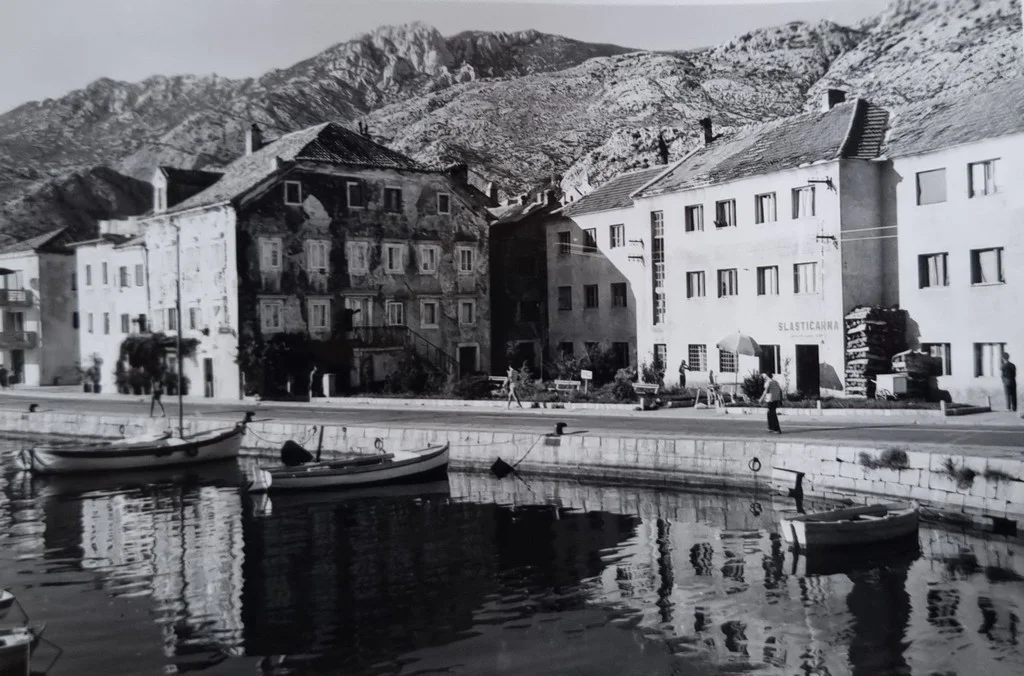
The Empty Pier and the Scent of Childhood – The Pastry Shop as a Meeting Place
This frame captures a moment of peace on the Karlobag waterfront, where the empty pier and the quiet sea, reflecting the boats, create a perfect summer idyll. While fishermen diligently go about their work at sea, the view lingers on the building that housed the popular pastry shop—an essential stop for refreshment and socializing for generations of locals and tourists. This image captures that special, slow pace of life in Karlobag, where daily duties intertwined with moments of enjoyment, leaving lasting memories of summer days by the sea.
Source: Croatian State Archives (HDA), Zagreb.
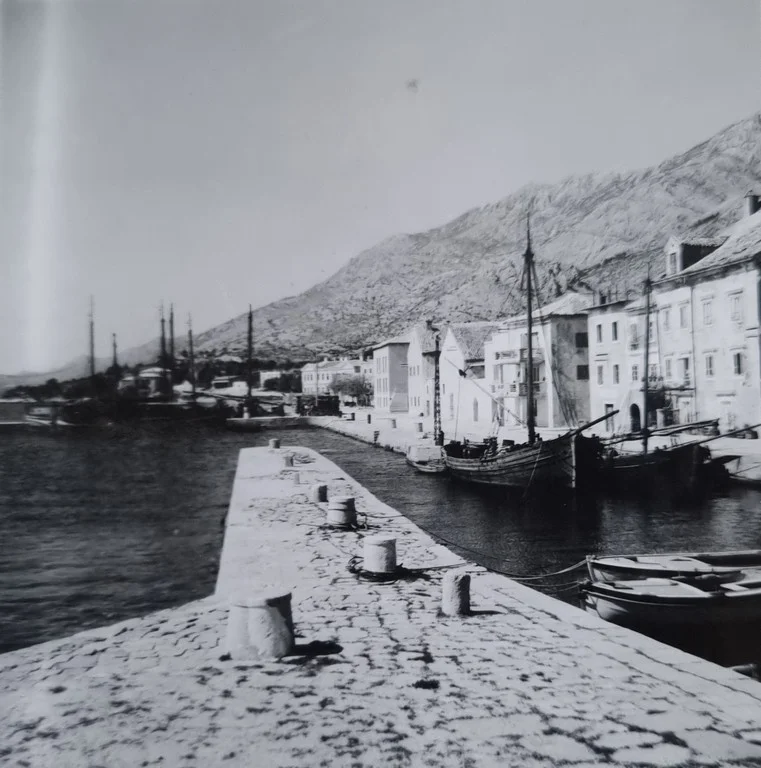
The Braceras Wait – A Moment Before Setting Out to the Open Sea
This photograph records an almost cinematic moment of silence in the port of Karlobag. The moored braceras—traditional cargo sailboats that were the lifeblood of Adriatic trade—quietly wait for the moment to set out to the open sea. In their masts and hull lines, the history of maritime Karlobag is read—a place that for centuries lived to the rhythm of the wind and tide. The scene where the historical core merges with these wooden giants creates a powerful image of the connection between land and sea, reminding us of the importance of the patience and preparation that were necessary for every voyage in those days.
Source: Croatian State Archives (HDA), Zagreb.
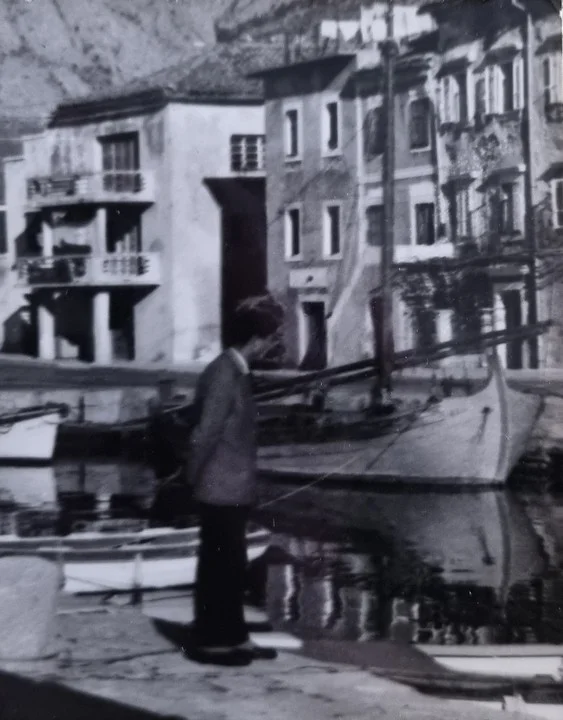
Karlobag Coast with a Pier
This is an old black-and-white photograph of the Karlobag coast with a pier, where in the foreground a man stands by the shore looking toward a traditional wooden boat and the calm surface of the sea. In the background, old seaside houses and typical coastal architecture stand out, faithfully evoking the peaceful, nostalgia-filled everyday life of old Karlobag.
Source: Collection of Ana and Marijana Popović.
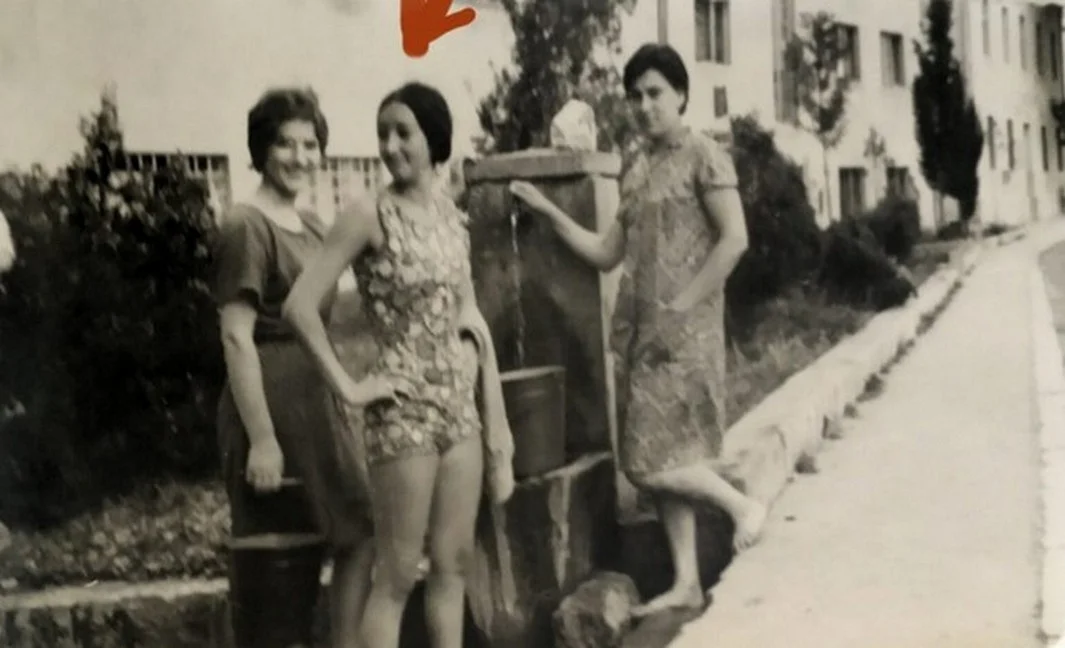
The Old Giardin Park and the Public Water Fountain
This photograph shows part of the old Giardin Park in Karlobag, where the town's public water fountain was located—one of the everyday gathering places for local residents. For decades, public fountains were an essential part of daily life, providing fresh water while also serving as places for meeting, conversation, and socialising. The photograph captures a group of young women from Karlobag, with the arrow indicating Marijana (Smojver) Popović. This candid scene preserves a memory of everyday life in Karlobag at a time when Giardin was a favourite meeting place for people of all generations.
Source: Private Archive of Tereza Laništanin.
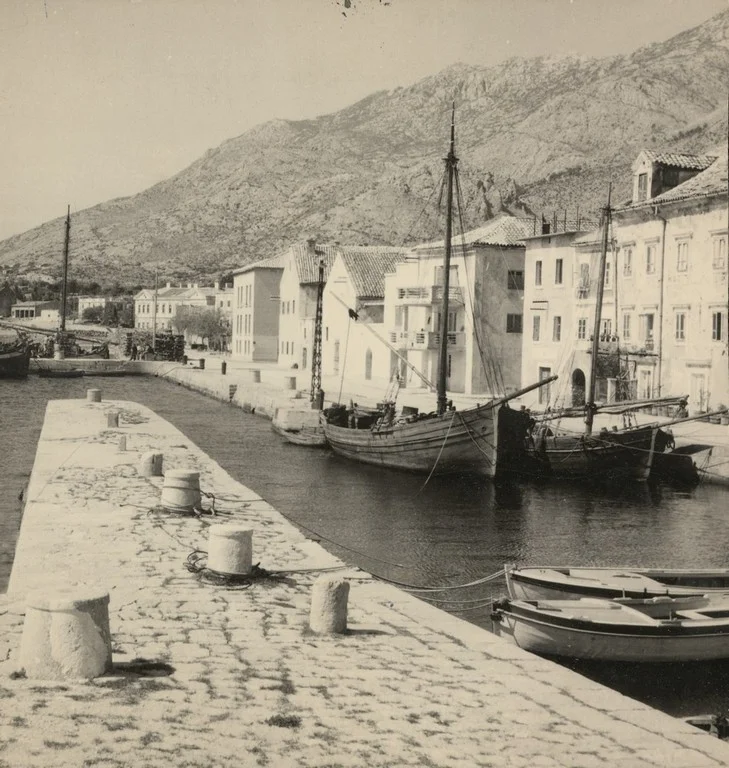
The Port at Rest – Another Perspective on Karlobag Tradition
This photograph offers a new angle on the port of Karlobag, where the stone pier, lined with bollards for mooring, guides the gaze toward the moored braceras. From this perspective, the details of the ships, their masts piercing the sky beneath Velebit, and the harmony of the historical architecture along the coast become even clearer. The scene exudes the calmness of a moment where time seems to have stopped, reminding us of the importance of these vessels that were an indispensable part of Karlobag's identity and daily life for decades.
Source: Croatian State Archives (HDA), Zagreb.
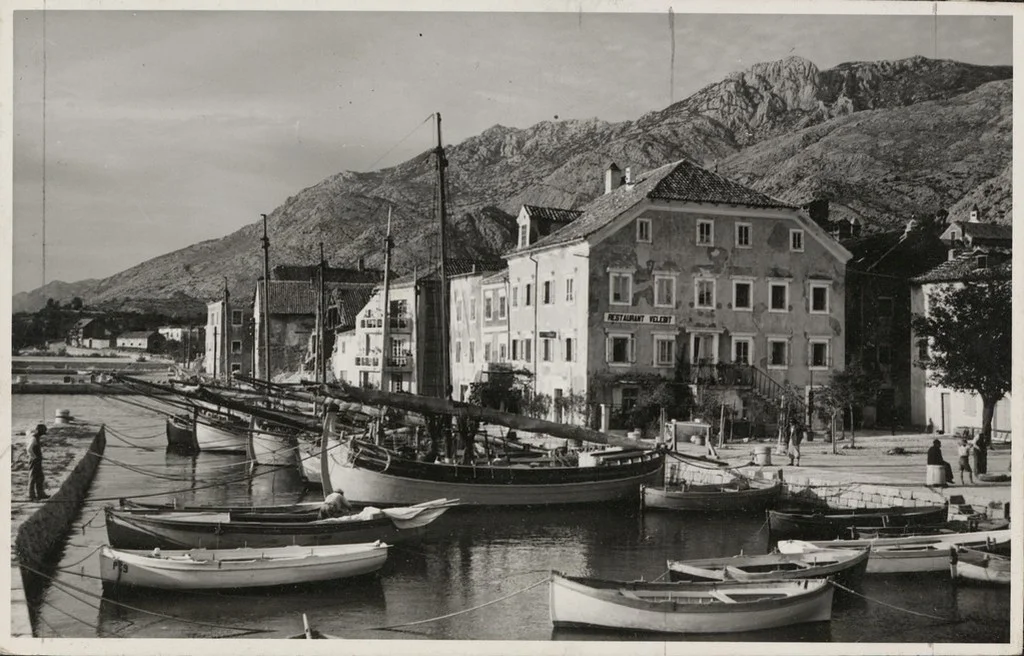
"Velebit" Restaurant and Boarding House – Hospitality on the Karlobag Waterfront
This photograph shows the recognizable building that housed the "Velebit" restaurant and boarding house, owned by Frano Škunca. Located in the very heart of the town by the coast, this establishment was a key meeting place for travelers, passersby, and locals, offering warm hospitality in the immediate vicinity of the sea and Velebit. The scene, which includes this historical building together with boats moored in the port, bears witness to the time when "Velebit" was an unavoidable point of Karlobag's catering offer, deeply rooted in the social life of the town.
Source: Croatian State Archives (HDA), Zagreb.
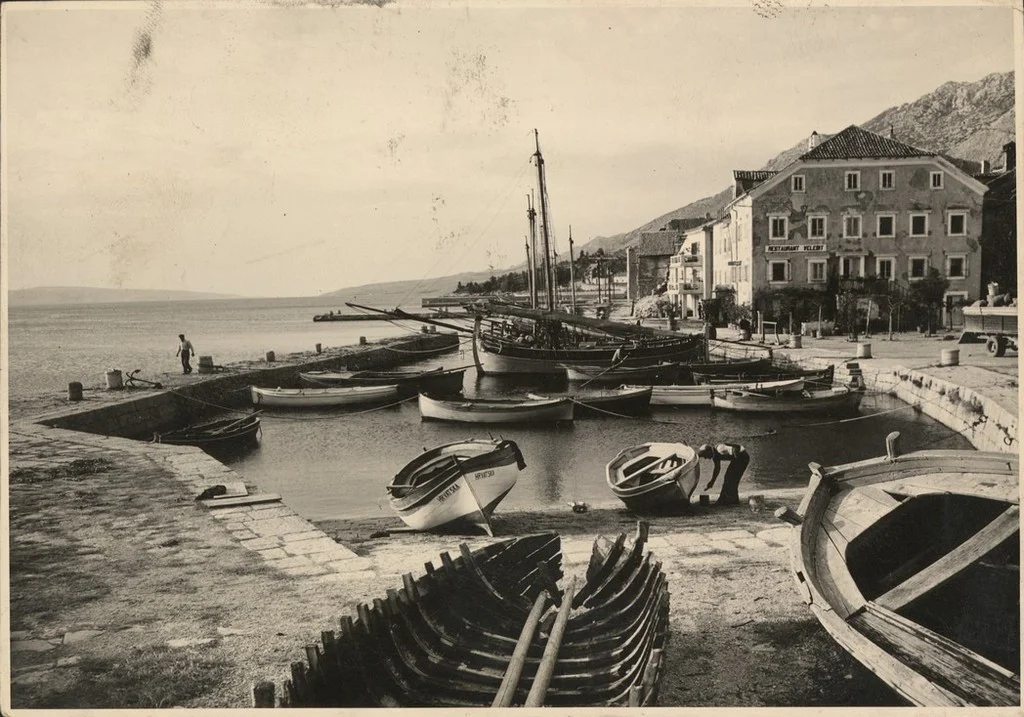
The "Hrvatska" Boat and the "Velebit" Restaurant – Pieces of the Karlobag Mosaic
This photograph combines two symbols of Karlobag's past in one place: the "Hrvatska" boat, which was owned by Blaž Bajo Potočnjak, and the recognizable building of the "Velebit" restaurant. The sight of the "Hrvatska" boat in the port in front of the restaurant evokes a time when family, work at sea, and catering were intertwined into the daily life of the town. While the "Hrvatska" boat rests in the port as a silent witness to its owner's maritime skills, the "Velebit" restaurant in the background reminds us of the hospitality that made Karlobag a special destination. This image is not just a depiction of a place, but a portrait of the people and vessels that shaped the identity of Karlobag.
Source: Croatian State Archives (HDA), Zagreb.
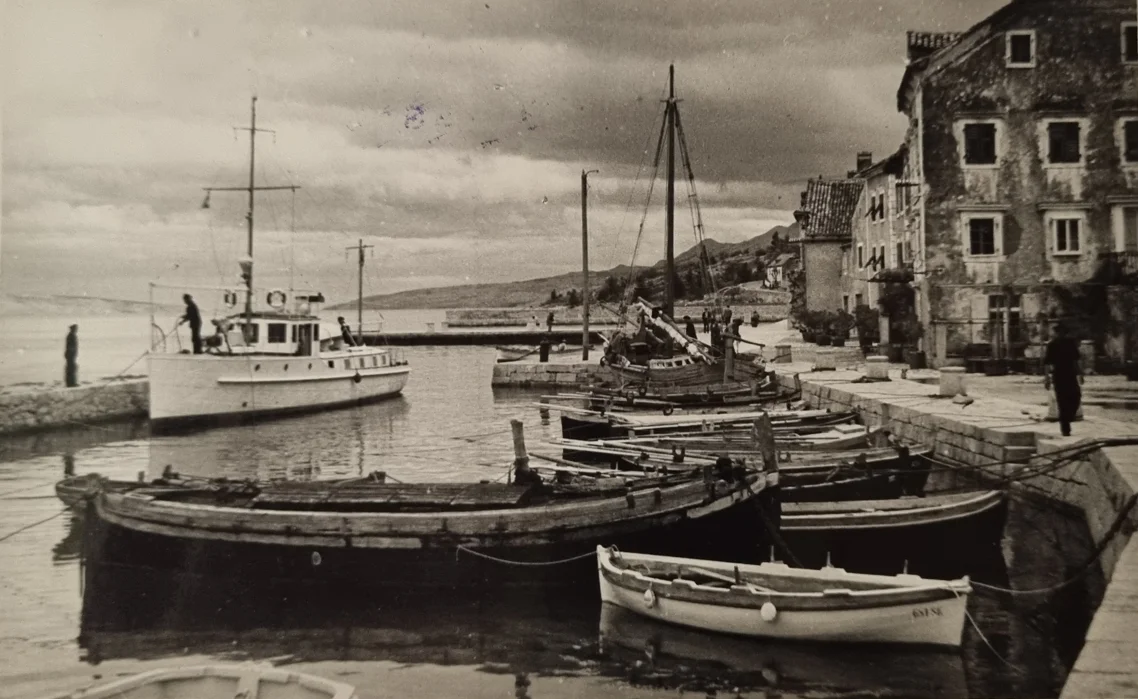
The Port – The Heart of Maritime Life in Karlobag
This photograph faithfully captures the atmosphere of the Karlobag port, a place where different generations of vessels meet—from smaller fishing boats to a larger ship lying quietly along the pier. Under a dramatic sky that heralds a change in weather, the port seems like a safe haven and at the same time a starting point for all those who bound their lives to the sea. The scene, which unites the wooden hulls of the ships, the stone walls of the waterfront, and the historical architecture in the background, provides strong visual proof of how the port has always been the epicenter of the economic and social life of Karlobag.
Source: Croatian State Archives (HDA), Zagreb.
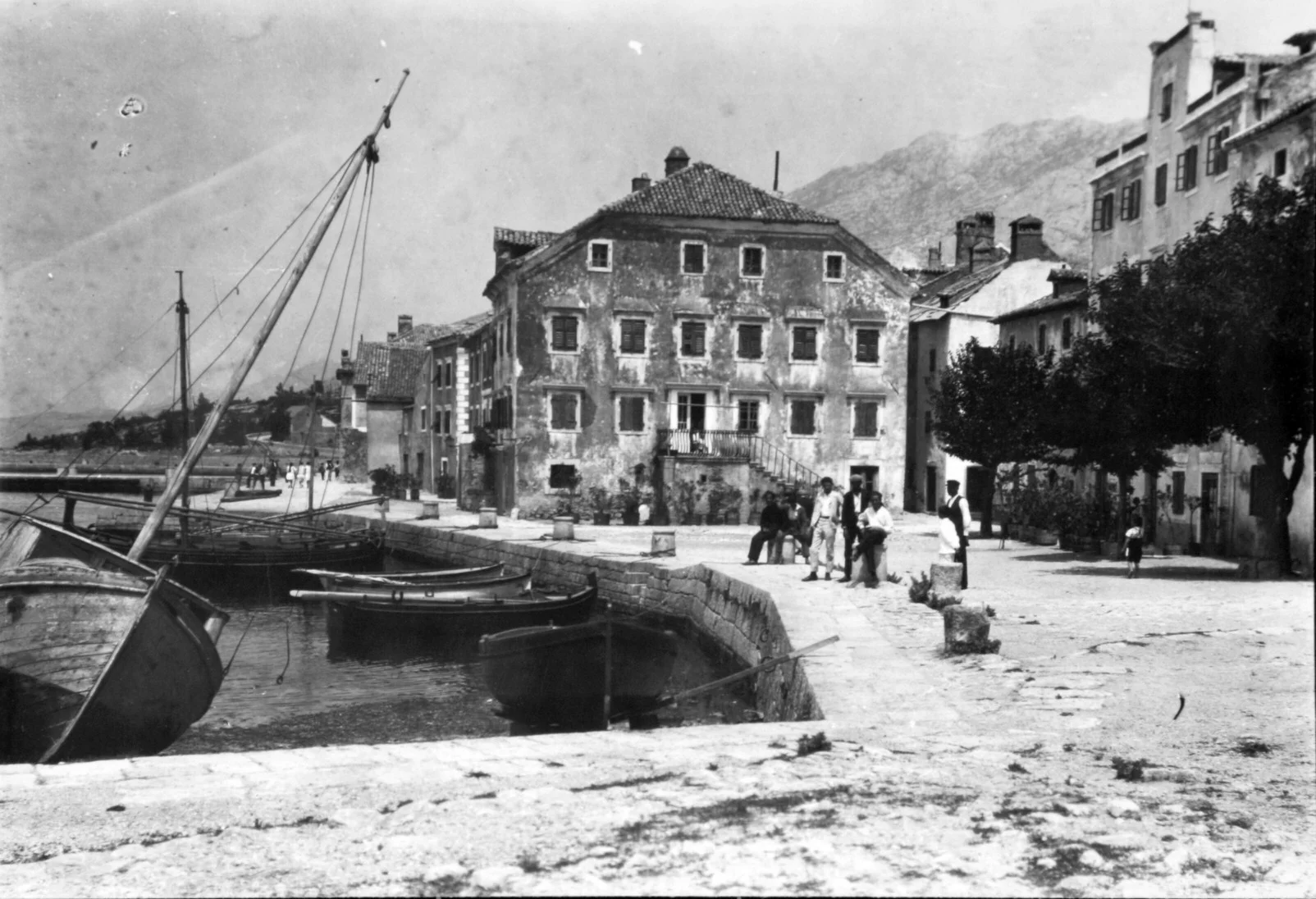
Town Harbor and the Old Waterfront of Karlobag – 1929
This photograph, taken by Gjuro Szabo in 1929, captures a peaceful view of Karlobag's historic harbor, where traditional wooden boats are moored along the stone waterfront that served for decades as the heart of the town's maritime life. In the foreground are fishing and transport boats typical of the period, while local residents gather along the quay in casual conversation, reflecting the lively atmosphere of a place closely connected to the sea, trade, and everyday community life. In the background stand the old stone buildings with their characteristic façades, including a prominent civic building overlooking the harbor, while the rugged slopes of the Velebit Mountains rise behind the town, forming Karlobag's distinctive landscape. This photograph is a valuable historical record of the town's waterfront during the interwar period, when the harbor remained the principal center of commerce, transportation, and social life.
(Photograph by Gjuro Szabo – 1929)
Source: Ministry of Culture and Media of the Republic of Croatia.
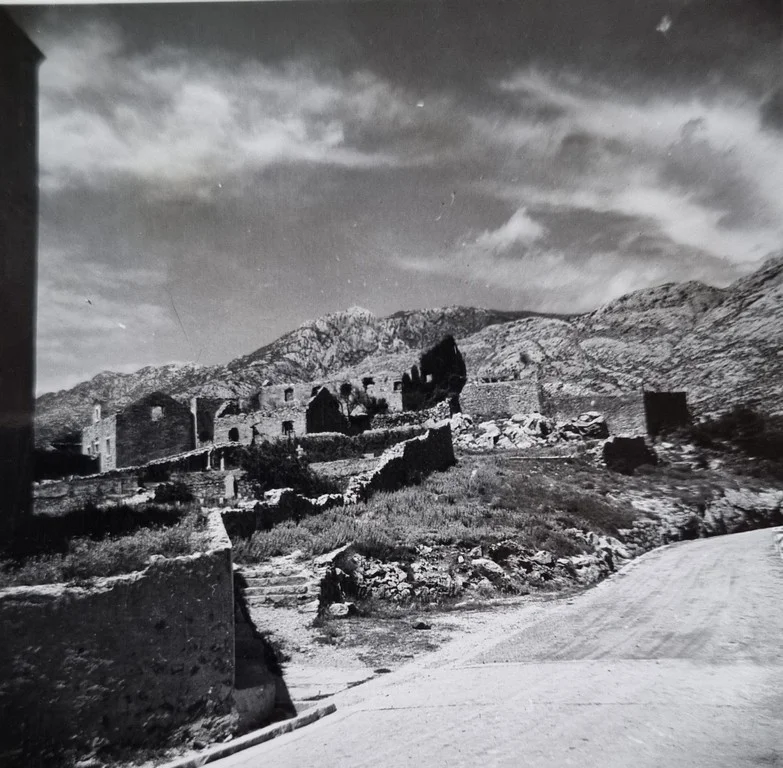
The Old Road beneath Fortica – A Journey Through Time
This photograph shows the old road that passed right below Fortica, on the route where a modern road is located today. While the harsh and impressive karst of Velebit rises in the background, the road passes by old, partially preserved stone buildings that bear witness to life on these slopes in the past. This historical path was not just a road, but a key connection that led beneath the fortress that oversaw the approaches to Karlobag for centuries. The scene with stone dry-walls and traces of the past invites contemplation of the strategic position of Fortica, but also of the hard, diligent life of those who passed along this path every day.
Source: Croatian State Archives (HDA), Zagreb.
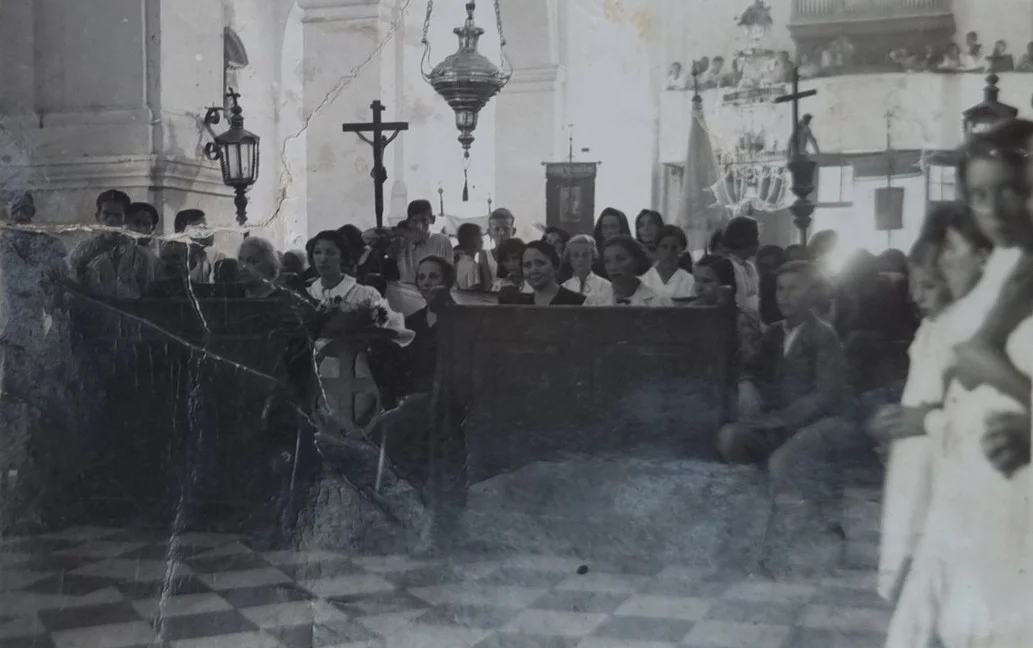
The First Mass of Father Bogomir Milinović
This photograph, taken on 25 July 1937, captures the solemn celebration of the first Mass of Father Bogomir Milinović in the Parish Church of St. Charles Borromeo in Karlobag. Seated in the pews are parishioners, family members, and invited guests gathered to take part in this important occasion. The richly decorated interior of the church provides a valuable glimpse of its original appearance before the destruction it suffered during the Second World War. This photograph stands as a precious record of the religious and social life of Karlobag on the eve of a period of profound historical change.
Source: Private Archive of Tereza Laništanin.
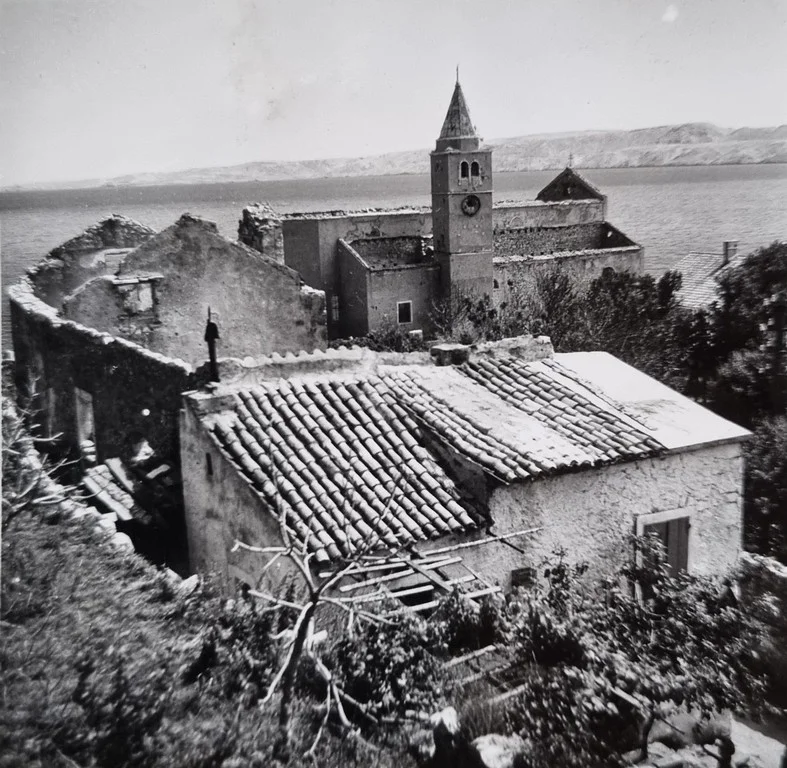
Wounds of War – The Destruction of the Church on August 31, 1944.
This poignant photograph bears witness to one of the most difficult moments in the modern history of Karlobag. The scene shows the ruined remains of the church after an air raid that took place on August 31, 1944. The attack was carried out by the Balkan Air Force, in whose service pilots of the South African Air Force also operated. The sight of the destruction leaves a strong mark, documenting the material damage inflicted on the sacred architecture and the very heart of the town, making this image a permanent warning of the devastation that World War II left on Karlobag soil.
Source: Croatian State Archives (HDA), Zagreb.
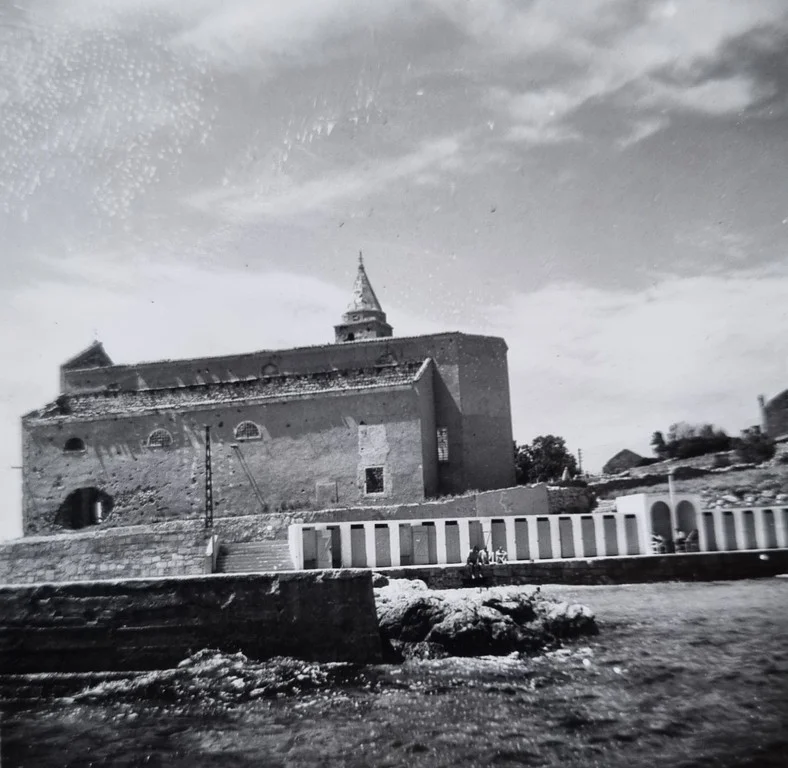
Post-War Scars – The Church after Destruction
This photograph, taken from the city beach, shows the church in a difficult state after the total destruction suffered during the war. The scene faithfully documents the desolation that the war operations left on this sacred object, which was once the center of the spiritual life of Karlobag. The contrast between the calm seashore, the city beach, and the skeleton of the once-proud building serves as a powerful visual reminder of the scale of the damage and the challenges the town faced in the years after the war.
Source: Croatian State Archives (HDA), Zagreb.
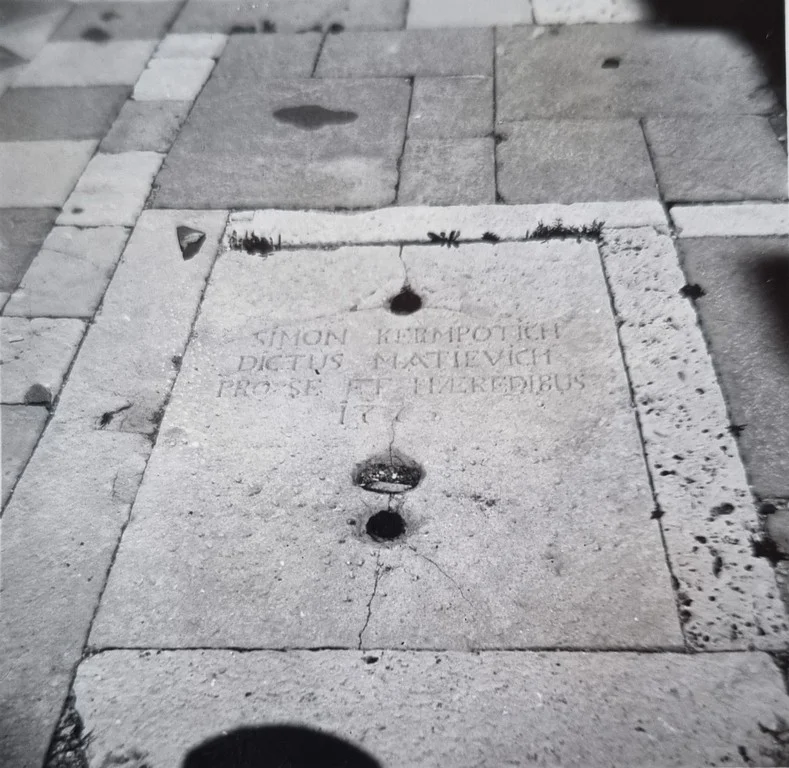
Eternal Remembrance – The Krmpotić Family Tomb
This photograph shows the tombstone of Simon Krmpotić (dictus Matievich) from 1765, one of the many tombs of prominent figures who once rested inside the Church of St. Charles Borromeo. The importance of this tomb has been confirmed by historical records; detailed descriptions of the church's interior and the tombs themselves were left by Ivan Kukuljević Sakcinski in his work from 1891, and by Većeslav Henneberg in a report from 1925. This slab is not just a stone record but a testament to the rich history and social standing of families who built the identity of Karlobag over the centuries.
Source: Croatian State Archives (HDA), Zagreb.
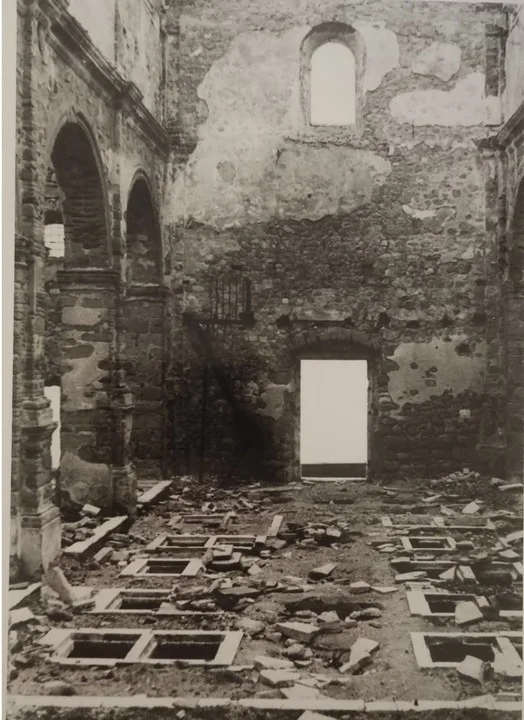
Interior of the Old Parish Church Before Its Demolition in 1958
This photograph shows the interior of the old Parish Church of St. Charles Borromeo in Karlobag shortly before its demolition in 1958. Following the destruction suffered during the Second World War, the church was left without its roof, revealing numerous masonry burial vaults beneath the former stone floor. These tombs served for centuries as the burial place of priests, prominent citizens of Karlobag, and benefactors of the parish, in accordance with the long-standing tradition of burial inside churches. The photograph is a rare historical document from the final years of the original church, preserving a unique view of its interior and the arrangement of its historic burial vaults before the remaining structure was removed.
Source: Collection of the Capuchin Monastery, Karlobag.
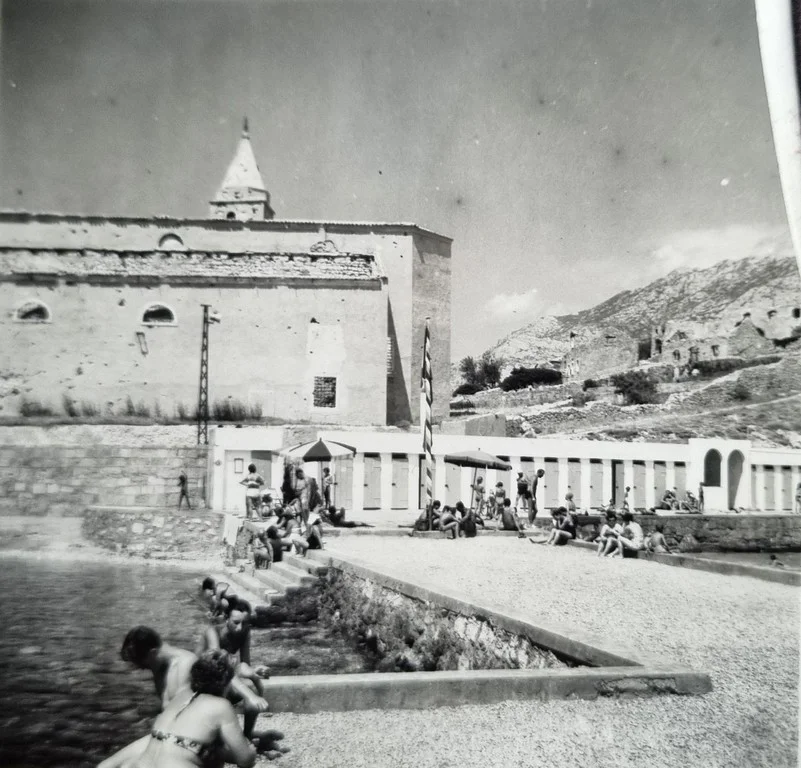
Life Triumphs – Swimming in the Shadow of the Past
This post-war photograph carries a strong message of optimism and resilience. While the scars of war destruction on the church are still visible in the background, life in Karlobag returns to its daily normality. People enjoy sunny summer days, relaxing on the city beach right in front of the ruins. The sight of bathers seeking refreshment in the sea, despite the visible consequences of recent suffering, bears witness to the unwavering will of the locals to continue and find joy in everyday life once again, turning this location into a place of meeting and spiritual renewal.
Source: Croatian State Archives (HDA), Zagreb.
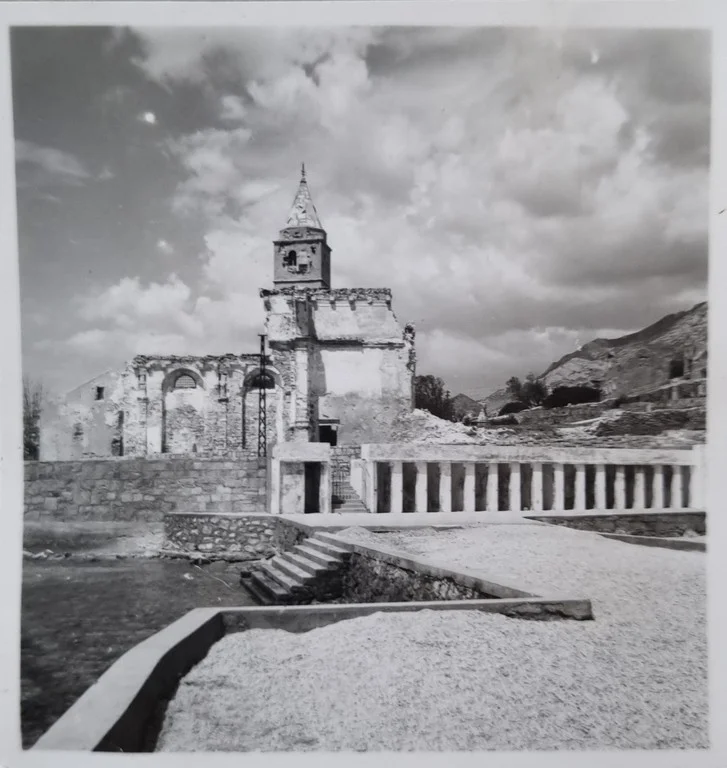
Final Disappearance – The Demolition of the Church in the Summer of 1958
This photograph documents the remains of the church after the demolition carried out in the summer of 1958 for the construction of a new main road. In the picture, the northern wall and the tower are clearly visible—silent witnesses to the once-magnificent edifice that, after the war destruction, met this fateful moment of urban transformation. Looking at these last parts of the structure, it becomes clear how heavy a toll modernization took on the cultural heritage of Karlobag, permanently changing the town's view and erasing the physical traces of centuries of history.
Source: Croatian State Archives (HDA), Zagreb.
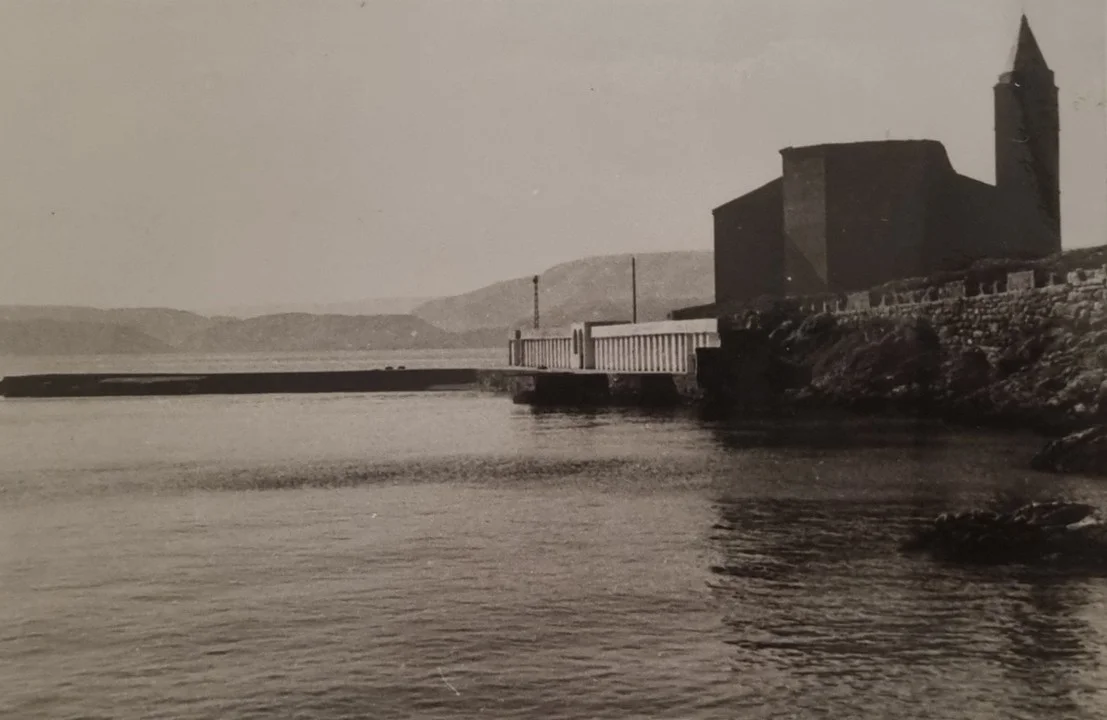
The Parish Church of St. Charles Borromeo and Karlobag Harbour
This peaceful coastal view shows the Parish Church of St. Charles Borromeo rising above the shoreline, with its distinctive bell tower serving as one of Karlobag's most recognizable landmarks. The photograph also captures part of the town's harbour and waterfront, where the calm waters of the Adriatic meet the stone embankment. For centuries, this area has welcomed fishermen, sailors, merchants, and travellers arriving by sea, making it one of the most characteristic views of historic Karlobag. The church, completed in the early eighteenth century, remains the spiritual and architectural heart of the town and continues to dominate Karlobag's coastal skyline.
Source: Collection of the Capuchin Monastery, Karlobag.
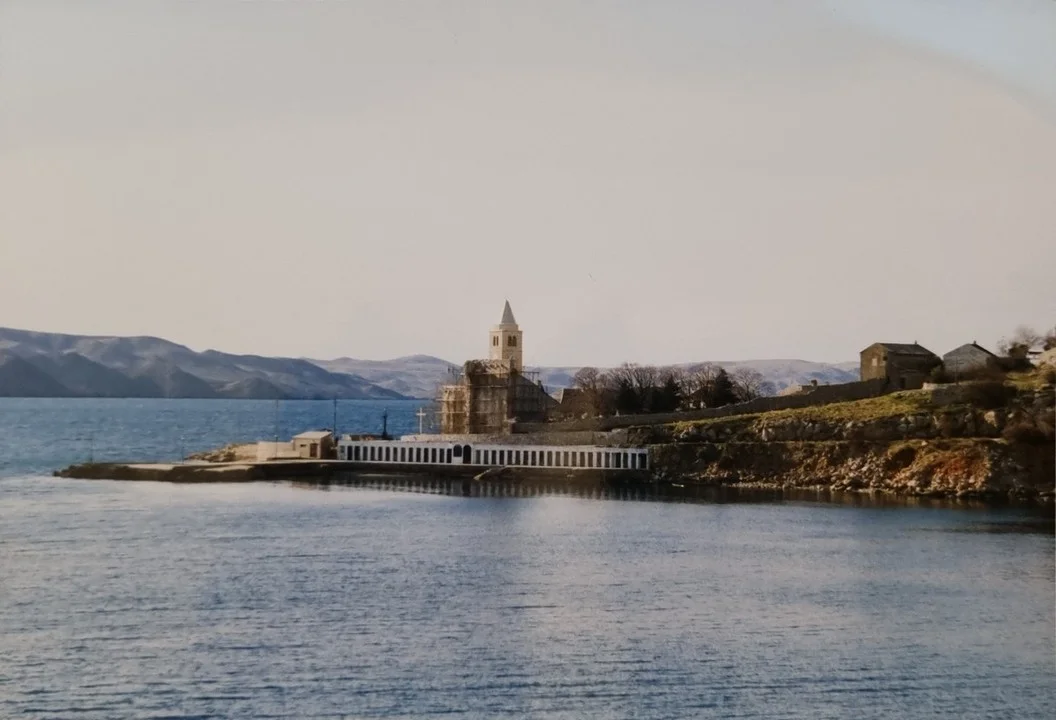
Town Beach and the Church of St. Charles Borromeo, 1999
Taken in 1999, this photograph shows Karlobag's town beach with a view of the Church of St. Charles Borromeo during its reconstruction. The church's distinctive bell tower dominates the scene, while the stone wall of the town beach stretches along the waterfront. The calm sea and the view toward the Island of Pag in the background capture the characteristic landscape of the Velebit Channel and the appearance of this part of Karlobag at the end of the 20th century.
Source: Collection of the Capuchin Monastery, Karlobag.
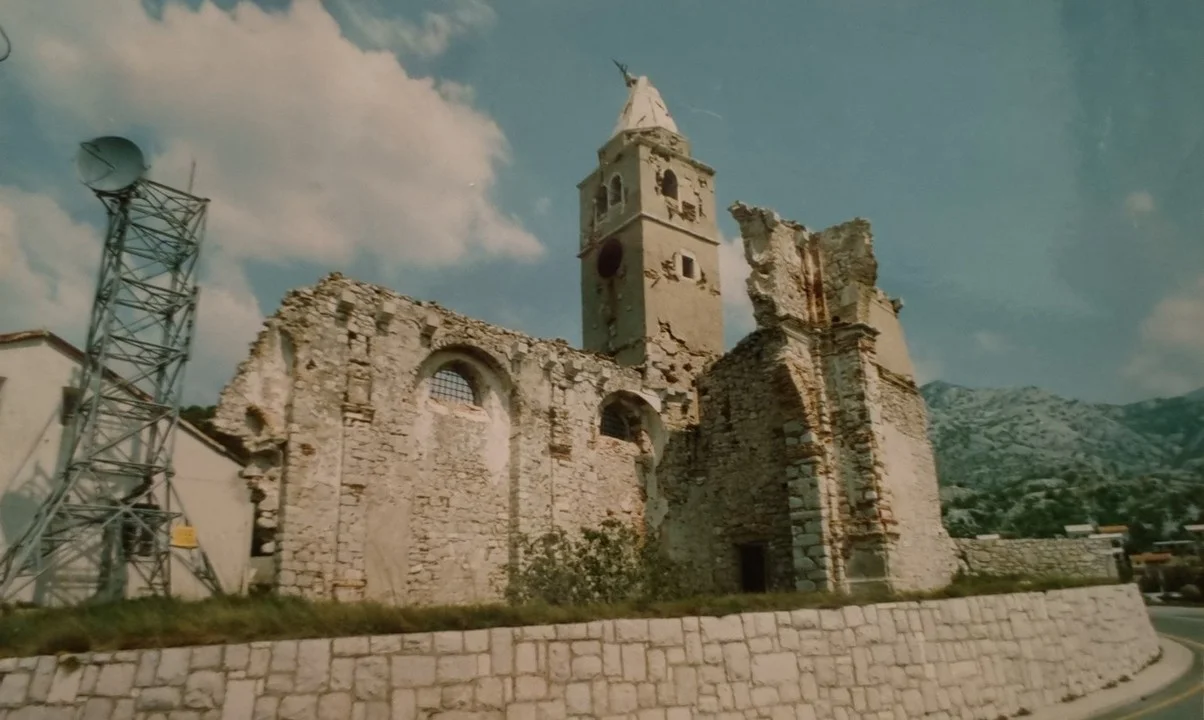
Ruins of the Church of St. Charles Borromeo before Restoration
This photograph shows the ruins of the Church of St. Charles Borromeo in Karlobag before the beginning of its comprehensive restoration. Following the destruction suffered during the Second World War, only the bell tower and parts of the stone walls remained standing, serving for decades as a reminder of the extensive wartime damage. The image documents the condition of one of Karlobag's most important sacred monuments immediately before restoration work commenced.
Source: Collection of the Capuchin Monastery, Karlobag.
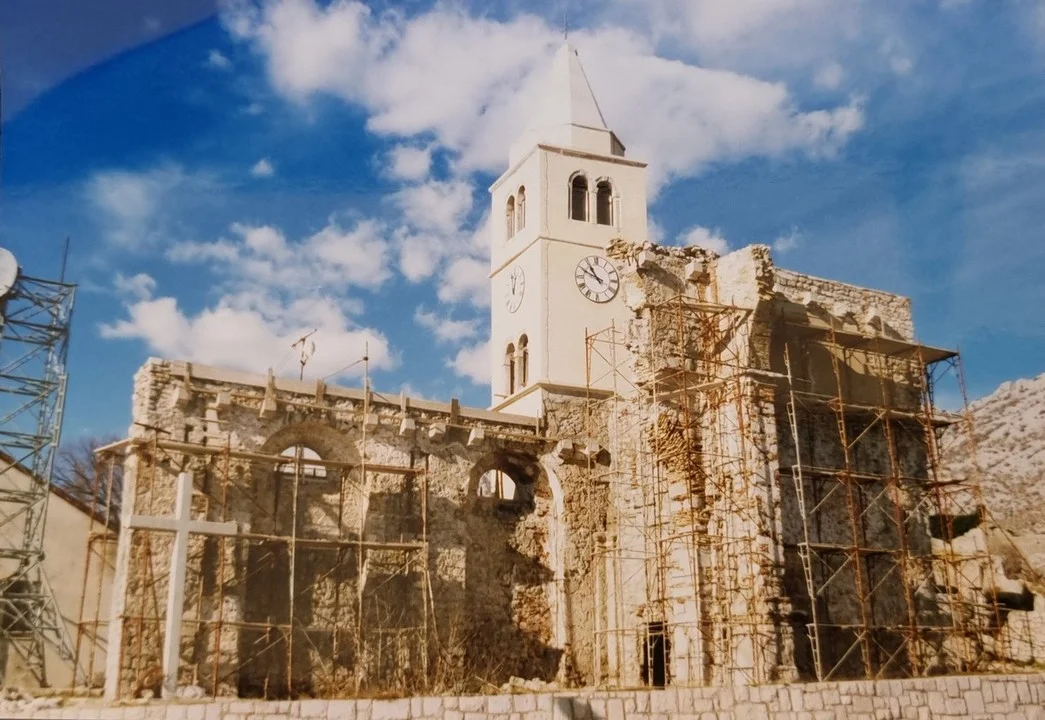
The Church of St. Charles Borromeo during Restoration, 1999
This photograph, taken in 1999, shows the Church of St. Charles Borromeo during extensive restoration work. Scaffolding surrounds the ruined walls of the church, documenting the restoration of one of Karlobag's most important sacred monuments, heavily damaged during the Second World War. In the background stands the restored bell tower, which for decades remained the town's most recognizable landmark and one of the few surviving parts of the church.
Source: Collection of the Capuchin Monastery, Karlobag.
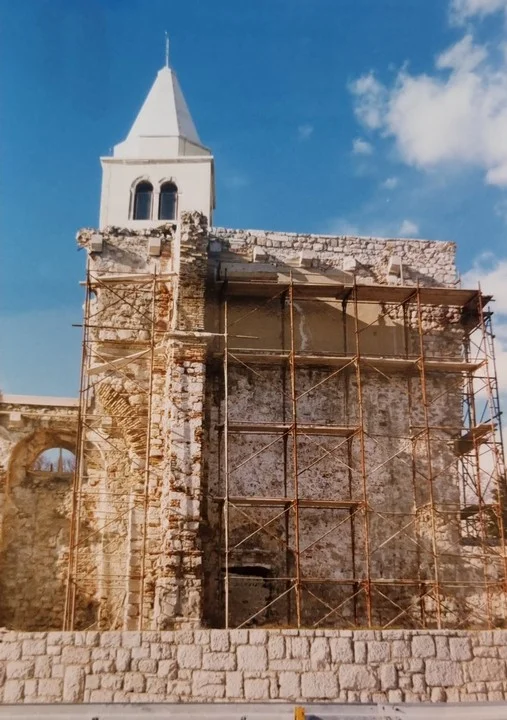
Restoration of the Sanctuary of the Church of St. Charles Borromeo, 1999
Taken in 1999, this photograph shows the sanctuary and one side of the Church of St. Charles Borromeo during restoration. Scaffolding erected against the stone walls illustrates the demanding conservation and restoration work carried out on a building severely damaged during the Second World War. The church's bell tower, one of Karlobag's best-known landmarks, rises prominently in the background.
Source: Collection of the Capuchin Monastery, Karlobag.
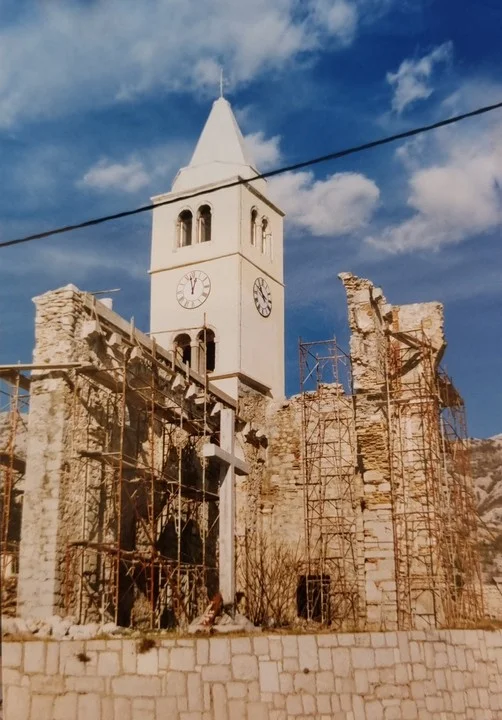
Bell Tower and Ruined Walls of the Church of St. Charles Borromeo during Restoration, 1999
This photograph, taken in 1999, shows the bell tower of the Church of St. Charles Borromeo surrounded by ruined walls and scaffolding erected during restoration work. Viewed from a different angle, it reveals the condition of the surviving walls before their complete restoration, while the large cross in the foreground recalls the long-standing religious and cultural significance of this sacred site in Karlobag.
Source: Collection of the Capuchin Monastery, Karlobag.
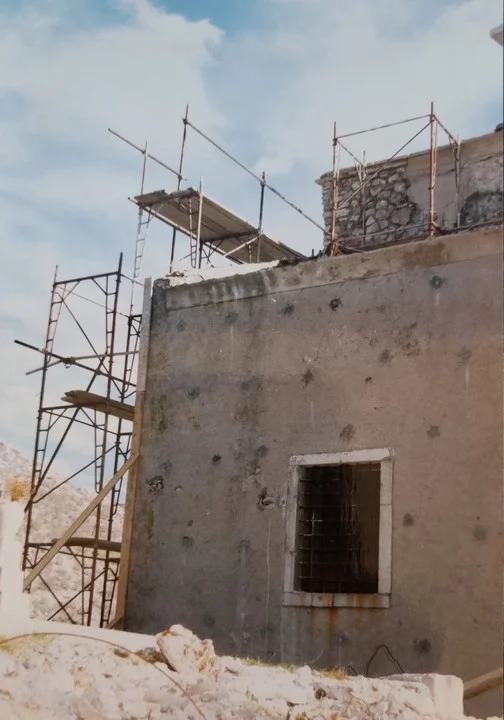
Detail of the Restoration Work on the Church of St. Charles Borromeo, 1999
Taken in 1999, this photograph shows part of the exterior wall of the Church of St. Charles Borromeo during restoration. Traces of decades of damage are still visible, while the scaffolding reflects the demanding restoration process of one of Karlobag's most significant sacred monuments. The image documents an important phase of the project, during which the original stone walls were stabilized and restored.
Source: Collection of the Capuchin Monastery, Karlobag.
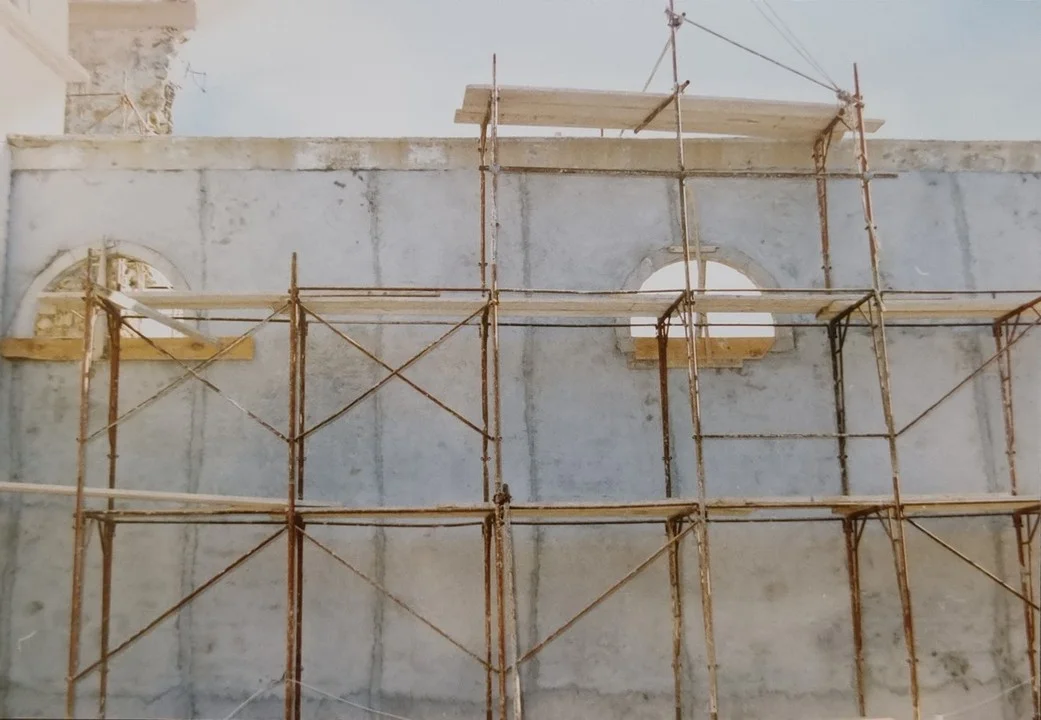
Restored Wall of the Church of St. Charles Borromeo during Restoration, 1999
This photograph, taken in 1999, captures one phase of the restoration of the Church of St. Charles Borromeo. Following the structural stabilization of the walls, conservation work began on the exterior surfaces, with scaffolding providing access for the restoration of the façade and the preservation of its original architectural features. Images such as this document the demanding restoration process of a church that bore the scars of wartime destruction for decades.
Source: Collection of the Capuchin Monastery, Karlobag.
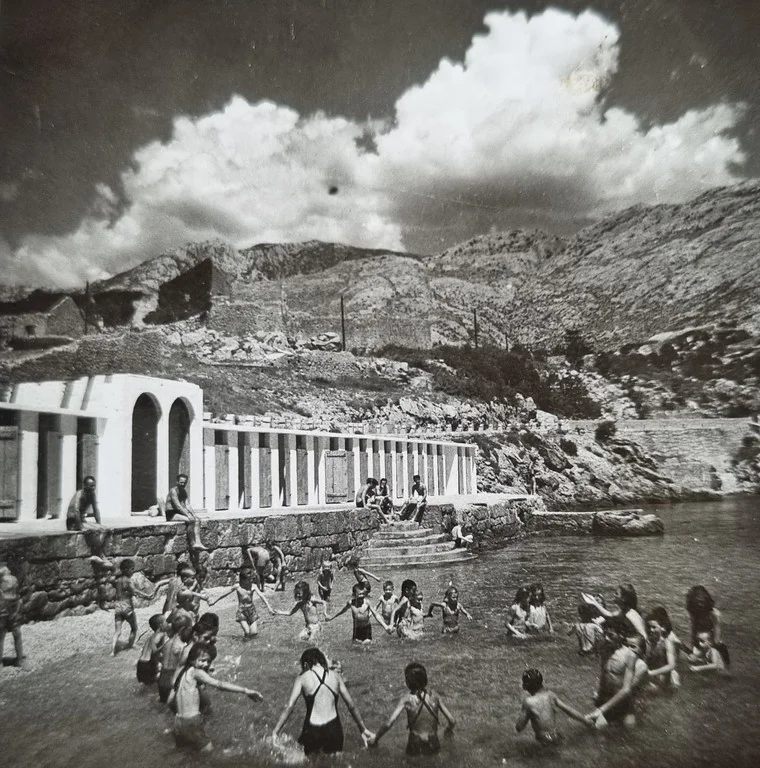
Summer Idyll – Carefree Days on the City Beach
This photograph perfectly captures the spirit of summer in Karlobag, where children's play and the joy of swimming in front of the old coast transform into a timeless moment. While traces of the past can be glimpsed in the background beneath the magnificent Velebit, life dominates the foreground—a group of children in the sea form a circle, enjoying the summer joys. The scene, which combines the familiar changing cabins, stone walls, and the blue of the sea, recalls summers when such gatherings were the center of social life, leaving indelible memories in the minds of all generations that grew up here.
Source: Croatian State Archives (HDA), Zagreb.
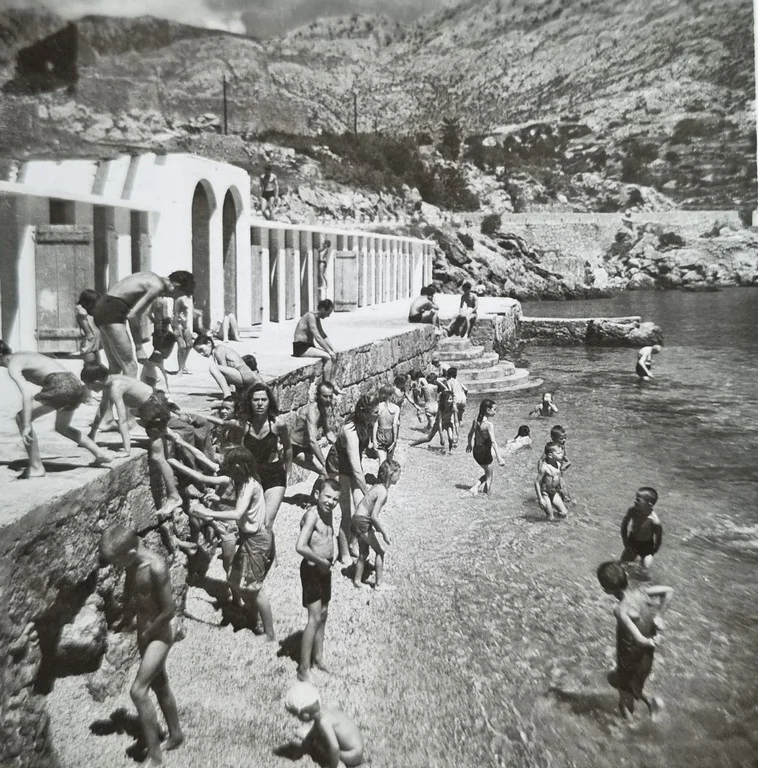
Summer in Full Swing – Liveliness on the City Beach
This photograph captures another sunny summer day on the Karlobag city beach, where the atmosphere is filled with children's play and the bustle of bathers. Alongside the recognizable changing cabins, which were an indispensable part of local beach infrastructure, we see generations of locals enjoying sea pleasures. The scene, which unites stone coasts, crystal clear sea, and joy in the foreground, perfectly portrays the simplicity and beauty of Karlobag summers, when the beach was the main center of gathering, socializing, and creating memories that last a lifetime.
Source: Croatian State Archives (HDA), Zagreb.
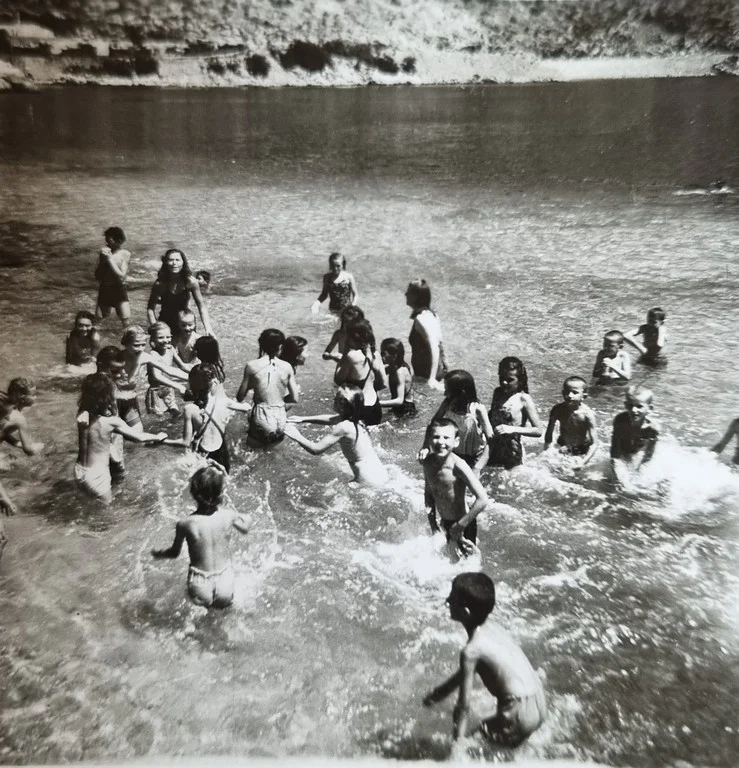
Joy in the Shallows – Childhood by the Karlobag Coast
This photograph depicts a spontaneous moment of children's play in the sea, where the carefreeness of childhood meets the crystal-clear sea of Karlobag. A group of children playing in the water, in a circle that radiates togetherness and joy, faithfully captures the atmosphere of summer as we remember it from old family albums. A scene filled with movement and laughter recalls times when such simple but precious moments in the shallows were the essence of a Karlobag summer, leaving a permanent mark on the upbringing of generations who bound their childhood to this part of the coast.
Source: Croatian State Archives (HDA), Zagreb.
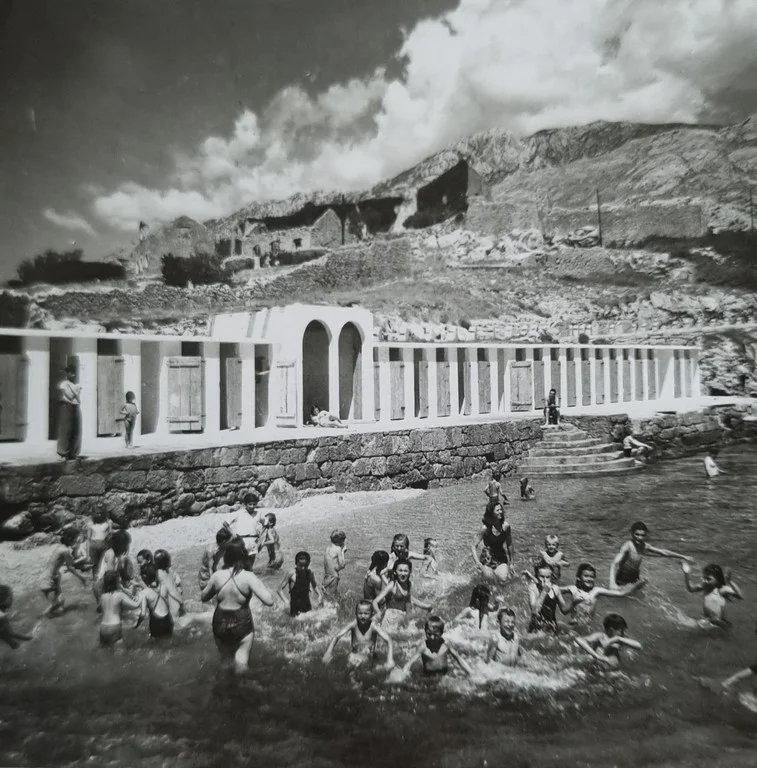
Summer Playfulness – Moments of Childhood
This photograph once again captures the lively atmosphere on the Karlobag city beach, where children's play in the sea is the main focus of the frame. Along with the recognizable white changing cabins that marked this location, we see a group of children enjoying the summer joys. The scene exudes joy and simplicity, recalling the times when the city beach was the heart of social life and an unavoidable place where generations of Karlobag residents created their favorite memories beneath Velebit.
Source: Croatian State Archives (HDA), Zagreb.
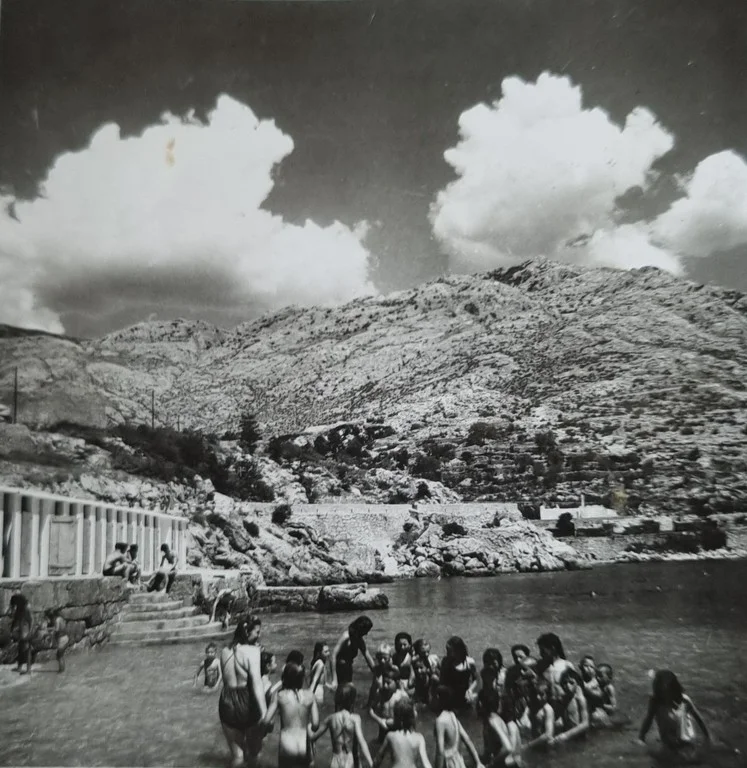
Summer Harmony – Togetherness on the Coast
Another scene depicting life on the city beach, where children's play in the sea takes place in front of the recognizable backdrop of white cabins and the harsh Velebit karst. This photograph again emphasizes the importance of the beach as a place of meeting and togetherness. As children enjoy summer pleasures in the shallows, the scene as a whole bears witness to simpler times when the sea was the center of life, and such gatherings created unbreakable bonds between generations who spent their childhood along the Karlobag coast.
Source: Croatian State Archives (HDA), Zagreb.
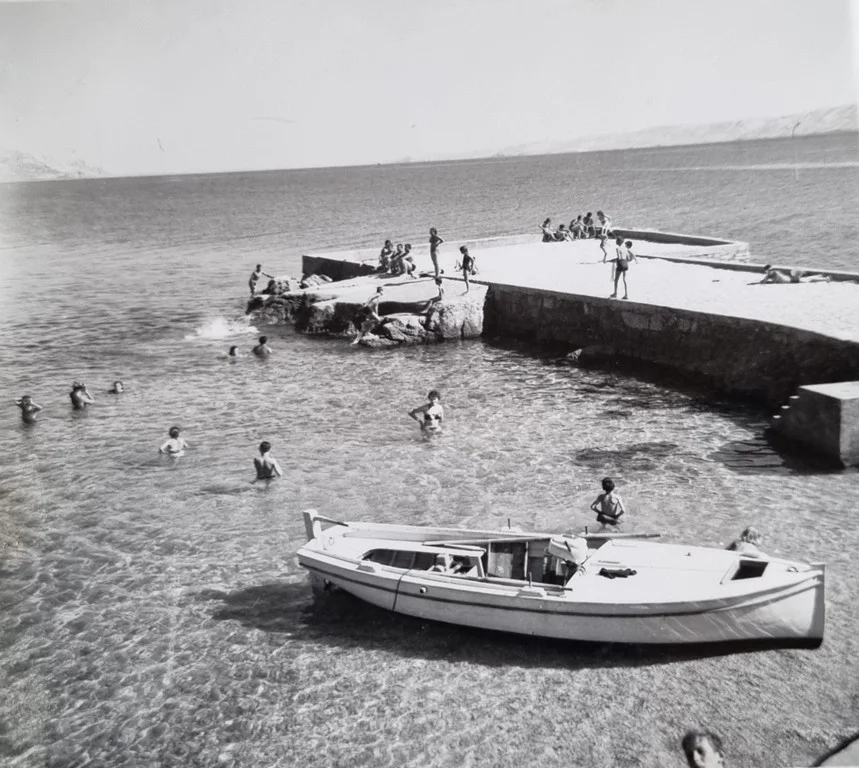
Summer Serenity – Life on the Karlobag Pier
The fiftieth photograph in our series shows a relaxed summer atmosphere on the old Karlobag pier. While bathers enjoy the crystal-clear sea and sunbathe on the concrete plateau, a wooden boat rests quietly moored in the shallows, a symbol of the town's inseparable connection with the sea. This scene perfectly captures the carefreeness of past summers, when the pier was the main place for gathering, jumping into the water, and summer joys that defined the Karlobag identity.
Source: Croatian State Archives (HDA), Zagreb.
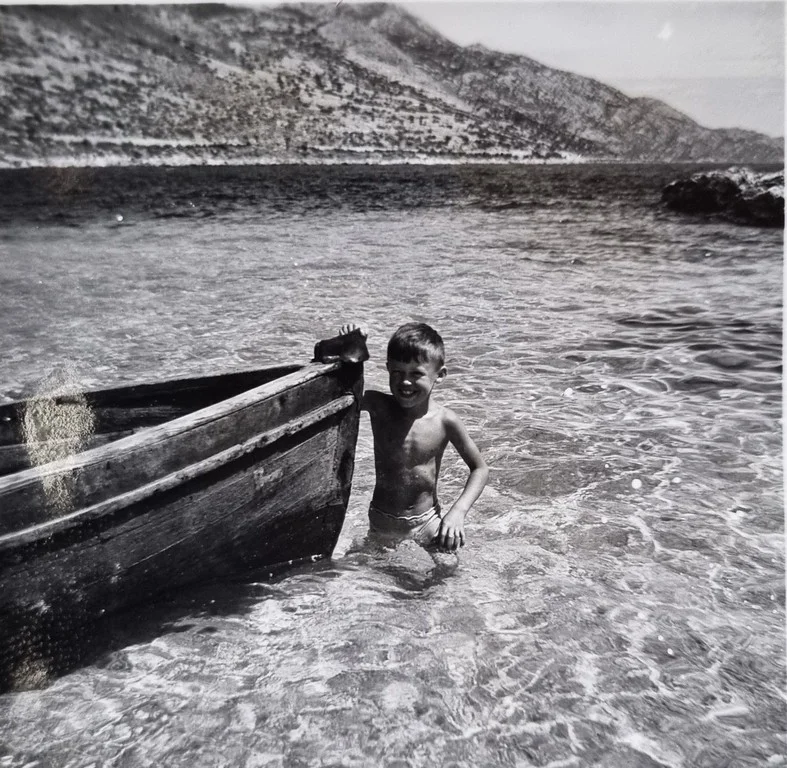
Summer of Childhood – Encounter with the Sea
This touching photograph caught a moment of pure childhood joy. A boy, leaning on the bow of an old wooden boat in the shallows, with a wide smile, testifies to the unbreakable connection between people and the sea that has defined Karlobag for centuries. The crystal-clear sea, which ripples in the sun, and the wooden boat in the foreground make for a timeless scene that evokes nostalgia for simple, happy summer days spent on the coast beneath Velebit.
Source: Croatian State Archives (HDA), Zagreb.
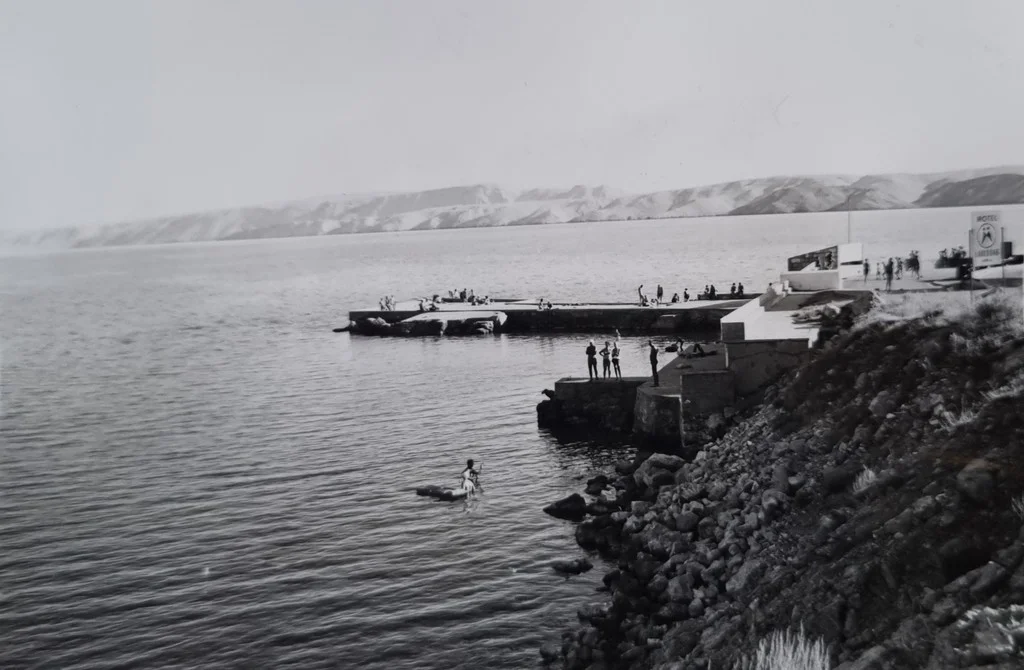
City Beach – View towards Pag
This photograph offers a panoramic view of the Karlobag city beach and its concrete pier stretching toward the open sea. In the background, the impressive silhouette of the island of Pag stretches out, creating a natural frame for this favorite gathering place. The sight of bathers enjoying themselves on the pier itself and in the clear sea faithfully records the summer everyday life of Karlobag, where the view of the nearby island has intertwined with life by the sea for centuries.
Source: Croatian State Archives (HDA), Zagreb.
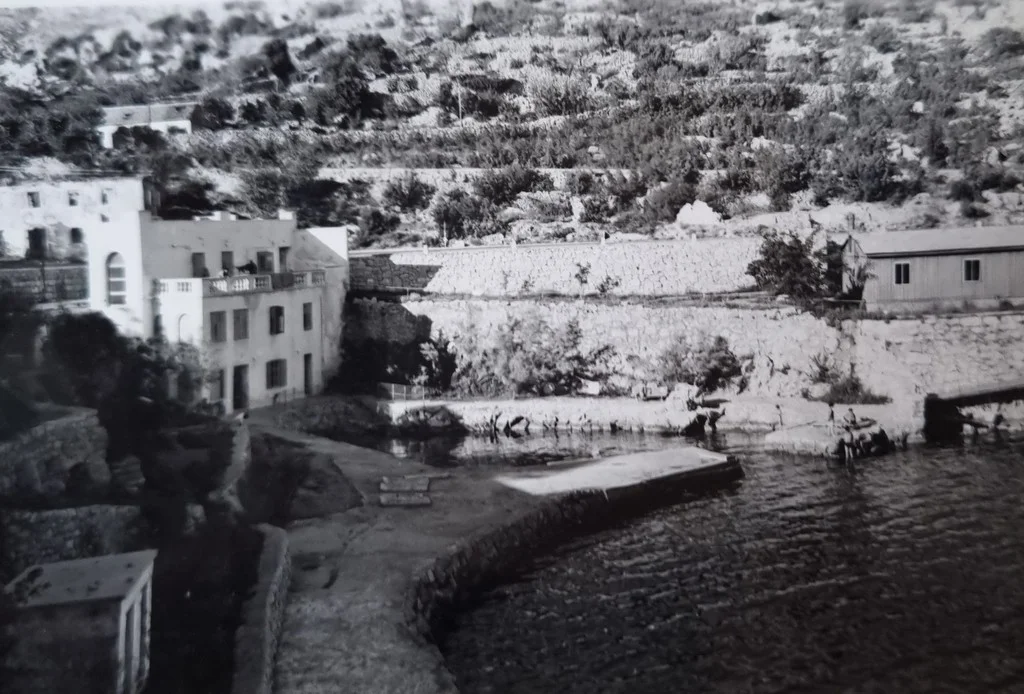
Gojtanova dražica and Villa Nada – A Corner by the Sea
This photograph shows Gojtanova dražica, one of the recognizable and more intimate corners of the Karlobag coast. In the center of the frame, the architecture of Villa Nada dominates, which, with its position right by the coast, testifies to the former style of construction and life by the sea. Surrounded by stone dry-walls and the Mediterranean landscape that rises in the background, this location carries a special peace and historical importance, reminding us of the times when such coves were an indispensable part of the everyday life and identity of Karlobag.
Source: Croatian State Archives (HDA), Zagreb.
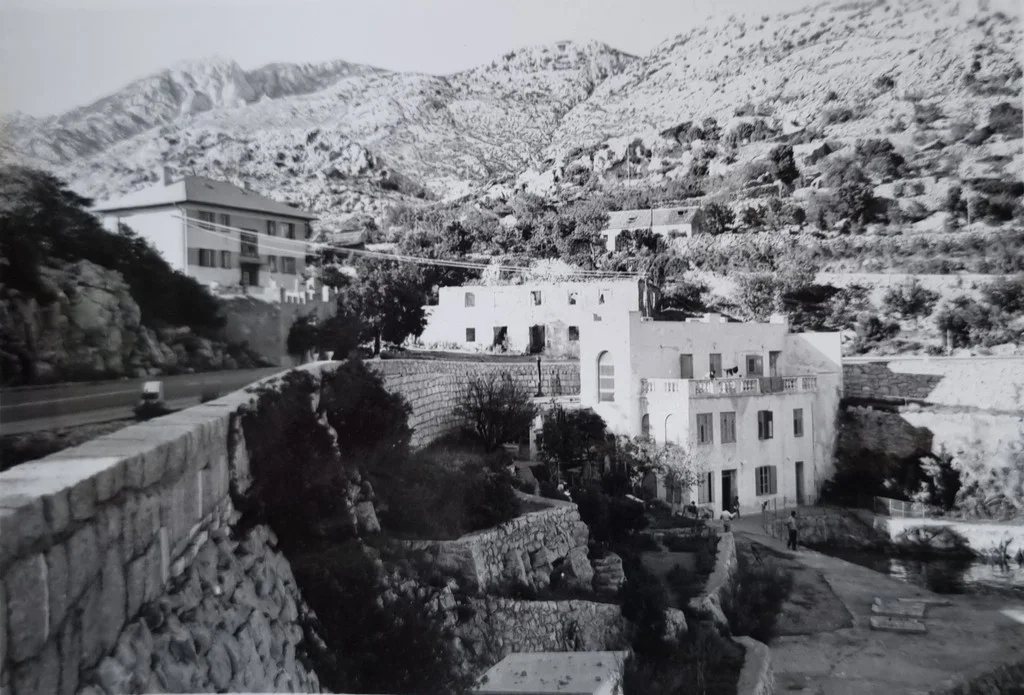
Villa Nada – An Architectural Pearl by the Coast
This photograph provides a detailed insight into Villa Nada, one of the recognizable buildings on the Karlobag coast. With its position in the rocky landscape beneath Velebit, the villa represents an example of harmony between traditional construction and the Mediterranean environment. The view includes its characteristic lines and terraces, which for generations have been part of the view of this part of the town, telling the story of life by the sea in the past and the architectural heritage of Karlobag.
Source: Croatian State Archives (HDA), Zagreb.
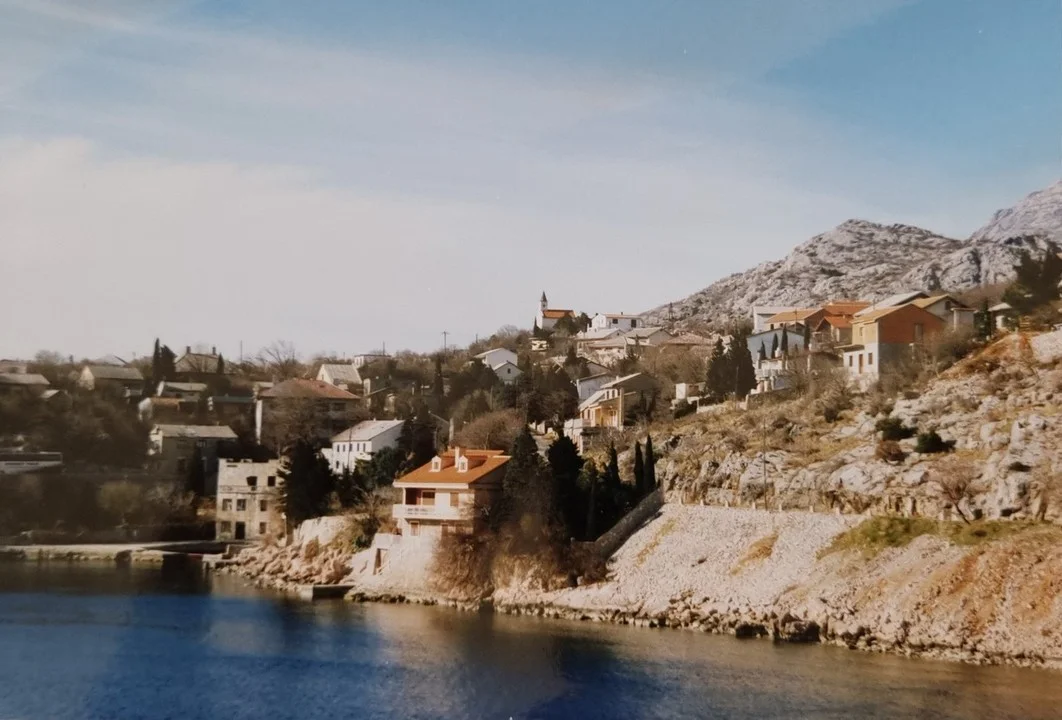
Baška Draga and a View of Villa Nada (Gojtan), 1999
This photograph, taken in 1999, shows Baška Draga, one of the most picturesque parts of Karlobag, with a view of Villa Nada, also known as Gojtan. Situated directly on the shoreline, the villa blends harmoniously into the rocky landscape beneath Mount Velebit. In the background, the Baška Draga neighborhood rises with its characteristic stone houses and the bell tower of the Church of St. Joseph, providing a glimpse of this part of Karlobag at the end of the 20th century.
Source: Collection of the Capuchin Monastery, Karlobag.
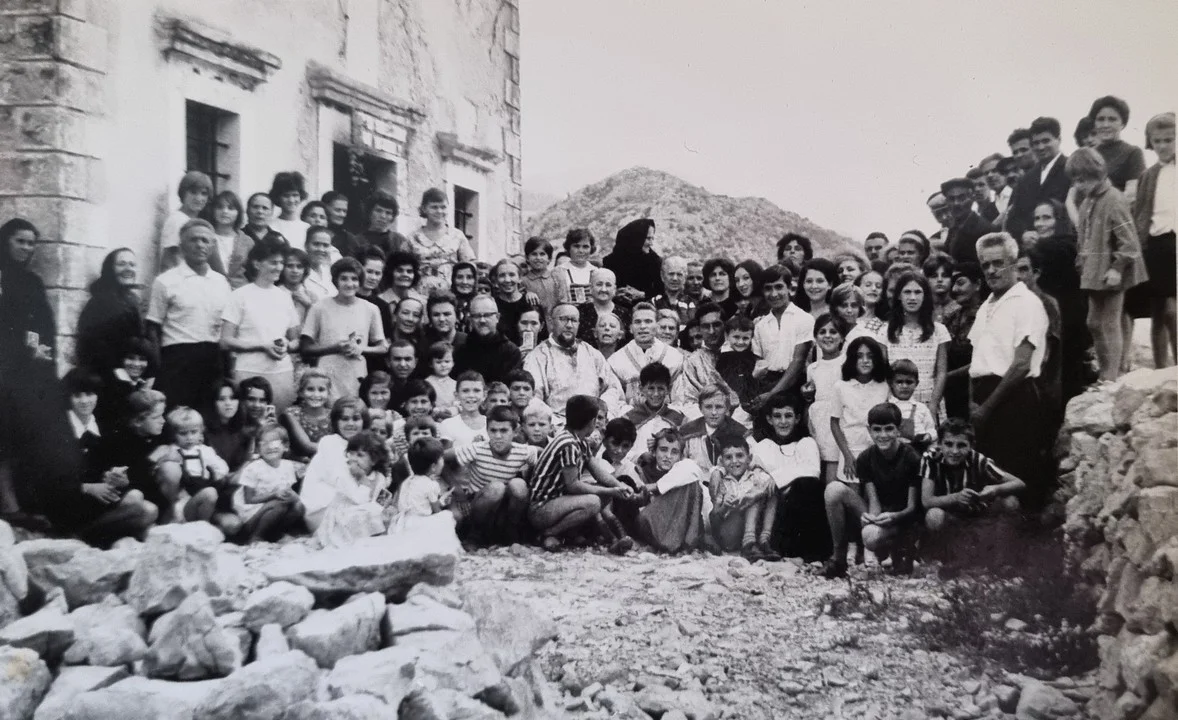
First Mass at Calvary
This historic black-and-white photograph depicts a gathering of local residents and faithful on the occasion of **Friar Krsto's First Mass** at Calvary. At the center of the photograph stand the priests and the newly ordained friar, surrounded by family members, local residents, and numerous children in front of the church on Calvary Hill. In the background, the barren hillsides rise above the scene, creating a powerful visual record of an important spiritual, communal, and traditional event in the history of Karlobag.
Source: Collection of Ana and Marijana Popović.
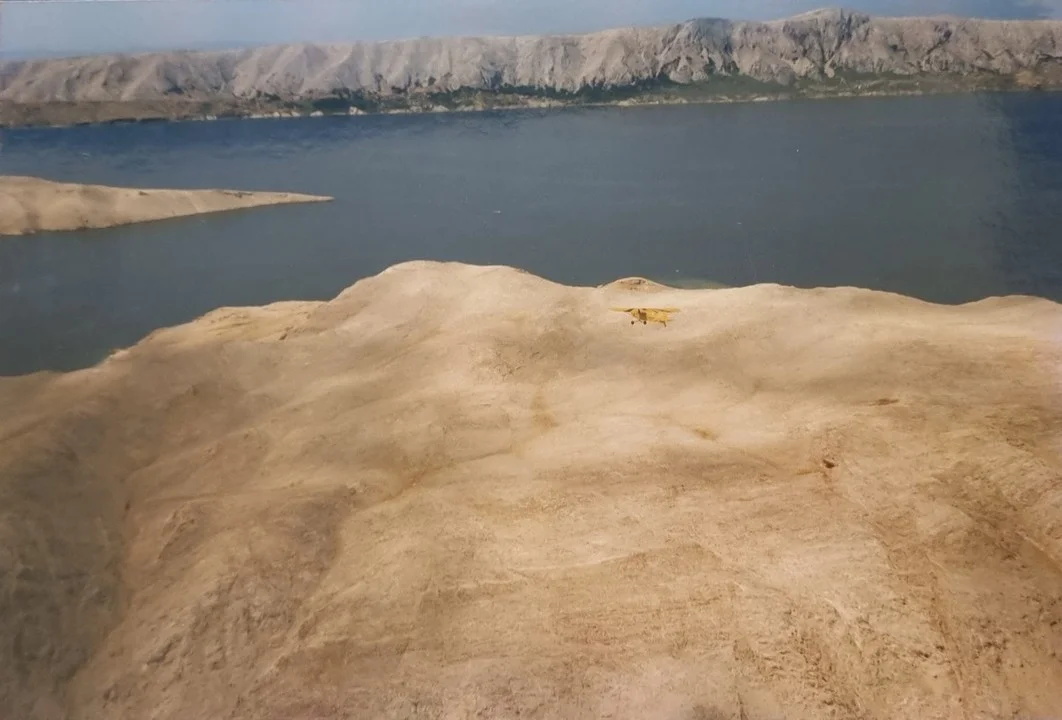
View from the Island of Pag toward Karlobag, 1984
Taken in 1984, this photograph captures the view from the Island of Pag across the Velebit Channel toward Karlobag and the Velebit coastline. The characteristic rocky landscape of Pag dominates the foreground, while the rugged slopes of Mount Velebit rise in the distance. The scene vividly illustrates the striking natural beauty of the Velebit Channel, which has connected the Island of Pag with the Podvelebit coast for centuries.
Source: Collection of the Capuchin Monastery, Karlobag.
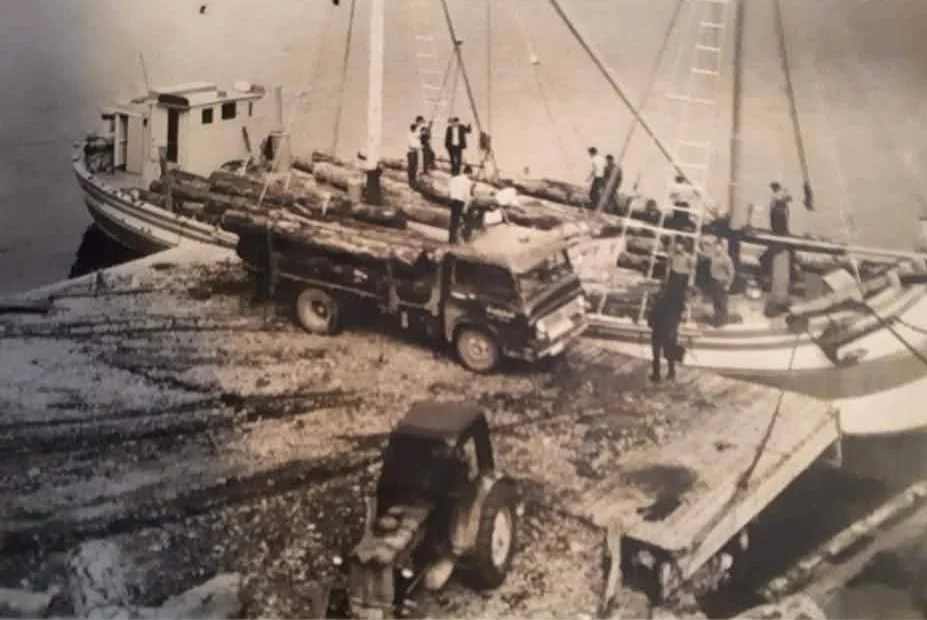
Loading Timber at the Pier in Baška Draga.
This photograph shows the loading of timber at the pier in Baška Draga, once an important location for the transport and shipment of wood products from the Velebit region. Cargo vessels are moored alongside the quay while workers jointly transfer logs between a truck and the ship. In the foreground, a tractor can be seen, and together with the truck and the vessel, it illustrates the busy activity of the harbour. The scene testifies to the economic importance of Baška Draga during the period when maritime transport played a key role in exporting timber from the Velebit coastal region.
Source: Private Archive of Tereza Laništanin.
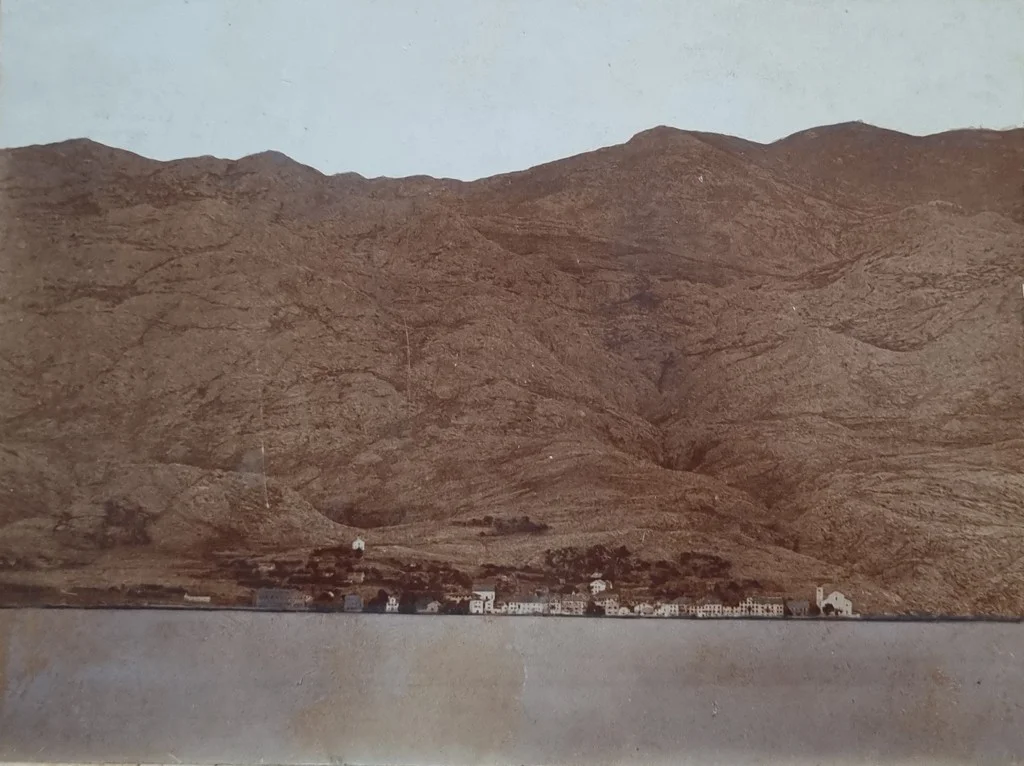
Panorama of Karlobag beneath Velebit
This panoramic photograph, taken from the sea, shows Karlobag as a narrow coastal settlement lying directly beneath the massive Velebit mountain range. The town stretches along the shoreline, while the steep and almost bare mountain slopes dominate the scene, clearly illustrating Karlobag’s unique position between the sea and the mountain. The photograph is a valuable record of the town’s former appearance and its harmonious relationship with the distinctive Velebit landscape.
Source: Karlobag Municipality Archives.