

Cesarica Between the Hillside and the Sea
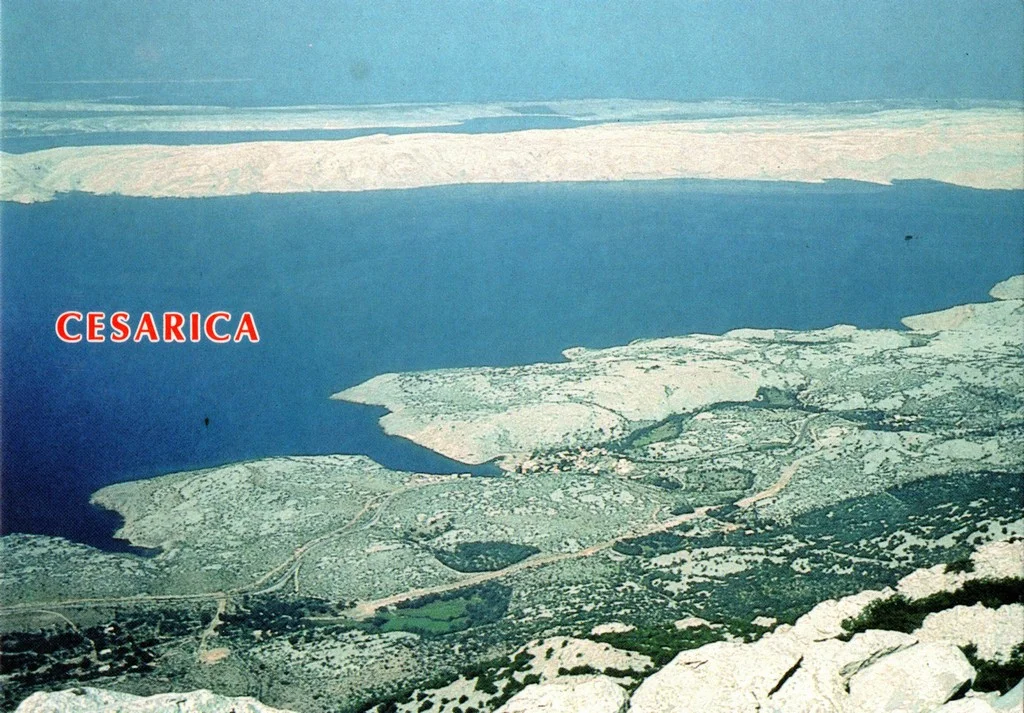
This panoramic postcard, bearing the red inscription “CESARICA”, shows the village from an elevated viewpoint. Pale rocks and vegetation fill the foreground; below, the road follows the hillside and houses cluster along the indented shoreline.
From this distance, individual buildings become part of a broader landscape. Coves, rocky headlands and the road reveal how the settlement relates to the terrain, while a long, pale stretch of land is visible across the sea. The postcard is particularly useful for examining the earlier distribution of houses and the road connections along the coast.
T. Potočnjak Collection
Inv. no. ZTP-CE-1703
The Parish House and the Beach
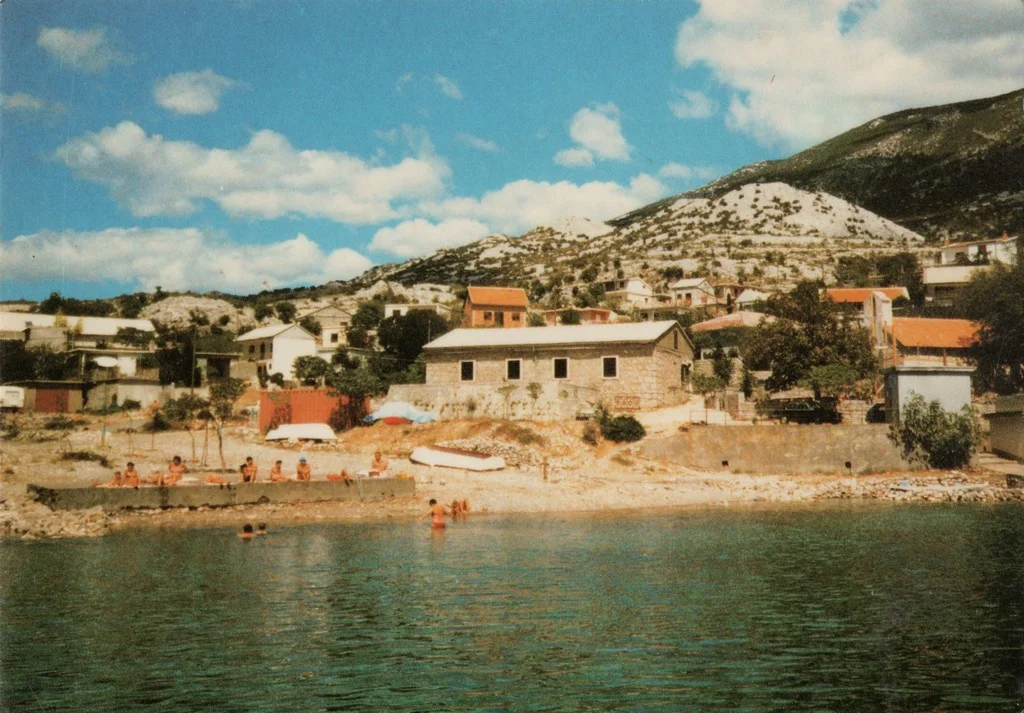
This view from the sea shows the beach and parish house in Cesarica. Bathers rest along a low seawall, while others are in the water. Small white boats have been hauled ashore, and the stone parish house stands immediately behind the beach, surrounded by other houses with reddish roofs.
In the background, the village extends up a rocky slope dotted with vegetation. The photograph places the parish house within its immediate coastal surroundings: the beach, bathers and small boats. The relationship between the building and the sea is a defining feature of this view. The postcard preserves details of the shoreline and buildings that can be compared with the village today.
T. Potočnjak Collection
Inv. no. ZTP-CE-1704
The Bathing Area and the Parish House
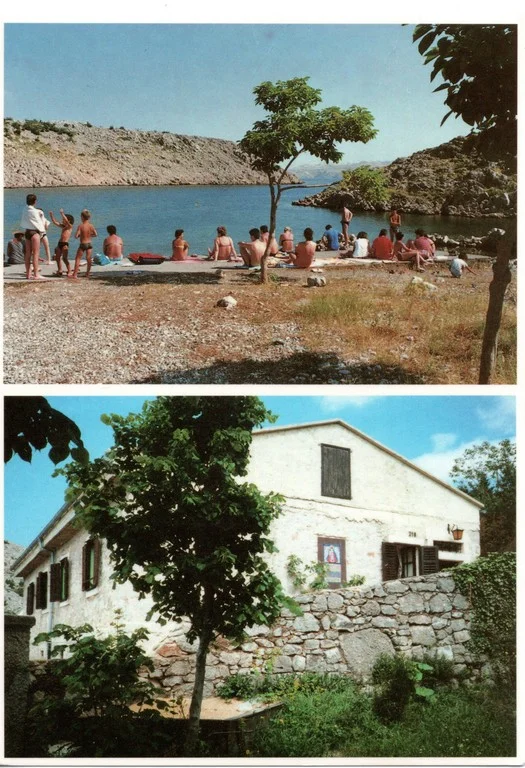
The upper photograph captures a summer pause by the sea. Bathers sit and stand along the low, built-up waterfront, while a small tree provides a little shade. Rocky slopes enclose the calm waters of the cove, with everyday social life at the bathing area at the heart of the scene.
The lower photograph shows the parish house, with its white façade and dark windows, behind a dry-stone wall. Trees partly obscure the façade, while greenery fills the space in front of the house. By pairing the bathing area with the parish house, the postcard links summer life by the sea with a setting associated with the parish community in Cesarica.
T. Potočnjak Collection
Inv. no. ZTP-CE-1702
The Church – Exterior and Interior
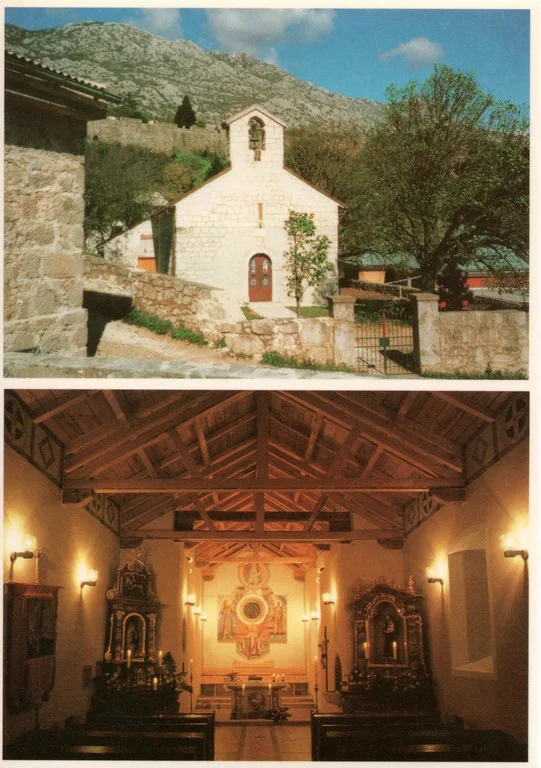
This two-view postcard presents the exterior and interior of the same church. The upper photograph shows a pale stone façade with a small bell gable. Stone walls, an entrance gate and a tree in the churchyard occupy the foreground, while a rocky hillside rises behind the church.
The lower photograph takes the viewer inside: rows of wooden pews face the sanctuary, while the exposed timber roof structure draws the eye upwards. Warm lighting and side altars create an atmosphere quite different from the sunlit exterior. The postcard preserves both the building’s place within the village and the space where the community gathers inside it.
T. Potočnjak Collection
Inv. no. ZTP-CE-1701